Summer has a sneaky way of making the garden feel endless. Then one afternoon arrives when dinner somehow needs to happen before the sun disappears, and suddenly every unfinished garden chore starts waving from across the yard. Thankfully, several worthwhile projects cost little or nothing, and finishing them now can make next season easier, cheaper, and considerably less chaotic.
The trick involves choosing projects that actually pay you back rather than wandering into a garden center and emerging with three bags of mysterious amendments and a decorative pot shaped like a frog. A little cleanup, careful collecting, and some strategic preparation can accomplish plenty with supplies already sitting around the property. These seven projects deserve attention before shrinking daylight turns garden chores into a race against dusk.
1. Build a No-Fuss Compost System
A compost pile ranks among the garden’s best money-saving projects because it turns many ordinary kitchen and yard scraps into a useful soil amendment. Start with a simple pile or bin in a spot with good drainage, then mix nitrogen-rich materials such as fresh grass clippings and vegetable scraps with carbon-rich materials such as dry leaves, shredded plain cardboard, and small amounts of untreated paper. Avoid meat, dairy, pet waste, diseased plants, and weeds carrying mature seeds, since those materials can create problems rather than garden gold.
There is no need to buy an elaborate tumbler to get started. Keep the pile moderately moist, add a variety of materials, and turn it occasionally with a fork to introduce air. As cooler weather arrives, the pile may work more slowly, but the organic material will continue breaking down and can contribute to future soil improvement.
2. Save Seeds From the Best Plants
Seed saving can turn one good growing season into a head start on the next one, but gardeners need to choose carefully. Tomatoes, peppers, beans, peas, lettuce, and many herbs offer approachable options, while hybrid varieties may produce offspring that differ from the parent plant, so check the seed packet before collecting. Choose seeds from healthy plants that performed well rather than simply grabbing whatever looks mature first.
Let seeds reach the appropriate stage of maturity before collecting them, because immature seed often stores poorly or fails to germinate. Tomato seeds benefit from a short fermentation process before rinsing and drying, while dry beans and peas need to remain on the plant until the pods dry. Label every packet with the plant variety and year, then store the completely dry seed somewhere cool, dark, and dry.
3. Make a Leaf-Mulch Supply
Leaves represent one of the cheapest garden resources available, assuming the trees nearby cooperate with the plan. Instead of sending every leaf to the curb, rake healthy leaves into a pile and shred them with a mower before using them as mulch or adding them to compost. Shredding helps the leaves settle more neatly and reduces the chance that a thick, wet layer will smother the lawn.
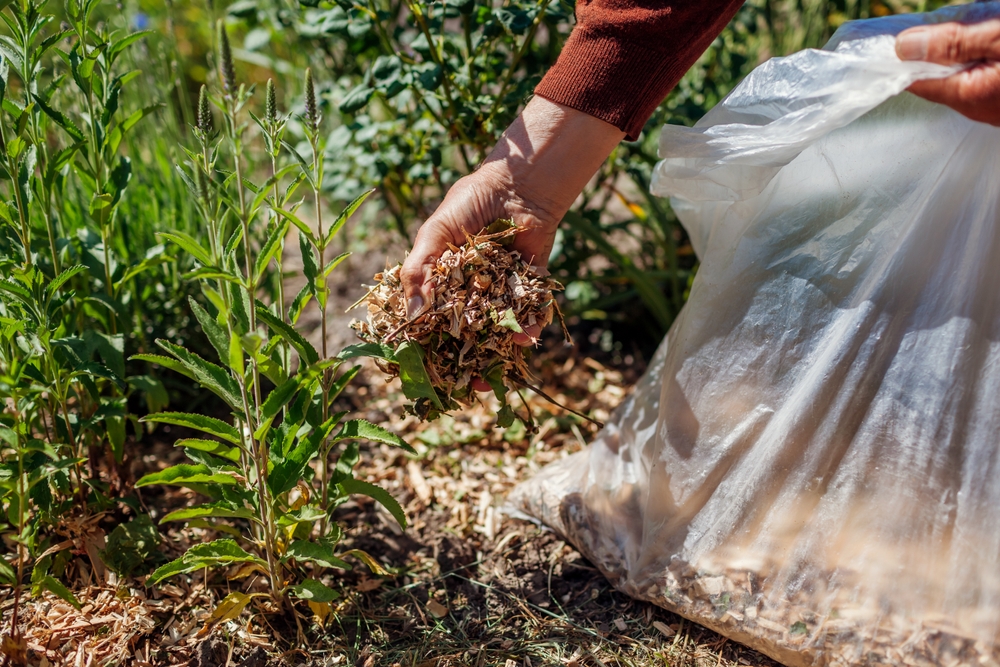
Garden beds benefit from a layer of chopped leaves because the material protects soil from temperature swings, adds organic matter as it breaks down, and can help suppress some weeds. Keep mulch away from the crowns of perennial plants and the trunks of trees and shrubs, since constantly damp material against plant tissue can encourage rot and pest problems. A simple leaf pile also creates a handy reserve for compost whenever the pile needs more carbon-rich material.
4. Repair Garden Tools Before They Disappear
A garden tool with a loose handle rarely fixes itself, no matter how optimistically it sits in the shed. Inspect pruners, shovels, hoes, rakes, trowels, wheelbarrows, hoses, and watering equipment before winter storage, and clean soil from metal surfaces before drying them thoroughly. Sharpening cutting tools now can make spring pruning faster and cleaner, while tightening loose screws or replacing inexpensive hardware can extend a tool’s useful life.
Do not forget the humble garden hose, which often suffers quiet abuse all summer. Drain it, inspect connections for leaks, and store it where freezing temperatures will not damage trapped water or fittings. A few minutes of maintenance can prevent the classic springtime discovery of a rusty shovel, tangled hose, and pruner that somehow developed the cutting ability of a butter knife.
5. Divide Crowded Perennials
Late summer and early fall can offer a useful opportunity to divide certain established perennials, depending on the plant and local growing conditions. Plants that have become crowded, developed a bare center, or started producing smaller flowers can sometimes benefit from division, although not every perennial appreciates the same treatment. Research the specific plant before reaching for the shovel, because some species prefer spring division while others dislike disturbance altogether.
When dividing suitable plants, dig carefully around the root system and separate healthy sections with roots and shoots attached. Replant divisions promptly at the correct depth and water them thoroughly so the roots can settle before winter. This project can multiply existing plants without requiring another trip to the nursery, which makes it particularly satisfying for gardeners who enjoy getting maximum mileage from every plant.
6. Prepare Beds Without Buying a Mountain of Products
Garden cleanup does not require stripping every bed until the soil looks suspiciously like a freshly vacuumed living room. Remove diseased plant material and spent annuals where appropriate, but leave healthy roots in the soil and consider leaving some non-diseased plant debris for compost or habitat when practical. Pull persistent weeds before they set more seed, especially around perennial beds and pathways where they can become next year’s nuisance.
Skip the temptation to add fertilizer simply because the garden looks tired. A soil test can reveal whether a nutrient actually needs replenishment, while compost and organic mulch can improve soil structure without encouraging unnecessary applications. Good garden preparation often looks less dramatic than a shopping cart full of products, but careful cleanup and thoughtful soil care can accomplish far more.
7. Create a Free Garden Inventory
Before the garden fades completely, take notes about what worked, what failed spectacularly, and what produced enough food to make the whole operation feel worthwhile. Record plant varieties, approximate planting locations, disease or pest problems, harvest timing, and any varieties worth growing again. Photos can help too, particularly when next spring arrives and a bare patch of soil offers absolutely no clue where the tomatoes lived.
This inventory can also prevent one of gardening’s sneakiest expenses: buying something that already exists. Count leftover seed packets, stakes, pots, labels, row-cover material, and usable soil amendments, then store everything where it will remain dry and easy to find. A five-minute inventory now can save money, duplicate purchases, and a frantic spring scavenger hunt later.
Give Next Spring a Head Start for Practically Free
The best late-season garden projects rarely involve expensive gadgets or complicated renovations. They involve saving useful materials, protecting soil, maintaining equipment, multiplying suitable plants, and recording lessons while the season still feels fresh. Those small jobs can transform the end of the growing season from a garden shutdown into the opening move for next year.
Start with whichever project removes the biggest headache from the list, then work through the others as daylight allows. Even a single afternoon spent collecting leaves, cleaning tools, or labeling seeds can make spring feel noticeably more organized. The garden may soon slow down, but there is no reason the gardener’s progress has to stop with it.
Which of these frugal garden projects will make it onto the to-do list before the days get noticeably shorter? Share your favorite money-saving garden trick in the comments.
You May Also Like…
Are Self-Seeding Flowers a Smart Choice for Frugal Gardeners?
Why Do Some Garden Beds Stay Wet Long After a Storm?
Why Are More Gardeners Treating Dandelions as Edible Crops?
The July Pest Damage Gardeners Mistake for Heat Stress
Drought Conditions Are Affecting U.S. Agriculture—What Home Gardeners Should Watch

Brandon Marcus is a staff writer for FrugalGardening.com at District Media, Inc., where he delivers practical gardening advice with a relatable, no-nonsense style. An avid amateur gardener, he holds a BA degree and with over ten years of professional writing experience, he is also an award-winning published author whose first book, Questions For Deep Thinkers, was released by Adams Media. His work has appeared in major publications including Fandom.com, CHUD.com, TheColdWire.com, and Fansided.com.
Leave a Reply