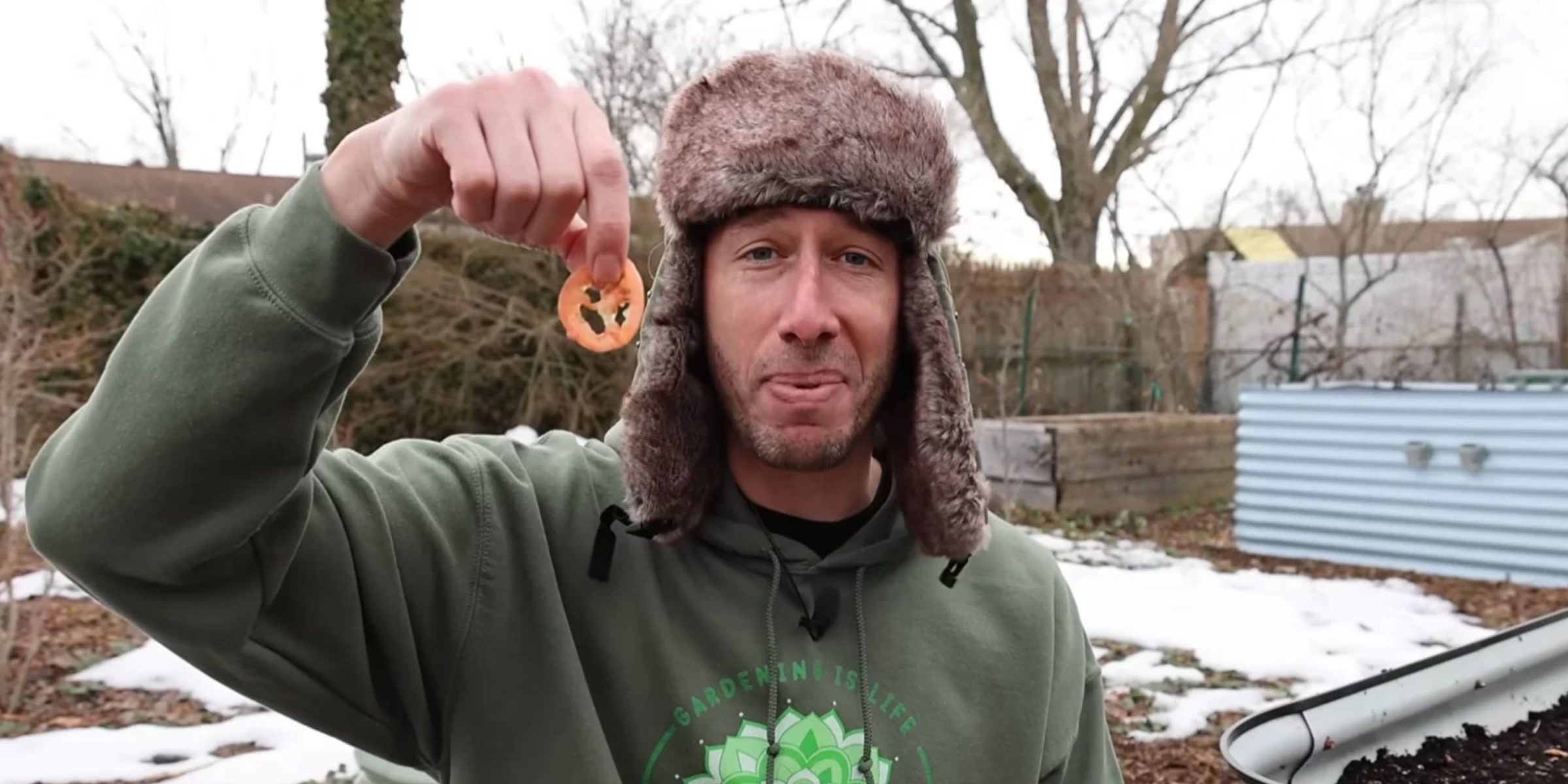
Most people unwrap a McDonald’s burger, eat it, and throw away the packaging without giving the tomato slices a second thought. But one gardener looked at those ordinary fast-food tomatoes and wondered whether they could become something much bigger.
Could the seeds from a McDonald’s burger actually grow into healthy tomato plants?
Gardening YouTuber James Prigioni decided to find out, and the results were far more impressive than he expected.
In a 124-day gardening experiment published in March 2026, Prigioni planted tomato seeds taken directly from McDonald’s burgers and documented their progress from germination to harvest. What started as a fun experiment eventually produced two tomato plants loaded with fruit.
For anyone interested in growing tomatoes from seeds, his experiment raises an interesting question: Could something you normally throw away become the beginning of your next backyard harvest?
The Experiment Started With Two McDonald’s Burgers
Prigioni purchased two McDonald’s Deluxe Quarter Pounders with cheese and removed tomato slices from the sandwiches. Rather than eating the tomatoes, he decided to test whether their seeds were capable of producing healthy plants. For the first experiment, he extracted seeds from a tomato slice and planted them in a small container filled with soil. For the second, he buried an entire tomato slice in another container, allowing the seeds to germinate naturally inside the decomposing fruit. Both approaches were surprisingly simple, requiring little more than soil, moisture, warmth, and patience.
The First Seedlings Appeared Surprisingly Quickly
According to Prigioni’s documented experiment, both planting methods began producing seedlings approximately eight days after planting. By day 15, the young plants had developed enough growth that he could begin selecting which seedlings to keep. He eventually thinned the seedlings so that one plant remained in each container, reducing competition for nutrients, water, and growing space. Around day 23, he transplanted the seed-grown tomato into a bucket and the slice-grown tomato directly into his garden. For gardeners interested in growing tomatoes from seeds, the early success demonstrated that even seeds taken from commercially prepared food can remain viable.
The Tomato Plants Kept Growing Despite Some Challenges
Once outdoors, the two tomato plants began developing differently, partly because they were growing under different conditions. The container-grown plant experienced periods of insufficient watering during hot weather, which Prigioni acknowledged affected its performance. Meanwhile, the plant growing directly in the ground developed vigorous growth and eventually produced an impressive number of tomatoes. By approximately day 47, the experiment had progressed to flowering, an important milestone before fruit production begins. Although both plants survived, their different growing conditions made it difficult to determine whether the original seed-planting method affected their eventual productivity.
The First Harvest Arrived After 94 Days
The experiment became particularly interesting when Prigioni began harvesting tomatoes from the container-grown plant around day 94. Despite experiencing watering problems, the plant had successfully developed fruit that could be picked and eaten. By day 108, the in-ground tomato plant was producing an even more remarkable harvest, with dozens of tomatoes developing on its branches. Prigioni described the fruit as mildly sweet and similar in appearance to Roma tomatoes, although the plants did not produce identical results. The gardener’s enthusiasm was understandable because he had transformed ordinary burger toppings into productive vegetable plants in just a few months.
Why Fast-Food Tomato Seeds Can Actually Grow
The science behind this experiment is less mysterious than it initially appears because fresh tomato slices can contain viable seeds. A tomato seed doesn’t lose its ability to germinate simply because the fruit was sliced and placed on a sandwich. However, successful germination depends on factors including seed maturity, temperature, moisture, and growing conditions. The University of California Agriculture and Natural Resources explains that tomato seeds can be collected from ripe fruit, cleaned, dried, and saved for future planting. That means growing tomatoes from seeds found in grocery store produce or restaurant food is entirely possible, although success isn’t guaranteed.
There’s One Important Catch With Hybrid Tomatoes
While the experiment proved that the seeds could grow, it didn’t guarantee that the resulting tomatoes would be identical to those served at McDonald’s. Commercial tomatoes are frequently produced from hybrid varieties selected for characteristics such as durability, appearance, and consistency. Seeds collected from hybrid tomatoes can produce plants with different traits because the next generation may not inherit the same combination of characteristics. According to Oshkosh Seed Savers’ tomato-growing guidance, seeds from open-pollinated varieties are generally more dependable when gardeners want offspring resembling the parent plants. For predictable results, purchasing known tomato varieties or saving seeds from suitable heirloom plants may be a better strategy than relying on unidentified restaurant tomatoes.
Could You Try This Experiment in Your Own Garden?
If you’re curious about growing tomatoes from seeds found in your food, you don’t need to purchase a fast-food burger specifically for the experiment. Start with a fresh, ripe tomato from your kitchen and remove several healthy-looking seeds, or try planting a thin slice in a small container. Cover the seeds lightly with seed-starting mix, maintain consistent moisture without waterlogging the soil, and provide warmth to encourage germination. Once the seedlings develop true leaves, thin or transplant them carefully and gradually introduce them to outdoor conditions before planting after the danger of frost has passed. Remember that tomato plants need sufficient sunlight, nutrients, water, and growing space to produce a worthwhile harvest.
Is Growing Tomatoes From Food Scraps Really a Money Saver?
At first glance, producing tomatoes from seeds you already have seems like an excellent way to reduce gardening expenses. However, gardeners should consider the costs of containers, potting mix, fertilizer, water, and plant supports before assuming the project will save substantial money. A few productive plants can provide plenty of fresh tomatoes, but unsuccessful seedlings or poor growing conditions may make the experiment less economical. Starting with an existing tomato rather than purchasing food specifically for its seeds is a more practical approach for budget-conscious gardeners. The biggest financial advantage may come from learning how to propagate plants successfully and applying those skills to future gardening seasons.
A Burger Tomato Became an Unexpected Backyard Success
Prigioni’s experiment demonstrates that growing tomatoes from seeds doesn’t always require expensive equipment or specially purchased seed packets. His two plants survived for more than four months and produced edible tomatoes, even though their growing conditions weren’t perfect. The results don’t mean every tomato slice will produce a successful harvest, particularly when seed quality and plant genetics are unknown. Still, the experiment offers an entertaining reminder that useful gardening opportunities sometimes come from unexpected places. Before throwing away your next tomato slice, consider whether its seeds might be worth a little space in your garden.
Have you ever tried growing tomatoes from seeds taken from grocery store produce, restaurant food, or kitchen scraps? Would you attempt this McDonald’s tomato experiment yourself? Share your experiences in the comments!
What to Read Next
Can You Grow an Avocado Tree From the Pit — And Will It Ever Produce Fruit?
5 Plants That Look Completely Dead but Can Surprise You With New Growth
Your HOA Says You Can’t Grow Vegetables in Your Front Yard — But Is That Actually Legal?
Leave a Reply