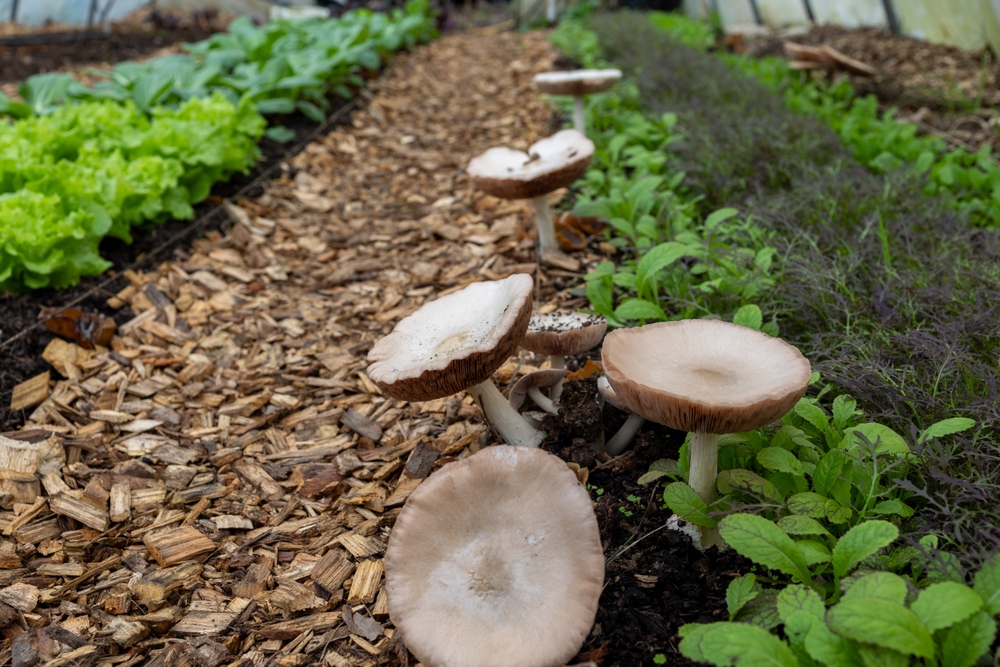
Mushrooms appearing around raised beds can look like tiny garden intruders, especially when a neat vegetable patch suddenly develops a crop of little caps overnight. In most cases, though, those mushrooms point to something much less alarming: moist conditions and fungi breaking down organic material in the soil or mulch. The mushroom itself represents only the visible fruiting body of a much larger fungal network that can live underground.
That distinction matters because a mushroom near a tomato plant does not automatically mean the tomato has a fungal disease. Many fungi in garden soil perform the useful job of decomposing dead leaves, roots, wood, compost and other organic material. Raised beds simply create an especially convenient neighborhood for that activity because gardeners often fill them with rich organic materials and then keep them consistently watered.
Moisture Turns the Mushroom Switch On
Rain or regular irrigation often provides the trigger for mushrooms to make an appearance. Fungi can live quietly in soil and organic matter for long periods, but when conditions become sufficiently moist, they may produce fruiting bodies above the surface to release spores. That explains the classic garden surprise: nothing unusual appears on Monday, a wet stretch rolls through, and by Wednesday the bed looks like it hired a miniature mushroom crew.
Raised beds can hold moisture particularly well when gardeners use generous amounts of compost, leaf material or organic mulch. Wood chips and bark also retain moisture while fungi break down their carbon-rich materials, making mulched areas especially inviting. Mushrooms may therefore appear along the outside edge of a bed, through the mulch, or in nearby soil without having anything to do with the health of the vegetables growing inside.
Compost and Mulch May Be the Culprits
A raised bed packed with compost creates a buffet for decomposer fungi. Those fungi feed on dead and decaying organic material, including pieces of wood, roots, leaves and other plant residues, while their underground mycelium spreads through the material. In other words, the mushrooms often indicate that the soil ecosystem has plenty of material for fungi to process rather than announcing an emergency for the plants.
Wood mulch can produce the same effect because fungi naturally colonize and decompose woody material. The effect becomes particularly noticeable after rain, when the mulch stays damp and fungal fruiting bodies emerge. Even old wooden bed boards, stakes and buried woody debris can provide food for certain fungi, so the source may sit below the surface rather than directly beside the mushroom.
Mushrooms Usually Do Not Mean Sick Vegetables
This is where gardeners can save themselves a lot of unnecessary panic. Many common mushrooms and other fungi that appear in mulch or soil feed on dead organic matter rather than living plant tissue, so they do not attack healthy vegetable roots simply because they happen to grow nearby. Penn State Extension notes that several common mulch fungi function as decomposers and do not harm landscape plants.
The important trick involves looking at the plant rather than treating the mushroom as the diagnosis. A tomato with wilting leaves, root damage, stem lesions or unusual discoloration deserves attention for those symptoms, while a healthy tomato surrounded by a few mushrooms usually does not need a fungal treatment. Fungicides also will not solve a mushroom problem caused by decomposing mulch or organic matter because these fungi perform a different job from pathogens that infect living plant tissue.
Should Those Mushrooms Stay or Go?
If mushrooms appear in a vegetable bed and nobody plans to eat them, leaving them alone usually works perfectly well. The fruiting bodies will eventually disappear, while the fungal network continues its work below the surface. Gardeners who dislike the appearance can knock the mushrooms over, pull them out with a gloved hand or remove them with a small trowel and discard them.
One rule deserves special attention: never treat an unknown mushroom as edible simply because it grows in familiar garden soil. Some mushrooms can cause poisoning, and reliable identification requires more than matching a photograph on a phone to a picture online. Keep children and pets from eating unfamiliar mushrooms, and wash hands after handling them if necessary.
When Mushrooms Signal a Garden Habit Worth Changing
Frequent mushrooms can prompt a closer look at watering practices. If the soil remains soggy or the bed receives water long after it needs it, reducing irrigation can make the surface less favorable for mushroom formation while also improving conditions around plant roots. Morning watering and directing water toward the soil rather than repeatedly wetting foliage can also help keep the garden environment drier.
Drainage deserves a look, too, particularly when mushrooms repeatedly appear in one persistently damp section of a raised bed. Check whether water sits after rain, whether a downspout empties nearby, or whether compacted soil beneath the bed slows drainage. Healthy soil needs both water and air, so the goal should not involve making a raised bed bone-dry, but rather avoiding conditions where water hangs around indefinitely.
The Mushroom May Actually Be a Soil Clue
A sudden flush of mushrooms often tells a surprisingly useful story about what happens below the surface. Moisture has arrived, organic material remains available, and fungi have enough energy to produce their temporary above-ground structures. That can make the mushrooms less of a villain and more of a tiny signpost pointing toward the activity inside a living soil ecosystem.
The best response usually involves observation rather than reaching immediately for a chemical treatment. Look at the mulch, check the moisture level, inspect the drainage and examine the plants themselves for actual signs of disease. If everything else looks healthy, those little mushrooms may simply be doing the unglamorous housekeeping that keeps organic matter moving through the garden.
Let the Tiny Caps Tell Their Story
Mushrooms around a raised bed usually come from a simple combination of moisture, organic material and fungi already living in the soil or mulch. They often appear after wet weather or heavy irrigation because those conditions encourage fungi to produce their visible fruiting bodies. Rather than automatically treating them as a problem, gardeners can use their arrival as a cue to check moisture and drainage while keeping an eye on the actual plants.
Have mushrooms started popping up around your raised beds, and did you leave them alone or remove them?
You May Also Like…
The Countertop Mushroom Kit vs. DIY: Which Saves You More Money?
Why Mushrooms Suddenly Appear in Lawns
Pet‑Friendly Gardening: Non‑Toxic Plants and Shady Spots Make Your Yard Safe for Fido
Why More Americans Are Creating “No-Mow” Yards
Why Morning Fog Can Boost Garden Fungi

Brandon Marcus is a staff writer for FrugalGardening.com at District Media, Inc., where he delivers practical gardening advice with a relatable, no-nonsense style. An avid amateur gardener, he holds a BA degree and with over ten years of professional writing experience, he is also an award-winning published author whose first book, Questions For Deep Thinkers, was released by Adams Media. His work has appeared in major publications including Fandom.com, CHUD.com, TheColdWire.com, and Fansided.com.
Leave a Reply