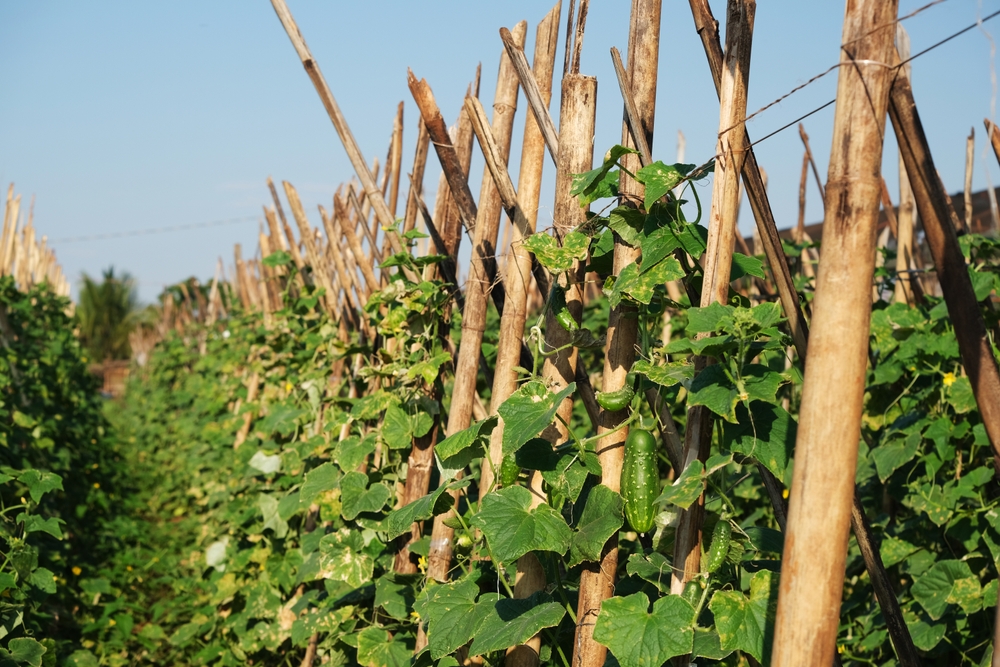
Bamboo stakes rarely deserve a one-season retirement. Before tossing a bundle into the shed until next spring, gardeners can put those slender poles to work supporting plants, protecting seedlings, organizing garden spaces, and even helping with small outdoor projects.
That matters because a bamboo stake can do far more than prop up a tomato. Its lightweight structure makes it handy for temporary supports, while its narrow shape slips neatly into containers, raised beds, and crowded planting areas. A few stakes and some garden twine can turn into a surprisingly useful little toolkit, especially when the garden starts throwing problems that a hardware-store run could solve for a few dollars more.
1. Turn Bamboo Stakes Into a Simple Trellis
Climbing plants make bamboo stakes particularly useful after the main growing season ends. Push several stakes firmly into the soil and connect them with garden twine to create a simple framework for peas, cucumbers, beans, or smaller flowering vines.
The key lies in matching the structure to the plant rather than expecting a few skinny poles to carry the weight of a giant vine. Place stakes close enough together to give stems something to grab, and anchor the bottom ends deeply enough to resist wobbling when foliage catches the wind. A teepee arrangement works nicely for beans, while parallel stakes with horizontal twine create a better climbing surface for cucumbers and peas. Check the supports occasionally because growing stems can pull lightweight stakes sideways as the season progresses. When the crop finishes, cut away the twine and lift the bamboo carefully so the stakes remain ready for another garden job.
2. Make a Temporary Barrier for Seedlings
Freshly planted seedlings often attract curious pets, clumsy feet, and enthusiastic garden visitors of the four-legged variety. Bamboo stakes can create a quick visual barrier around vulnerable plants without building a permanent fence.
Space several stakes around the planting area, then connect them with twine, soft garden tape, or another plant-safe material. The barrier will not stop a determined rabbit or other persistent animal, so gardeners should choose sturdier fencing when wildlife pressure demands it. However, the simple outline can keep people from accidentally stepping on tiny plants and can discourage pets from wandering through freshly prepared beds. It also gives gardeners an easy way to mark newly planted areas when mulch, bare soil, and small seedlings all look remarkably similar from a distance. Remove the barrier once the plants grow large enough to stand out or once the garden no longer needs the reminder.
3. Give Top-Heavy Flowers Some Backup
Flowers such as dahlias, delphiniums, peonies, and tall lilies can develop a serious case of garden flop when heavy blooms meet wind or rain. A bamboo stake can provide discreet support before stems bend far enough to become difficult to straighten.
Choose a stake that reaches high enough to support the plant without towering awkwardly above it. Push the stake into the soil beside the plant rather than directly through the root crown, then attach the stem loosely with soft ties. Leave enough room for the stem to move and expand because a tight knot can rub or constrict growing tissue. For plants with several stems, gardeners can arrange several stakes around the clump and connect them with twine to create a subtle support ring. Install supports early, before a spectacular flower display turns into a botanical yard sale after one windy afternoon.
4. Create a Handy Container Plant Support
Container gardeners can squeeze plenty of extra mileage from bamboo stakes. A single stake can support a tomato, pepper, young tree, climbing flower, or houseplant that needs a little directional help.
Insert the stake near the edge of the container, taking care not to spear the main root mass or damage the plant’s crown. Attach the stem loosely and adjust the tie as the plant grows so the support guides the plant instead of forcing it into an unnatural position. Several short stakes can also create a small framework for a patio cucumber or compact climbing plant. Containers often dry and warm faster than garden beds, so check the stake occasionally because repeated watering can loosen the surrounding potting mix. If the stake starts leaning, reposition it promptly rather than waiting for the plant to follow it toward the floor.
5. Mark Plants, Rows, and Garden Boundaries
Bamboo stakes make excellent garden markers because gardeners can see them from across a bed. Add a weather-resistant label, tie a plant tag near the top, or simply use different stake positions to identify rows and planting areas.
This trick proves especially useful when dormant perennials disappear beneath seasonal growth or when several varieties look nearly identical early in the season. A stake can also mark the location of bulbs, newly planted seeds, irrigation lines, or an area that needs special attention. Keep labels legible and secure because rain, wind, and repeated watering can turn a carefully labeled garden into a mystery plot surprisingly quickly. Avoid placing stakes where lawn equipment or foot traffic can catch them. Once the garden no longer needs the markers, pull them, clean off soil, and store them somewhere dry.
6. Build a Quick Garden Cleanup Framework
Bamboo stakes can even help with chores that have nothing to do with supporting living plants. Gardeners can arrange several stakes over a tarp or compost area to create a lightweight framework for drying washed pots, holding small bundles of plant material, or keeping garden twine organized.
They also work well for making a temporary rack for drying herbs, provided gardeners keep the setup clean and use materials suitable for food contact. Another simple trick involves tying several stakes together to create a loose bundle for carrying lightweight cut stems or gathered garden debris. Bamboo does not replace a sturdy rack, fence, or structural lumber, so keep these projects temporary and lightweight. Inspect older stakes before reuse and discard any that show serious splitting, mold, sharp splinters, or structural weakness. A quick inspection takes seconds and prevents a useful garden helper from turning into an annoying hand injury.
Give Those Stakes One More Garden Season
Bamboo stakes earn their keep because gardeners can repurpose them again and again without demanding much space or complicated equipment. A few can become trellises, flower supports, plant markers, seedling barriers, container guides, or temporary garden frameworks depending on what the yard needs that day.
Before storing them, brush away soil and plant debris, let the stakes dry thoroughly, and keep them somewhere protected from prolonged moisture. Avoid storing damp bamboo in a tightly packed pile because moisture can encourage deterioration and mold. Keep stakes off the ground when possible, and inspect them before each new season for cracks, soft spots, or splintering. A little care can keep a useful bundle ready for the next gardening problem that wanders through the gate.
Which of these bamboo-stake ideas would earn a permanent spot in your garden toolkit?
You May Also Like…
5 Ways to Stabilize Pepper Plants Loaded With Fruit
Why Are More Gardeners Designing Around Evening Use?
The Backyard Garden Design Trend Everyone Is Copying in 2026
5 Budget Vegetable Patch Designs for Small Yards
Build a Trellis on the Cheap: 3 DIY Supports for Your Climbing Plants

Brandon Marcus is a staff writer for FrugalGardening.com at District Media, Inc., where he delivers practical gardening advice with a relatable, no-nonsense style. An avid amateur gardener, he holds a BA degree and with over ten years of professional writing experience, he is also an award-winning published author whose first book, Questions For Deep Thinkers, was released by Adams Media. His work has appeared in major publications including Fandom.com, CHUD.com, TheColdWire.com, and Fansided.com.
Leave a Reply