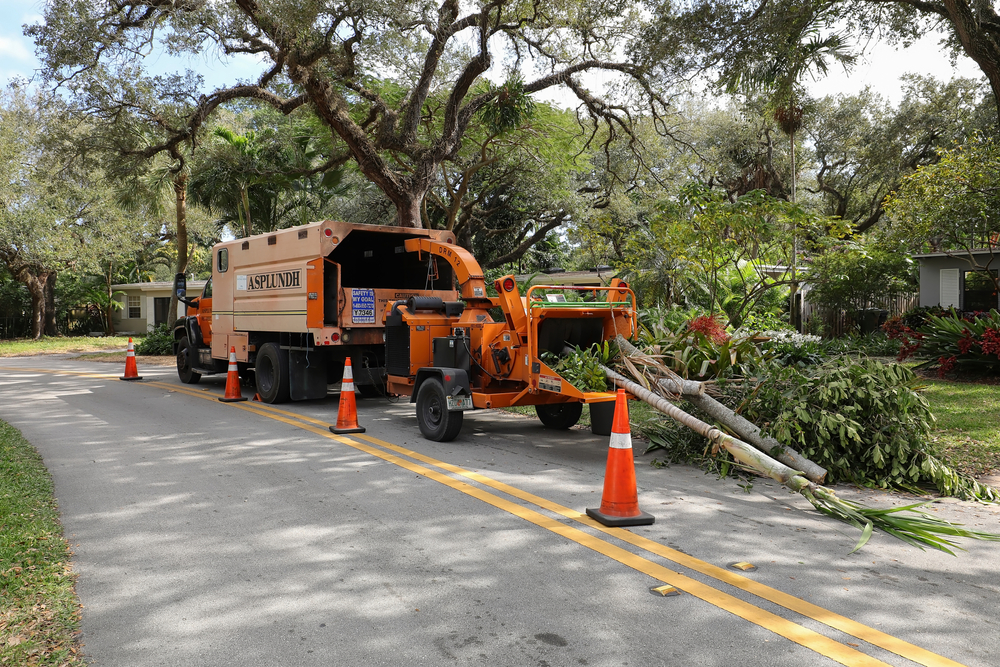
That towering tree in your backyard might be beautiful, but when branches start hanging over your roof or the trunk begins leaning toward your house, removing it can suddenly feel urgent. Unfortunately, hiring the wrong tree removal company could leave you facing unexpected charges, property damage, or even liability for an injured worker.
Tree removal isn’t always a simple landscaping project, especially when large trees are located near homes, fences, vehicles, or power lines.
The International Society of Arboriculture recommends working with qualified tree care professionals who understand proper removal techniques, safety procedures, and tree health.
Before signing a contract or handing over a deposit, homeowners should understand exactly what they’re paying for and what protections are in place.
Here are five important questions to ask before hiring a tree removal company.
1. Are You Properly Insured, and Can You Prove It?
One of the most important questions to ask any tree removal company is whether it carries appropriate liability insurance and workers’ compensation coverage. Tree removal involves heavy equipment, falling branches, chainsaws, and workers operating at significant heights, making accidents a serious concern. If an uninsured contractor damages your roof or an injured worker files a claim, you could face complicated financial and legal consequences depending on state law and your insurance coverage. Ask the company for current certificates of insurance and verify coverage directly with the insurance provider rather than relying on verbal assurances. Always ask for proof of insurance before allowing tree care work to begin.
2. Is Removing the Entire Tree Really Necessary?
Before agreeing to an expensive removal, ask whether the tree actually needs to come down or whether professional pruning could address the problem. A tree with overgrown branches isn’t necessarily unhealthy, and some structural concerns can be managed through appropriate maintenance. The Arbor Day Foundation emphasizes the importance of proper tree care, including pruning practices that support long-term tree health. Consider hiring an ISA Certified Arborist to evaluate the tree’s condition, particularly if the person recommending removal also stands to profit from the job. While severely damaged, dying, or structurally unstable trees may require removal, getting an independent assessment can help homeowners avoid paying to eliminate a tree that could safely remain.
3. What Exactly Is Included in the Quoted Price?
A low estimate from a tree removal company doesn’t necessarily mean you’re getting the best deal. Some contractors quote only the cost of cutting down the tree, while stump grinding, branch removal, log hauling, and cleanup may carry additional charges. Imagine receiving a $900 estimate and discovering afterward that removing the remaining stump and hauling away large sections of wood will cost several hundred dollars more. Ask for a written, itemized estimate that clearly identifies every service included, any exclusions, and how unexpected complications will be handled. Comparing detailed estimates from multiple qualified contractors can help you identify meaningful price differences without sacrificing safety or workmanship.
4. How Will You Protect My House and Property?
Tree removal becomes considerably more complicated when large branches extend over roofs, garages, fences, or neighboring properties. Ask the contractor to explain how workers plan to lower heavy limbs, protect nearby structures, and prevent equipment from damaging lawns or underground utilities. Professional tree care companies may use ropes, rigging equipment, aerial lifts, or cranes depending on the tree’s size and location. The Occupational Safety and Health Administration identifies falling objects, power lines, chainsaws, and falls as significant hazards associated with tree care operations. A reputable tree removal company should be willing to discuss its safety procedures and explain whether additional precautions are necessary for your particular property.
5. Do I Need a Permit, and Who Handles the Paperwork?
Many homeowners assume they can remove any tree growing on their property, but local ordinances and homeowners association rules may say otherwise. Some communities protect certain tree species, regulate the removal of large mature trees, or require permits before work begins. Removing a protected tree without proper authorization could result in fines, replacement requirements, or other expenses that exceed the original removal cost. Ask the contractor whether local permits are required, who will obtain them, and whether any additional inspections or approvals are necessary. Because regulations vary considerably by location, homeowners should confirm requirements directly with their local government or HOA rather than relying exclusively on a contractor’s assurances.
Don’t Overlook the Warning Signs of a Questionable Contractor
Beyond asking the right questions, homeowners should pay attention to how a tree removal company conducts business before accepting an estimate. Be cautious of contractors who pressure you to make an immediate decision, refuse to provide insurance documentation, or insist on receiving the entire payment before starting work. The Federal Trade Commission warns that home improvement scammers sometimes use high-pressure sales tactics, unusually low prices, or demands for upfront payment to exploit homeowners. After major storms, these risks can increase as unfamiliar contractors approach residents dealing with fallen trees and property damage. If a company refuses to provide a written agreement or verifiable business information, consider contacting another qualified professional.
Could Your Homeowners Insurance Help Cover the Cost?
Before paying out of pocket, check whether your homeowners insurance policy provides any coverage for tree removal. The Insurance Information Institute explains that homeowners insurance generally covers damage when a tree falls on an insured structure because of a covered event, subject to policy terms and deductibles. However, removing a healthy tree simply because it’s too large, inconvenient, or potentially hazardous is usually considered routine property maintenance rather than a covered insurance claim. Coverage for removing a fallen tree that hasn’t damaged a structure may also be limited or unavailable, depending on the policy and circumstances. Contact your insurance company before authorizing expensive work if you believe a storm or other covered event caused the damage, but don’t delay necessary emergency safety measures.
A Little Research Could Prevent a Very Expensive Mistake
Hiring a tree removal company shouldn’t come down to choosing whoever offers the lowest price or promises the fastest service. Insurance coverage, professional qualifications, detailed estimates, safety procedures, and local permit requirements all deserve attention before work begins. Homeowners should also consider whether the tree truly needs removal and whether their insurance policy might help with certain storm-related expenses. Taking time to compare contractors and understand the agreement can reduce the risk of surprise charges, property damage, and costly disputes.
Have you ever hired someone to remove a tree, and did the final bill match the original estimate, or were there unexpected costs? Share your experience in the comments.
What to Read Next
Stop Planting These 7 Trees So Close to Your House
That $20 Tree From the Garden Center Could Become a $2,000 Problem
Your Neighbor’s Tree Is Destroying Your Yard — Who Actually Has to Pay?
Leave a Reply