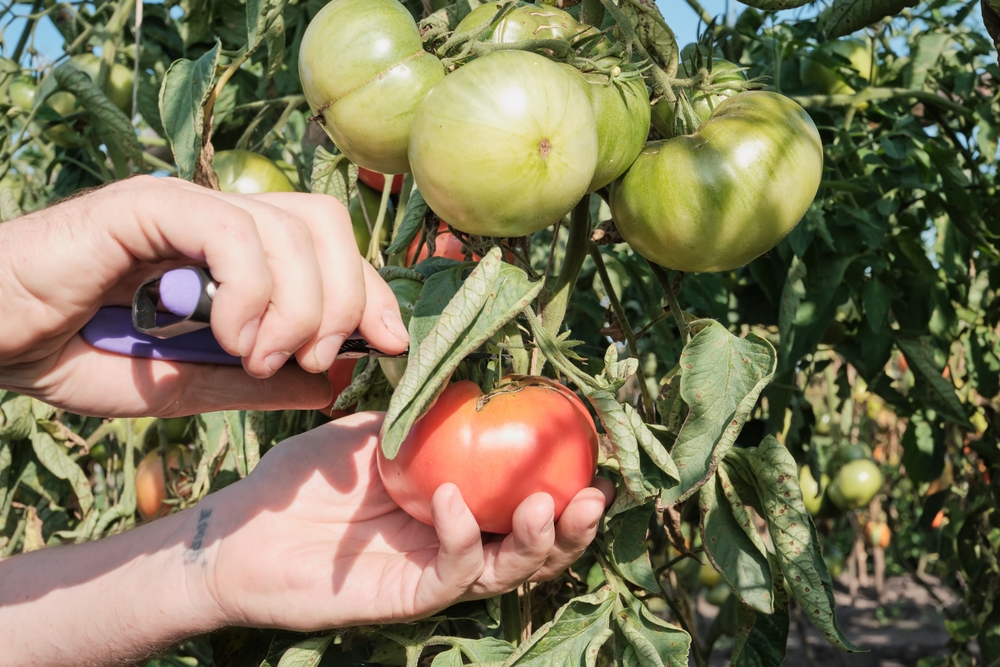
Volunteer tomatoes have a funny habit of showing up without an invitation, planting themselves in the garden and then acting as though they own the place. By late summer, that once-cute surprise can turn into a serious question: should the plant keep growing, or should it get pulled before it becomes a tangled mess? The answer depends on the plant’s health, the amount of fruit it carries, and how much growing season remains.
A volunteer tomato that still looks vigorous and carries flowers or young fruit can deserve some extra time. However, a plant covered in disease, struggling under cool nights, or producing nothing but tiny green tomatoes may have reached the point of diminishing returns. A little gardening judgment can save a lot of work, especially when the calendar starts marching toward frost.
Give a Healthy Volunteer Tomato a Chance
A healthy volunteer tomato can keep producing surprisingly late when warm weather continues, and the plant has plenty of sunlight, moisture, and nutrients. Look at the foliage first, because healthy leaves give the plant the energy it needs to keep developing flowers and fruit. A plant with green foliage, firm stems, active flowers, and steadily enlarging tomatoes still has something going for it. Volunteer plants often start later than intentionally planted tomatoes, so their fruit may simply need more time to catch up. That delay does not automatically make the plant useless.
The real question involves the fruit, not just the size of the plant, because a gigantic tomato jungle can produce very little worth harvesting. Check for tomatoes that have reached full size even if they remain green, along with flowers that have a reasonable chance to develop before cold weather arrives. If the plant carries only new flowers and pea-sized fruit while the season rapidly cools, patience may not pay off. A volunteer tomato also may have unpredictable characteristics if it grew from a hybrid tomato, so the fruit might look or taste different from the tomato that originally dropped the seed. Sometimes that surprise turns into a garden favorite, and sometimes it produces a tomato that tastes like a disappointing water balloon.
Know When Cold Weather Changes the Math
Tomatoes love warmth, and they slow down dramatically when temperatures drop, particularly during cool nights. A late-season volunteer plant may look perfectly healthy while its fruit development crawls along because the weather no longer provides the conditions tomatoes prefer. Frost creates an even clearer deadline because tomato plants cannot tolerate freezing temperatures. If frost threatens and the plant carries mature green fruit, harvesting those tomatoes can make more sense than gambling on another warm spell.
Green tomatoes can continue ripening after harvest when gardeners keep them at room temperature away from direct sunlight. Place them in a single layer or loosely wrap individual fruit in paper if desired, then check them regularly for soft spots or decay. Very immature fruit may not ripen well, so prioritize tomatoes that have reached their mature size and show signs that they have begun changing internally. Gardeners can also leave healthy fruit on the vine when the forecast remains safely above freezing and temperatures still support ripening. Once frost enters the picture, however, the garden stops playing by tomato rules and starts playing by winter rules.
Disease Can Make the Decision Much Easier
Late summer often exposes tomato diseases that hide earlier in the season, and volunteer plants do not receive a magical exemption from fungal and bacterial problems. Yellowing lower leaves alone do not necessarily mean the plant has a serious disease, because older tomato foliage naturally declines as the season progresses. Dark lesions, rapidly spreading leaf spots, severe blight symptoms, collapsing stems, or widespread browning deserve much more attention. Remove badly diseased plants rather than keeping them around simply because they still contain a few tomatoes. Leaving a heavily infected plant standing can create more garden cleanup later and may allow disease-causing organisms to remain in garden debris.
Sanitation matters particularly when tomato plants come from fallen fruit, because volunteers often appear exactly where last season’s tomatoes dropped. Pull spent plants after harvest and remove fallen fruit and obviously diseased leaves from the growing area. Do not assume a backyard compost pile will destroy every plant pathogen, because many home piles never reach or maintain temperatures high enough to reliably eliminate them. Healthy tomato debris can make useful compost material when handled appropriately, but severely diseased material deserves more caution. A volunteer tomato that produces a good crop while remaining healthy can earn its garden space, while a diseased plant earns a trip out of the garden.
Make the Call Based on Fruit, Weather, and Health
Late-season tomato decisions become much easier when three things get equal attention: the plant’s health, the condition of its fruit, and the weather forecast. A vigorous plant loaded with full-sized green tomatoes deserves protection and patience when several warm weeks remain. A sprawling plant with disease and almost no usable fruit usually does not justify continued care. Gardeners can also harvest mature green tomatoes before an approaching frost rather than sacrificing an entire crop to one cold night. That simple move can turn an uncertain volunteer into a surprisingly productive bonus crop.
There is also nothing wrong with pulling a healthy volunteer plant when the garden needs the space for something else. Removing an unproductive tomato opens room for fall crops, improves airflow, and makes garden cleanup considerably less chaotic. If the plant produces excellent fruit, saving a few seeds can provide another volunteer experiment next season, although hybrid offspring may not reproduce the original tomato exactly.
The best late-season garden decisions rarely come from following a rigid calendar because weather varies from year to year. Instead, inspect the plant, inspect the fruit, check the forecast, and then decide whether the tomato has earned another round.
Let the Tomato Earn Its Keep
A volunteer tomato does not need special treatment simply because it appeared for free, but it also does not deserve an early eviction just because the calendar says summer is winding down. Keep a healthy, productive plant growing while conditions remain favorable, especially when it carries substantial fruit that can still mature. Harvest mature green tomatoes before frost threatens, and remove plants that develop serious disease or stop producing anything worthwhile. That approach keeps the garden productive without turning fall cleanup into a wrestling match with an enormous tomato vine.
What has the best volunteer tomato surprise produced in your garden, and did you let it keep growing until frost or pull it earlier?
You May Also Like…
What Is the Best Use for Tomato Suckers You Remove?
Why Do Tomatoes Develop Yellow Shoulders Near the Stem?
8 Fruits You Should Never Plant Too Close Together
The Fruits and Nuts You Can Still Harvest This Month
7 Things That Secretly Stress Tomato Plants

Brandon Marcus is a staff writer for FrugalGardening.com at District Media, Inc., where he delivers practical gardening advice with a relatable, no-nonsense style. An avid amateur gardener, he holds a BA degree and with over ten years of professional writing experience, he is also an award-winning published author whose first book, Questions For Deep Thinkers, was released by Adams Media. His work has appeared in major publications including Fandom.com, CHUD.com, TheColdWire.com, and Fansided.com.
Leave a Reply