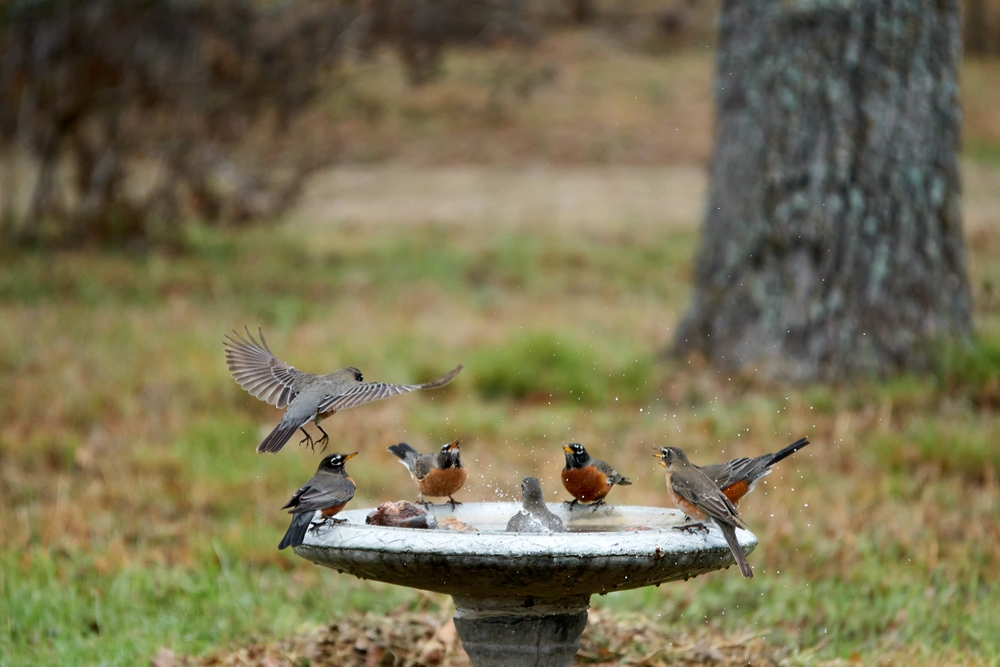
A clean birdbath gives backyard birds something far more valuable than a fancy garden accessory: dependable fresh water. The best cleaning method removes algae, droppings, grime, and potentially harmful germs without leaving behind soap, chemicals, or other residues that birds can ingest or spread through their feathers.
The trick involves less chemistry and more consistency. A birdbath does not need to sparkle like a hotel swimming pool, but it does need regular attention, especially during hot weather when water can turn murky surprisingly fast. A few minutes with a scrub brush, clean water, and the right cleaning solution can keep the little watering hole safe without turning the garden into a laboratory.
Start With the Simplest Cleaning Method
For routine cleaning, empty the birdbath completely, rinse away loose debris, and scrub the basin with a stiff brush and fresh water. That approach works particularly well when the basin contains a little algae, dirt, leaves, or the occasional contribution from an overconfident bird who apparently considers the bath a bathroom, too. The National Audubon Society recommends cleaning birdbaths with a nine-to-one mixture of water and vinegar, followed by a thorough rinse, while other bird-care guidance recommends regular scrubbing with plain water when the basin simply needs routine maintenance.
Give extra attention to corners, textured surfaces, water lines, and any slimy film that clings to the basin. A dedicated brush works better than a kitchen sponge because the brush can reach stubborn buildup without requiring aggressive chemicals. After scrubbing, rinse the entire basin thoroughly and refill it with fresh water, rather than leaving a little cleaning solution behind and hoping dilution will handle the rest. Birds drink from and bathe in this water, so cleanliness matters in a very direct way.
Vinegar Has a Place, but Rinsing Matters
A diluted vinegar solution offers a useful option for routine birdbath cleaning because it helps loosen mineral deposits and organic buildup without introducing detergent into the basin. Garden professionals recommend nine parts water to one part vinegar for cleaning birdbaths and advise against synthetic soaps and cleansers because residues can interfere with birds’ feathers. That makes vinegar a practical choice when the basin looks grimy but does not have a serious contamination problem.
The important step comes after the scrubbing: rinse, rinse again, then rinse once more if necessary. The goal involves removing the loosened grime and any remaining vinegar before fresh water goes back into the basin. Vinegar should not become an excuse to skip mechanical cleaning, either, because the brush does much of the heavy lifting. Think of the solution as a helper, not a magical birdbath potion.
When Disinfection Makes Sense
Routine grime does not always require aggressive disinfection, but a more serious situation calls for more caution. If a birdbath has heavy contamination from droppings, or if local wildlife authorities recommend extra disease-control measures because of illness among wild birds, cleaning needs to move beyond the ordinary scrub-and-rinse routine. The CDC currently advises cleaning birdbaths at least weekly or whenever they become visibly dirty, and it recommends removing a birdbath temporarily if a sick or dead bird appears in the yard.
For disinfection, the CDC provides a nine-parts-water-to-one-part-bleach method for bird-feeding equipment, with a soak of at least 10 minutes followed by a thorough water rinse and complete drying. Never mix bleach with vinegar or another cleaner, because combining cleaning chemicals can create dangerous fumes. Wear disposable gloves while handling a dirty birdbath, clean it outdoors when practical, and wash hands thoroughly afterward.
Fresh Water Matters More Than Fancy Products
A sparkling basin cannot compensate for stale water sitting around for days. Birds encounter bacteria, algae, mosquito larvae, feathers, leaves, and droppings in outdoor water sources, so frequent water changes are one of the easiest ways to keep conditions cleaner. In hot weather, replacing the water more frequently makes sense because warmth accelerates algae and microbial growth.
Placement also affects how quickly the bath becomes filthy. Keep the basin near protective vegetation so birds can retreat quickly, but avoid putting it directly beneath trees, feeders, or dense branches where leaves, seed hulls, and droppings can rain into the water. Moving water can also discourage mosquitoes from treating the basin like prime real estate, so a small fountain or drip feature can make the bath more attractive while keeping the surface moving. A shallow basin with a rough or textured bottom also gives smaller birds better footing than a slick, deep bowl.
Give Wildlife a Clean Bath Without Overcleaning the Yard
The goal involves creating a clean water source, not sterilizing every molecule in the garden. Birds benefit from natural outdoor habitat, and gardeners should avoid turning a birdbath into a constant chemical project when a brush and fresh water can handle routine maintenance. At the same time, ignoring visible algae, fouled water, or accumulating droppings defeats the entire purpose of providing a water source in the first place. Regular attention strikes the useful middle ground.
A simple routine works beautifully: dump the old water, scrub the basin, rinse it thoroughly, and refill it with fresh water. Use diluted vinegar for stubborn routine buildup, and reserve stronger disinfection measures for situations that actually call for them. If a sick or dead bird appears nearby, avoid touching it and follow guidance from the appropriate wildlife or public-health authorities rather than playing backyard veterinarian. The cleanest birdbath is not necessarily the one with the strongest cleaner; it is the one that gets emptied, scrubbed, rinsed, and refilled before the water turns into a miniature swamp.
The Birdbath Rule Worth Remembering
The safest birdbath routine remains pleasantly simple: clean regularly, scrub away buildup, rinse thoroughly, and provide fresh water often. Skip fragranced soaps and unnecessary chemicals, and never combine cleaning products. A little vinegar can help with routine cleaning, while properly diluted bleach can provide disinfection when circumstances warrant it, provided the basin receives a thorough rinse afterward.
That routine protects more than the birds stopping by for a drink. It also reduces the chance that the birdbath becomes a stagnant mosquito nursery or a concentrated gathering place for germs.
Keep the water fresh, keep the basin clean, and let the birds handle the rest of the bathing schedule. What cleaning trick or birdbath routine has worked best in your garden?
You May Also Like…
7 Reasons Small Wildlife Ponds Are Gaining Ground
Can Playing Animal Crossing Inspire Real-Life Frugal Gardening?
What Should You Do When a Raised Bed Sinks Midseason?
7 Low-Cost Ways to Protect Grapes as They Begin to Sweeten
What Is the Cheapest Way to Keep Berries Away From Birds?

Brandon Marcus is a staff writer for FrugalGardening.com at District Media, Inc., where he delivers practical gardening advice with a relatable, no-nonsense style. An avid amateur gardener, he holds a BA degree and with over ten years of professional writing experience, he is also an award-winning published author whose first book, Questions For Deep Thinkers, was released by Adams Media. His work has appeared in major publications including Fandom.com, CHUD.com, TheColdWire.com, and Fansided.com.
Leave a Reply