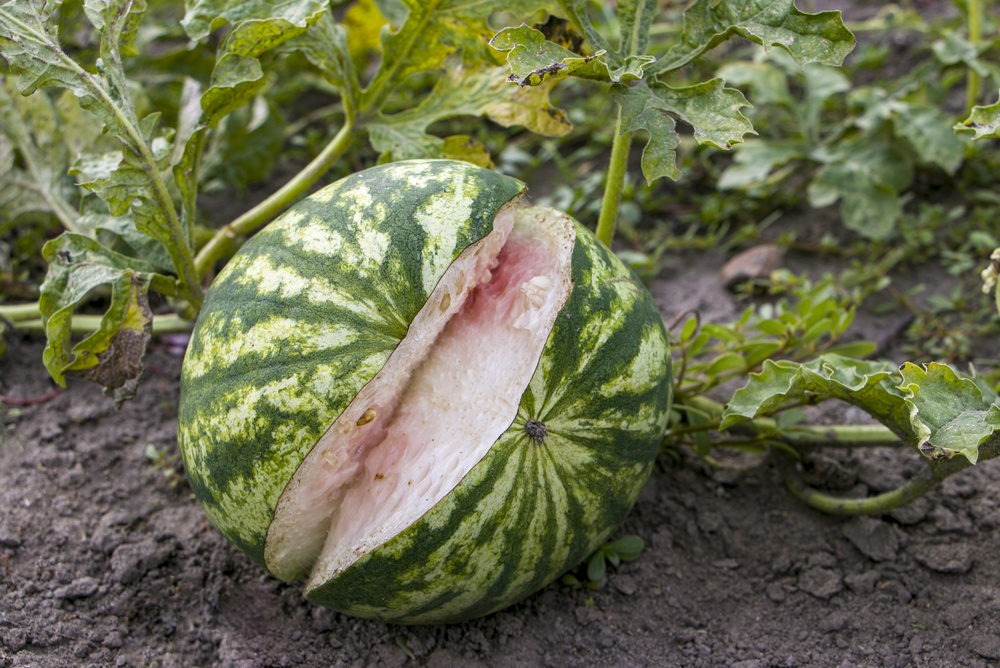
There is nothing more heartbreaking than walking into the garden, spotting a beautiful watermelon ready for picking, and finding a giant crack running through the middle. Watermelon splitting happens because the fruit grows faster than its skin can handle, often after sudden changes in water availability. Knowing why this happens helps gardeners protect their sweet summer harvest.
A watermelon can look perfect one day and turn into a garden mystery the next. The good news is that split melons usually do not signal a failed garden, but they do reveal clues about watering habits, weather patterns, and plant care. A few simple adjustments can help keep those juicy treasures intact until harvest day.
Water Swings Put Pressure on Growing Melons
Watermelons need consistent moisture as they develop, but the plants struggle when conditions shift from extremely dry soil to a sudden flood of water. The fruit stores that extra water quickly, and the inside expands faster than the outer rind can stretch. When the pressure becomes too much, the rind cracks open like a tiny green balloon pushed past its limit.
Gardeners often see this problem after a long dry spell followed by heavy rain or deep watering. The roots absorb a large amount of moisture, the flesh swells, and the tough outer skin cannot always keep pace. A steady watering routine gives the plant a smoother path from small fruit to harvest-ready melon.
The Rind Tells the Story Before the Split Appears
A watermelon’s skin often provides warning signs before a major crack develops. Small hairline fractures, soft spots, or unusual swelling can signal that the fruit faces stress from inconsistent growing conditions. Checking melons regularly helps gardeners catch problems before the damage becomes severe.
Temperature changes also play a role in watermelon splitting because hot days can increase water demand from the plant. When a melon sits in dry soil during intense heat, the plant protects itself by slowing growth. A sudden return to plentiful moisture can restart rapid expansion inside the fruit and create trouble for the rind.
Harvest Timing Matters More Than Many Gardeners Think
Waiting too long to pick a watermelon can increase the chance of splitting, especially when the fruit reaches full size and continues pulling in moisture. Many gardeners watch for signs of ripeness, such as a dried tendril near the stem, a yellowish patch where the melon rests on the soil, and a dull sound when tapped. These clues help determine when the fruit reaches its sweet spot.
A ripe watermelon does not need extra time hanging on the vine to become better. In fact, leaving it too long can turn a perfect harvest into a cracked disappointment after a rainy week. Picking at the right moment protects both the flavor and the appearance of the melon.
Smart Watering Keeps Melons Whole and Healthy
The best defense against watermelon splitting starts with consistent watering habits. Deep watering encourages strong roots, while frequent shallow watering creates uneven moisture levels that can stress the plant. A layer of mulch around the vines also helps the soil hold moisture and reduces dramatic swings.
Gardeners should avoid soaking watermelon plants after the soil dries completely. Instead, regular watering keeps the plant on a predictable schedule and reduces sudden bursts of growth. Drip irrigation or a slow hose soak near the base of the plant can deliver moisture without creating unnecessary stress.
Simple Garden Habits Protect the Summer Harvest
Growing successful watermelons requires more than planting seeds and waiting for a giant green prize. Paying attention to soil moisture, weather patterns, and plant signals gives gardeners a much better chance of bringing home unbroken fruit. Even experienced gardeners learn new lessons when a beautiful melon cracks open unexpectedly.
A split watermelon still offers useful information about what happened in the garden. It may point toward watering changes, earlier harvesting, or closer monitoring during rainy periods. Each season provides another opportunity to fine-tune the process and enjoy better results.
A Crack-Free Watermelon Starts With Consistent Care
Watermelon splitting often happens because the fruit grows quickly while the rind struggles to keep up. Gardeners can reduce the risk by maintaining even soil moisture, watching weather changes, and harvesting at the right time. Those small steps can make the difference between a garden victory and a sticky kitchen cleanup.
The next time a watermelon develops a mysterious crack, the garden has already provided the answer. The fruit simply reacted to changing conditions, and those clues can help create a better harvest next season. A little attention goes a long way when growing these summer favorites.
What tricks have helped keep your watermelons from splitting before harvest? We want to hear your thoughts below.
You May Also Like…
6 Ways to Protect Ripening Fruit From Sudden Splitting
Warm Weather Can Delay Female Flowers on Melons—Gardeners Shouldn’t Panic Yet
Can a Backyard Garden Really Beat Grocery Inflation? We Ran the Numbers
What Is Making Your Zucchini Fruit Shrivel Before Growing?
Why Do Some Melons Stop Setting Fruit During the Hottest Weeks?

Brandon Marcus is a staff writer for FrugalGardening.com at District Media, Inc., where he delivers practical gardening advice with a relatable, no-nonsense style. An avid amateur gardener, he holds a BA degree and with over ten years of professional writing experience, he is also an award-winning published author whose first book, Questions For Deep Thinkers, was released by Adams Media. His work has appeared in major publications including Fandom.com, CHUD.com, TheColdWire.com, and Fansided.com.
Leave a Reply