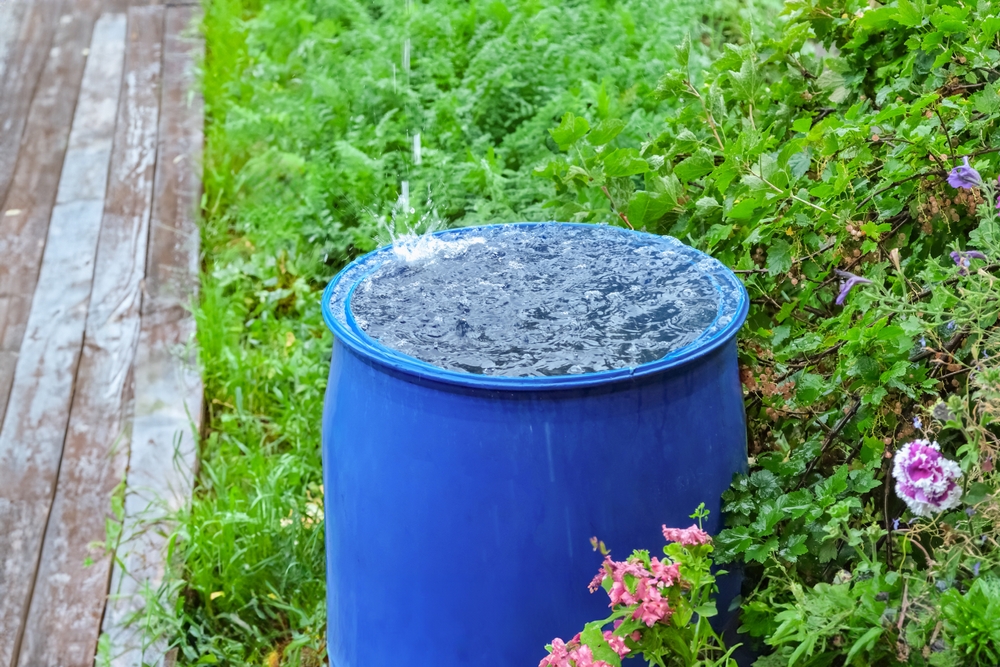
A garden shed roof can quietly collect a surprising amount of free water, but that does not mean the shed needs a full gutter system. With a few clever additions, gardeners can guide roof runoff into barrels, buckets, storage tanks, or even directly toward thirsty garden beds.
The trick involves controlling where the water lands instead of letting every storm turn the ground around the shed into a miniature mud wrestling arena. Some solutions cost almost nothing, while others create a more polished setup that can handle repeated rainfall with less fuss. The best choice depends on the shed roof, the available space, and what happens to the water after it leaves the roof.
1. Let a Rain Chain Do the Directing
A rain chain offers one of the simplest alternatives to traditional downspouts because it gives falling water a path from the roof to the ground. Install the chain at a low point along the roof edge, and incoming water will follow the chain downward instead of scattering across the surrounding soil.
A sturdy bucket, barrel, basin, or decorative catch container can sit underneath the chain to collect the runoff. Choose a container with enough weight or a stable base so a gusty afternoon does not send it rolling across the yard, and make sure the water cannot pool against the shed foundation. Rain chains work especially well on small sheds because they add a useful function without turning the building into a plumbing project.
2. Hang a Collection Tarp Beneath the Roof Edge
A heavy-duty waterproof tarp can create a surprisingly effective rain catcher when a shed lacks gutters. Stretch the tarp beneath the roof edge at a slight angle, secure the upper edge firmly, and position the lower edge over a collection barrel or other sturdy container.
The setup needs enough tension to prevent the tarp from sagging into a giant mosquito-sized swimming pool, and the attachment points need to withstand wind and wet weather. Keep the tarp away from sharp metal edges that could tear it, and empty or cover the collection container when necessary to prevent debris and mosquitoes from turning the water storage area into a nuisance. This approach suits gardeners who want a temporary or inexpensive system rather than a permanent installation.
3. Position a Rain Barrel Where Roof Runoff Naturally Falls
Sometimes the easiest answer involves no roof modification at all. Watch the shed during a decent rainstorm and look for the spots where water naturally pours from the roof edge, then place a rain barrel directly beneath one of those streams.
A barrel with a secure lid and a screened inlet can collect water while keeping leaves, insects, and other debris out, although the roof itself can still contribute dirt and organic material to the runoff. Use an overflow hose or another controlled outlet so a full barrel does not dump water against the shed or create a soggy patch beside the building. Gardeners should also remember that stored rainwater works best for appropriate outdoor uses, such as watering ornamental plants and many garden crops, rather than drinking.
4. Create a Gravel Catchment Zone
Not every rainwater solution needs a container. A deliberately designed gravel area beneath the shed’s roof edge can catch falling water, slow its movement, and encourage infiltration into the surrounding soil instead of allowing runoff to carve little trenches through the garden.
Start with a shallow, gently shaped area and fill it with washed gravel or another suitable drainage material, keeping the finished surface sloped away from the shed. This approach works particularly well when the goal involves watering nearby plantings rather than storing water for later use, especially around beds that appreciate occasional deep soaking. Avoid directing concentrated runoff toward the foundation, pathways, or low spots where standing water could create bigger problems.
5. Build a Simple Roof-Edge Diverter
A flexible sheet of metal, rigid plastic panel, or purpose-made roof diverter can redirect water away from the roof edge and into a collection container without requiring a conventional gutter. Position the diverter so gravity carries water toward one chosen point, then place a barrel, tub, or other collection vessel beneath that outlet.
The important part involves creating a secure slope rather than simply sticking a piece of material under the roof and hoping for the best. Fasten the diverter securely, inspect it after strong weather, and make sure water cannot sneak behind the material and soak the shed wall. A properly positioned diverter can provide a clean, simple collection point while keeping the installation much less elaborate than a full gutter-and-downspout system.
6. Turn the Roof Runoff Into a Rain Garden
A shed can also feed a small rain garden, which transforms runoff into a useful feature instead of something that needs constant collection. Direct water from the roof toward a shallow planting area filled with moisture-tolerant plants, while keeping the garden far enough from the shed foundation to avoid sending excess water toward the building.
Shape the area so water spreads rather than rushes through one narrow channel, and use mulch and suitable soil to help slow the runoff. Choose plants that match the site’s sunlight and moisture conditions because a rain garden should not become a permanent swamp after every storm. This method makes particularly good sense when storage space feels limited and the garden already contains a spot where captured rainfall can soak into the landscape.
Make the Shed Roof Work a Little Harder
A shed does not need a complicated gutter network to contribute water to the garden. Rain chains, barrels, tarps, diverters, gravel catchments, and rain gardens all offer different ways to control runoff, and several methods can work together when the site calls for it.
Start by watching where water naturally falls during rainfall, because the roof itself will reveal the best collection points. Then choose the simplest method that safely moves water where it belongs, and check the setup after heavy storms for leaks, overflowing containers, erosion, or water collecting near the shed. A little planning can turn an overlooked roof into a useful part of the garden’s watering strategy without covering the building in gutters and downspouts.
What gutter-free rainwater collection method would work best around your garden shed?
You May Also Like…
Why Do Watermelons Split Just Before Harvest?
Are Punctured Rain Barrels the Next Low-Cost Irrigation Trend?
Turn Rain Barrels into Low-Tech Irrigation by “Puncturing” Them—Let Water Drip Slowly to Plant Roots
The Gardening Mistake That Can Destroy Plants After Heavy Rain

Brandon Marcus is a staff writer for FrugalGardening.com at District Media, Inc., where he delivers practical gardening advice with a relatable, no-nonsense style. An avid amateur gardener, he holds a BA degree and with over ten years of professional writing experience, he is also an award-winning published author whose first book, Questions For Deep Thinkers, was released by Adams Media. His work has appeared in major publications including Fandom.com, CHUD.com, TheColdWire.com, and Fansided.com.
Leave a Reply