Your basil is still producing beautiful green leaves, the parsley is overflowing its container, and the chives are growing faster than you can use them. Unfortunately, freezing temperatures are approaching, and those fresh herbs won’t last forever. Before you let the final harvest go to waste, there’s a simple way to preserve much of that flavor for winter.
Learning how to freeze fresh herbs can save you money on grocery-store seasonings while making homemade soups, sauces, and casseroles more flavorful. Unlike drying, freezing can preserve more of the fresh taste of certain herbs, particularly basil, parsley, dill, and chives.
According to Penn State Extension, many herbs freeze successfully using ordinary freezer bags, ice cube trays, or small containers. However, choosing the wrong preparation method can leave you with freezer-burned leaves, clumps of herbs, or disappointing results.
Here’s how to preserve your garden harvest properly before cold weather arrives.
Choose Herbs That Freeze Better Than They Dry
Not every culinary herb benefits equally from freezing, so start with varieties that retain their flavor particularly well. Basil, parsley, dill, chives, mint, tarragon, and lemon balm are excellent candidates for freezer preservation. These herbs often lose some of their fresh character when dried, making freezing a useful alternative for home cooks. Rosemary and thyme can also be frozen, although their sturdy leaves generally dry well and may not require freezer space. When deciding how to freeze fresh herbs, consider how you normally use them because frozen leaves become limp after thawing and are generally better suited for cooked dishes than garnishes.
Harvest Herbs Before Their Flavor Begins Declining
The quality of your frozen herbs depends heavily on the condition of the leaves when you harvest them. It is recommended that you harvest herbs in midmorning after the dew has evaporated, but before strong afternoon sunlight reduces their aromatic oils. Choose healthy, vibrant foliage and avoid leaves showing mold, significant insect damage, or deterioration from cold weather. For many herbs, harvesting before flowering provides better flavor because mature flowering plants may develop stronger or more bitter characteristics. If a frost warning is approaching, prioritize collecting tender herbs such as basil rather than waiting until the weather damages your remaining harvest.
Wash and Dry the Leaves Before Freezing
One of the most important steps in learning how to freeze fresh herbs is removing dirt without leaving excessive moisture behind. Gardeners should rinse harvested herbs in clean water and gently pat them dry or use a salad spinner. Remove tough stems, yellowing leaves, and other unwanted material before dividing the herbs into usable portions. Excess surface moisture can cause individually frozen leaves to stick together, making it difficult to remove small quantities later. Handle delicate basil and parsley carefully because crushing or bruising leaves during preparation can reduce their appearance and quality.
Freeze Whole Leaves When You Want Flexible Portions
If you prefer using whole leaves or small sprigs in recipes, freezing them individually is a convenient option. You should spread herb leaves in a single layer on a baking sheet before transferring the frozen pieces into freezer-safe bags. This technique prevents the leaves from immediately freezing into one large clump and allows you to remove smaller amounts when cooking. Work quickly when transferring frozen leaves because partially thawed herbs can stick together again once returned to the freezer. Rosemary and thyme sprigs can also be frozen on their stems, making them convenient additions to slow-cooked dishes and homemade stocks.
Use Ice Cube Trays for Ready-to-Cook Portions
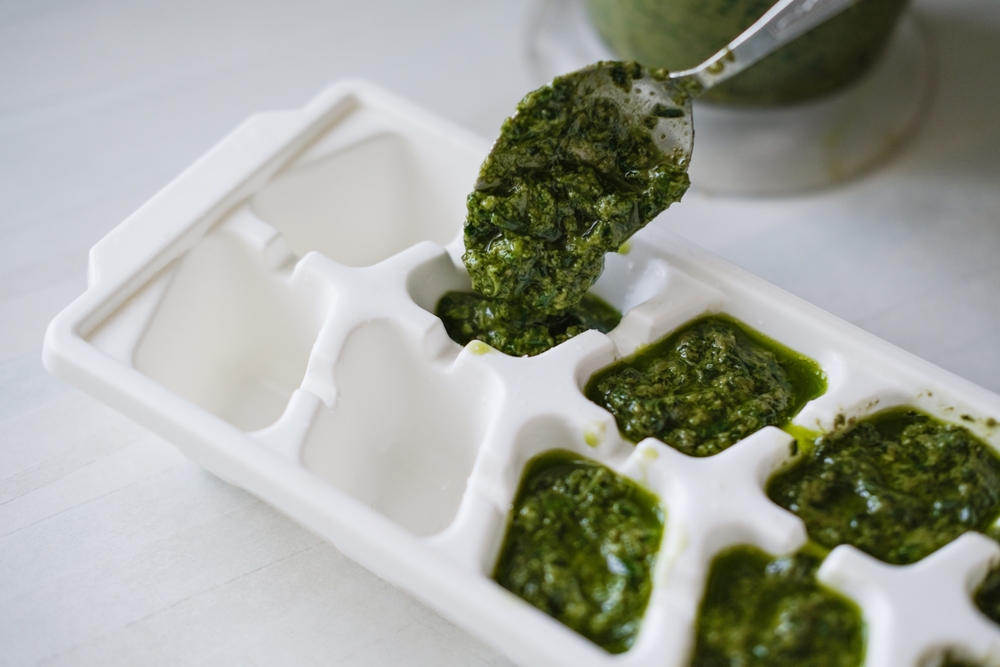
One of the easiest methods for anyone researching how to freeze fresh herbs involves an ordinary ice cube tray. Chopped herbs can be placed in individual compartments with water and frozen into convenient cooking portions. Try adding approximately one tablespoon of chopped parsley, dill, or chives to each compartment before covering the herbs with water. Once the cubes are completely frozen, transfer them into labeled freezer bags so you can reuse the trays for another batch. Drop a frozen herb cube directly into soups, stews, sauces, or other cooked dishes without thawing it first.
Freeze Basil in Oil for Better Color and Convenience
Basil deserves special attention because its delicate leaves can darken and lose their appealing texture during storage. The University of Minnesota Extension recommends combining one-quarter cup of chopped basil with approximately two teaspoons of olive or vegetable oil before freezing small portions. You can spoon the mixture onto a lined baking sheet, freeze it, and transfer the portions into freezer-safe containers. This method is particularly useful when you frequently add basil to pasta sauces, roasted vegetables, or homemade soups. Importantly, herbs mixed with oil must be frozen rather than stored at room temperature because improperly stored herb-oil mixtures can create serious food safety risks.
Try Freezing Herbs Flat to Save Freezer Space
Ice cube trays are convenient, but they aren’t always practical when you’re preserving a large garden harvest. Try spreading chopped herbs mixed with a little oil into a thin layer inside a freezer-safe zipper bag. Remove excess air, seal the bag, and flatten the mixture before placing it on a baking sheet in the freezer. Once frozen, you can break or cut off small pieces as needed instead of thawing an entire container. This space-saving approach works particularly well for gardeners who want to preserve several varieties without filling their freezer with bulky containers.
Label Everything and Protect Herbs From Freezer Burn
Knowing how to freeze fresh herbs also means storing them properly after the initial freezing process. Strongly scented herbs should be packaged carefully because their aromas can transfer to other foods in the freezer. Use freezer-safe containers or bags, remove as much excess air as practical, and label each package with the herb name and freezing date. A freezer maintained at zero degrees Fahrenheit or below helps preserve frozen food quality, although flavor and aroma can gradually decline during extended storage. For the best results, aim to use your frozen herbs within several months, even though properly packaged herbs may remain useful for up to a year.
Don’t Expect Frozen Herbs to Look Fresh Again
One common disappointment occurs when gardeners thaw frozen basil or parsley and discover the leaves have become soft and limp. Freezing causes water inside plant cells to expand, damaging their structure and changing their texture. That doesn’t mean your preservation attempt failed because frozen herbs can still provide excellent flavor in cooked recipes. Add frozen parsley to soup, stir basil into tomato sauce, or sprinkle frozen chives into a warm potato dish near the end of cooking. If you need attractive leaves for fresh salads or garnishes, continue using newly harvested herbs rather than expecting frozen ones to maintain their original appearance.
A Small Freezer Stash Can Stretch Your Garden Budget
Learning how to freeze fresh herbs is an inexpensive way to keep enjoying your garden after the growing season ends. Gardeners should try freezing whole leaves, sprigs, or chopped herbs in water depending on how you plan to use them. By preserving your final harvest in small portions, you can avoid purchasing another package of fresh basil or parsley every time a recipe calls for a tablespoon. Start with the herbs you use most frequently, choose freezer-friendly packaging, and remember that frozen herbs are usually best added directly to cooked dishes.
Do you freeze your garden herbs in ice cube trays, store them whole, or prefer drying them for winter cooking? Share your favorite preservation method in the comments.
What to Read Next
How to Dry Garden Herbs Before the Season Ends
Leave a Reply