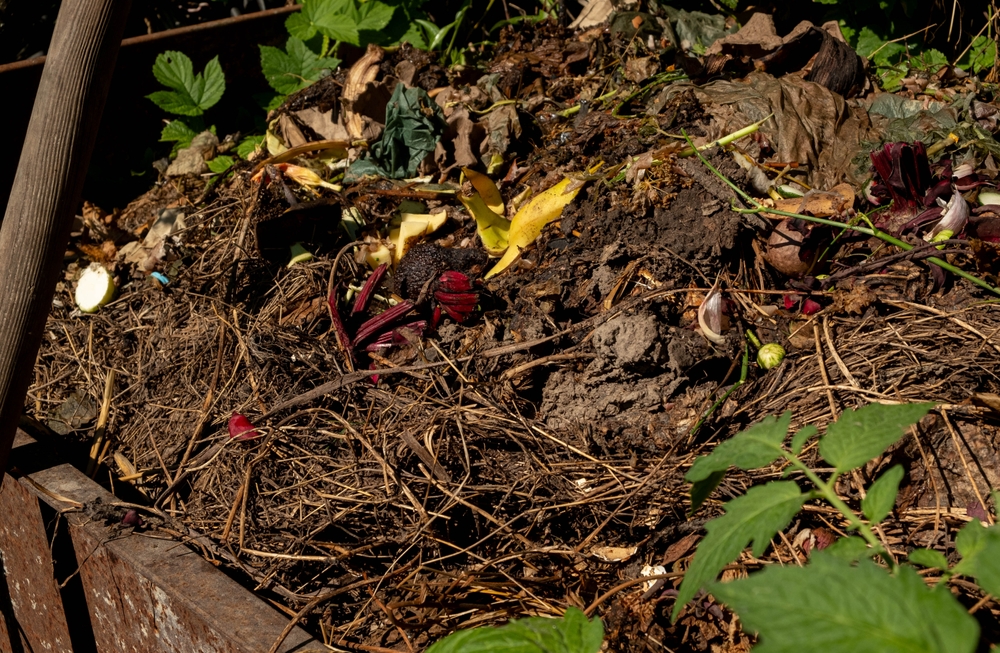
Your kitchen scraps could be the secret to turning all those fallen leaves into rich garden compost, but there’s a catch. Tossing everything into a pile without paying attention to the proportions can leave you with a soggy, smelly mess instead of the nutrient-rich soil amendment you were hoping for.
Fortunately, balancing leaves and kitchen scraps doesn’t require expensive equipment, special additives, or a complicated formula.
According to the Environmental Protection Agency, successful composting depends on combining carbon-rich brown materials with nitrogen-rich green materials while maintaining adequate moisture and airflow.
Getting that balance right can help you turn two common household waste products into something valuable for next year’s garden.
Here’s how to balance compost materials properly and avoid the mistakes that can slow down decomposition.
Why Leaves and Kitchen Scraps Work Better Together
Fallen leaves and kitchen scraps provide different nutrients that microorganisms need to break down organic matter. Dry leaves are considered brown materials because they contain substantial amounts of carbon, which serves as an energy source for decomposers. Fruit and vegetable scraps are considered green materials because they provide nitrogen that supports microbial growth and activity. When you combine the two, microorganisms can break down the ingredients more efficiently than they would in a poorly balanced pile. Understanding this relationship is the first step toward creating compost that improves soil structure, moisture retention, and overall garden health.
Start With the Right Brown-to-Green Ratio
One of the easiest ways to balance compost materials is to follow the EPA’s recommendation of approximately two to three parts brown materials for every one part green materials by volume. For example, if you add one bucket of vegetable scraps, aim to mix in roughly two or three buckets of dry leaves. This doesn’t need to be measured perfectly because different materials contain varying amounts of carbon, nitrogen, and moisture. The goal is to provide enough dry material to absorb excess moisture while still supplying nitrogen for active decomposition. If you’re unsure where to begin, starting with three parts shredded leaves to one part kitchen scraps is a practical approach for most backyard compost piles.
Shred Your Leaves Before Adding Them to the Pile
Whole leaves can take a surprisingly long time to decompose, especially when they become wet and stick together. Shredding them with a lawn mower or leaf shredder creates smaller pieces that microorganisms can break down more easily. The EPA’s composting guidance explains that reducing particle size increases the surface area available for decomposition. However, you don’t want every ingredient ground into fine particles because the pile still needs spaces for oxygen to circulate. A mixture of shredded leaves and slightly coarser material generally provides a better balance between decomposition speed and airflow.
Bury Kitchen Scraps Instead of Leaving Them Exposed
One of the biggest mistakes homeowners make is dumping food scraps directly onto the top of their compost pile. Exposed fruit peels, vegetable scraps, and other food waste can attract flies, rodents, and wildlife looking for an easy meal. NC State Extension recommends burying food scraps within the compost pile to reduce the likelihood of attracting unwanted animals. Create a small opening in the center of your pile, add the scraps, and cover them thoroughly with several inches of leaves or existing compost. This simple habit helps balance compost materials while keeping your composting area cleaner and less attractive to pests.
Know Which Kitchen Scraps Belong in Your Compost
Not everything that comes out of your kitchen should go into a typical backyard compost pile. Fruit peels, vegetable trimmings, coffee grounds, and many other plant-based scraps are generally suitable additions. However, the EPA recommends avoiding meat, dairy products, and greasy foods because they can create odors and attract animals. You should also remove produce stickers, plastic packaging, and other noncompostable materials before adding food waste to the pile. Keeping inappropriate materials out of your compost helps prevent contamination and reduces the likelihood of expensive pest problems around your home.
Check Moisture Before Adding More Ingredients
Even when you balance compost materials correctly, too much or too little moisture can interfere with decomposition. A healthy compost pile should feel similar to a wrung-out sponge, meaning it holds moisture without dripping excessively. A handful of compost should release approximately one or two drops of water when squeezed. If the pile feels soggy, mix in additional dry leaves and turn the ingredients to improve airflow. If the material feels dusty and dry, add a little water while mixing until the moisture becomes more evenly distributed.
Turn the Pile to Prevent Bad Smells
A compost pile that smells like rotten eggs or sour garbage may not be getting enough oxygen. When wet materials become compacted, anaerobic conditions can develop and slow the normal composting process. Try turning compost and adding dry brown materials when unpleasant odors indicate excess moisture or insufficient airflow. Use a garden fork or compost aerator to move material from the outside toward the center, where decomposition is often most active. Turning the pile periodically also helps distribute kitchen scraps and leaves more evenly, preventing concentrated pockets of wet food waste.
Don’t Expect Your Compost to Heat Up During Every Cold Spell
Fall composting can be productive, but dropping temperatures naturally slow microbial activity in many backyard piles. Even a well-balanced mixture of leaves and kitchen scraps may stop heating noticeably when winter weather arrives. Larger piles generally retain heat better than small ones, although moisture, ingredient balance, and insulation also affect decomposition. Actively managed hot compost piles may produce finished compost in several months, while slower cold-composting methods can take a year or longer. Rather than adding unnecessary products to force faster decomposition, continue maintaining a healthy balance and allow the process to resume as temperatures improve.
Save Extra Leaves for Winter Composting
One of the smartest ways to balance compost materials throughout winter is to save more fallen leaves than you immediately need. Kitchen scraps accumulate year-round, but dry leaves become harder to find once autumn cleanup is finished. Store shredded leaves in covered bins, reusable yard bags, or another dry location where they won’t become waterlogged. Whenever you add a bucket of vegetable scraps, use some of your stored leaves to maintain the proper brown-to-green ratio. This approach eliminates the need to purchase additional carbon-rich materials and keeps your compost pile manageable even after the trees are bare.
A Better Compost Pile Starts With What You Already Have
Learning to balance compost materials is one of the simplest ways to turn everyday household waste into a useful resource for your garden. Fallen leaves supply carbon, kitchen scraps contribute nitrogen, and adequate moisture and oxygen allow microorganisms to do the work. Start with approximately two to three parts browns to one part greens, bury food scraps, and adjust the mixture whenever it becomes too wet or dry. With a little patience, your compost will eventually develop a dark, crumbly texture and earthy smell, making it useful for improving garden beds and supporting future plant growth.
Do you save your fall leaves for composting, or have you struggled to find the right balance between kitchen scraps and yard waste? Share your experience in the comments.
What to Read Next
8 Kitchen Scraps That Actually Belong in the Compost — And 5 That Don’t
Tomato Blight? Don’t Put These Plants in the Compost Pile
Powdery Mildew Is Everywhere This Fall — Can Those Leaves Go in Compost?
Leave a Reply