That beautiful little tree at the garden center might seem like the perfect addition to your front yard, but planting it in the wrong spot could become an expensive mistake. What starts as a $40 landscaping purchase can eventually turn into cracked pavement, clogged gutters, damaged siding, or costly tree removal.
The problem isn’t necessarily the tree itself, but how large it becomes and how close it’s planted to your home.
According to the Arbor Day Foundation, homeowners should consider a tree’s mature height, canopy spread, and root system before choosing a planting location. Large trees generally need at least 20 feet of clearance from building walls, and some species benefit from considerably more room.
If you’re planning new landscaping, these seven trees deserve extra consideration before you plant them near your foundation.
1. Weeping Willows Can Create Problems Around Underground Pipes
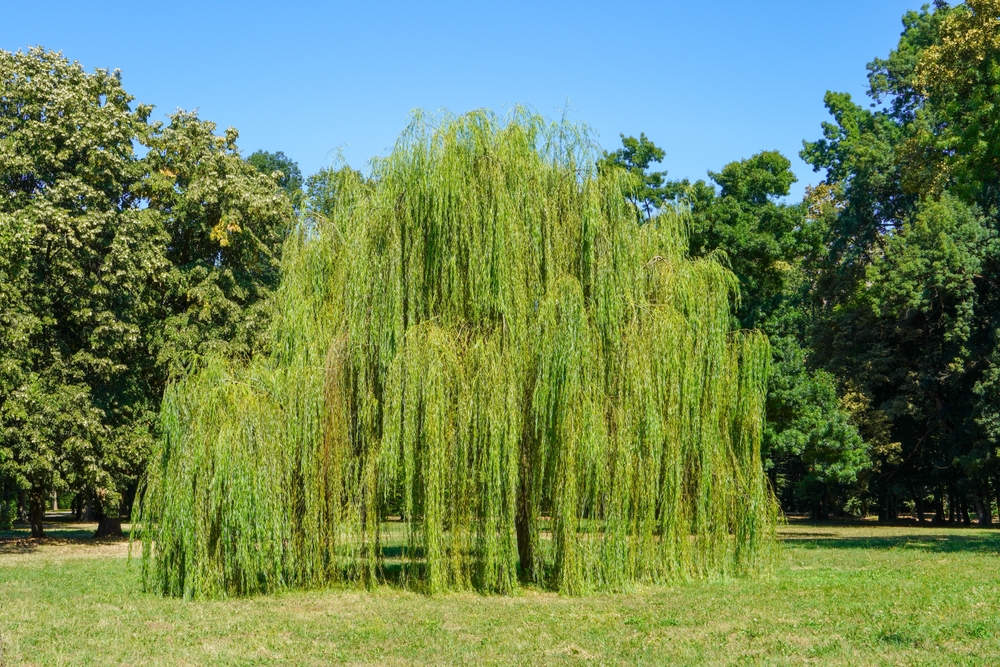
Weeping willows are beautiful, fast-growing trees, but their extensive root systems make them questionable choices for small residential yards. These trees naturally thrive in moist environments, and their roots can extend considerable distances in search of suitable growing conditions. When sewer lines or drainage pipes already contain cracks or leaks, willow roots may enter those openings and worsen existing problems. A homeowner who plants a willow near an older sewer line could eventually face expensive plumbing repairs if roots invade damaged piping. The safest approach is to give willows generous space away from buildings, septic systems, and underground utilities rather than squeezing them into narrow landscaping beds.
2. Silver Maples Grow Quickly but Can Become Maintenance Nightmares
Silver maples are popular because they grow rapidly and provide substantial shade, but their mature size can create problems near houses. These trees commonly develop broad root systems that may interfere with sidewalks, driveways, and other paved surfaces when adequate growing space isn’t available. Their relatively weak wood also makes large branches more vulnerable to storm damage than those of some other shade trees. Imagine planting a silver maple 10 feet from your house and discovering years later that its branches extend over your roof while surface roots lift nearby pavement. If you want a maple near your home, consider a smaller species or cultivar suited to your region and available space.
3. Bradford Pear Trees Are Beautiful but Structurally Weak
Bradford pear trees became landscaping favorites because of their showy white spring flowers and relatively fast growth. Unfortunately, the North Carolina State Extension Gardener Plant Toolbox explains that these trees develop narrow branch attachments that can split during strong winds, heavy rain, or ice storms. When planted close to a house, falling branches can threaten roofs, gutters, vehicles, and outdoor structures. Bradford pears are also associated with the invasive Callery pear, creating environmental concerns beyond ordinary property maintenance. Instead of planting another Bradford pear, consider native alternatives such as eastern redbud, flowering dogwood, or serviceberry where growing conditions are appropriate.
4. Cottonwood Trees Need Much More Space Than Most Yards Provide
Cottonwoods can grow into enormous shade trees, making them poorly suited for planting immediately beside residential buildings. Their extensive roots may create conflicts with pavement and underground infrastructure, particularly when trees are planted in restricted spaces. Cottonwoods can also shed substantial amounts of branches, leaves, and cotton-like seeds, creating additional maintenance around roofs, gutters, and outdoor equipment. A tree that looks manageable when it’s six feet tall may eventually tower over the entire house and require professional pruning. These trees are generally better suited to large properties where their mature size and natural growing habits have room to develop.
5. River Birch Trees Can Outgrow Tight Foundation Beds
River birches are attractive trees known for their peeling bark, graceful branches, and ability to tolerate moist soil. However, they can become large, spreading trees that overwhelm narrow planting areas beside houses. Their roots may compete with nearby landscaping for moisture, while overhanging branches can create maintenance challenges around roofs and gutters. Homeowners sometimes plant multiple river birches together for privacy without accounting for how much space their combined canopies will eventually occupy. If you love the appearance of river birch, choose a location that accommodates its mature dimensions or investigate smaller cultivars with verified growth characteristics.
6. American Sycamores Can Become Too Large for Residential Spaces
American sycamores are impressive shade trees, but their enormous mature size makes them risky choices for small yards. These trees can develop massive trunks, broad canopies, and extensive root systems that require considerable growing space. When planted too close to buildings, their branches may eventually overhang roofs while roots create conflicts with nearby pavement. Sycamores also shed bark, leaves, and seed balls, adding cleanup responsibilities for homeowners who already struggle with yard maintenance. A large sycamore can be an excellent landscape tree on a spacious property, but it deserves more room than a typical foundation planting provides.
7. Lombardy Poplars Can Create Expensive Long-Term Problems
Lombardy poplars are often marketed as fast-growing privacy trees because their tall, narrow shape creates an attractive natural screen. Unfortunately, these trees can experience significant disease problems and relatively short useful lifespans in many landscapes. Their vigorous growth and extensive roots can also create conflicts when they’re planted too close to foundations, driveways, or underground utilities. Homeowners who plant a tight row beside their house may eventually face the expense of removing several declining trees rather than replacing just one. For long-term privacy, consider regionally appropriate trees or shrubs that offer manageable growth, reliable health, and adequate spacing from structures.
The Distance From Your House Matters More Than You Think
Before planting any large tree, remember that the small sapling you’re buying today won’t stay small forever. The Arbor Day Foundation recommends placing small trees at least 8 to 10 feet from building walls, medium trees at least 15 feet away, and large trees at least 20 feet away, with additional space often beneficial. These are general guidelines rather than guarantees against damage, because soil conditions, tree species, drainage, and mature canopy size all influence the appropriate planting location. Tree roots generally don’t break through sound foundations or intact pipes simply because they’re nearby, but they can exploit existing openings and create conflicts with pavement and other structures.
Have you ever planted a tree that eventually became too large for your yard, or dealt with expensive damage from a neighbor’s tree? Share your experience in the comments.
What to Read Next
That $20 Tree From the Garden Center Could Become a $2,000 Problem
Your Neighbor’s Tree Is Destroying Your Yard — Who Actually Has to Pay?
Leave a Reply