Nothing tests a gardener’s patience quite like watching grape clusters finally plump up, only to discover that birds, wasps, raccoons, or hungry squirrels noticed them first. The weeks before harvest bring the biggest reward, but they also attract every creature in the neighborhood that appreciates a sugary snack. Protecting grapes during this stage often makes the difference between baskets full of fruit and a few lonely stems.
The good news is that keeping grapes safe does not require expensive gadgets or commercial vineyard equipment. A handful of simple materials, a little creativity, and good timing can shield ripening fruit without draining the gardening budget. Even better, most of these methods work together, creating several layers of protection that discourage pests from making a meal out of months of careful work.
1. Cover Grape Clusters with Organza or Mesh Bags
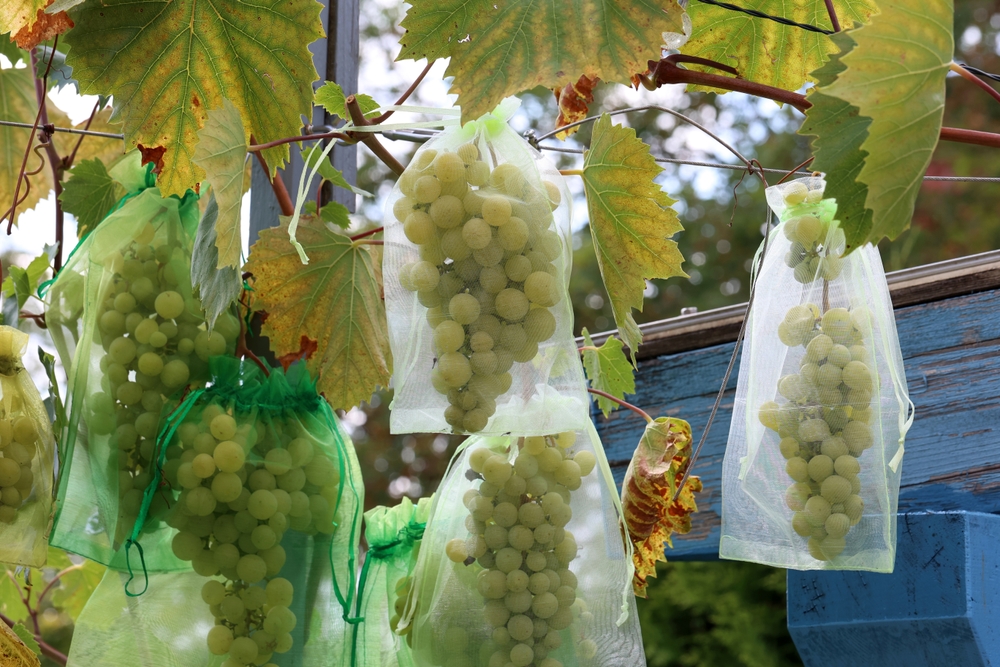
Small mesh or organza drawstring bags rank among the cheapest insurance policies for backyard grapes. Slip one over each cluster as soon as the berries begin to soften and change color, then tighten the drawstring around the stem. The bags allow sunlight, rain, and airflow to reach the fruit while blocking birds, insects, and many larger pests from helping themselves. Unlike plastic bags, breathable fabric reduces the chance of moisture collecting around the grapes. Many gardeners reuse the same bags for several growing seasons, making the cost even lower over time.
This approach works especially well for smaller vines with manageable numbers of clusters. The bags also protect grapes from light hail and reduce damage from curious pets brushing through the vines. Choosing light-colored bags keeps the fruit visible so gardeners can monitor ripeness without removing the covering. Checking each bag every week ensures no insects became trapped inside after installation. A few minutes of work now often saves an entire harvest later.
2. Install Bird Netting the Right Way
Bird netting earns its reputation because it creates a physical barrier instead of relying on scare tactics that birds eventually ignore. The key involves draping the net over a simple frame or support instead of laying it directly against the grape clusters. Birds can peck fruit through netting if it rests against the grapes.
Secure the bottom edges with landscape pins, boards, bricks, or heavy rocks so birds cannot sneak underneath. Inspect the net every few days for gaps or tangled wildlife, since loose sections create problems for both birds and gardeners. Fine-mesh netting usually works better than wide openings because it reduces the chance of birds becoming entangled. At the end of harvest, fold the net carefully before storing it, and it should provide protection for several more seasons.
3. Remove Damaged Fruit Quickly
One split grape may not seem important, but damaged fruit sends an invitation to wasps, yellowjackets, fruit flies, and other insects searching for sugar. Once those visitors discover the buffet, they often attract even more pests to the area. Regular inspection prevents a small problem from becoming a feeding frenzy.
Walk the vines every few days and clip away cracked, moldy, or bird-damaged clusters immediately. Place discarded fruit in the trash rather than tossing it nearby, where insects can still find it. Clean fallen grapes from the ground as well because they continue attracting unwanted visitors. This simple housekeeping habit costs nothing but often reduces pest pressure throughout the ripening season.
4. Use Reflective Objects for Extra Deterrence
Shiny objects still deserve a place in the grape patch, although nobody should expect miracles from them alone. Old CDs, reflective ribbon, aluminum pie plates, or metallic garden tape catch sunlight and flash unpredictable reflections that make many birds hesitate before landing. That hesitation sometimes gives grapes the extra protection they need.
Change the location of reflective items every several days to keep birds guessing. Stationary decorations quickly become part of the scenery, and clever birds soon ignore them. Combining reflective materials with netting or fruit bags creates a much stronger defense than relying on flashing light alone. Most gardeners already have suitable reflective items tucked away in a drawer or recycling bin, making this one of the least expensive solutions available.
5. Harvest a Little Earlier Than Planned
Many grape varieties continue developing flavor after they reach full color, but waiting too long increases the chance that wildlife will beat gardeners to the finish line. Taste a few grapes every couple of days rather than judging ripeness by appearance alone. Once the fruit develops good sweetness and flavor, harvest without unnecessary delay.
Leaving perfectly ripe grapes hanging for another week often benefits birds more than people. Morning harvests usually produce cooler fruit that stores better after picking. Using clean pruning shears also prevents unnecessary damage to the vines. A slightly earlier harvest frequently protects far more fruit than gambling on a few extra days of sweetness.
6. Keep the Area Around the Vines Clean
Messy gardens create comfortable hiding places for unwanted visitors. Tall weeds, piles of boards, dense brush, and fallen fruit encourage rodents and insects to settle close to the grape vines. A tidy growing area removes many of those convenient shelters.
Trim weeds beneath the vines and remove unnecessary clutter before harvest season begins. Good airflow also helps grape clusters dry faster after rain or heavy morning dew, reducing conditions that favor certain fungal diseases. Garden sanitation rarely receives much attention because it seems almost too simple, yet experienced growers often treat it as one of the most valuable maintenance jobs of the season. Clean surroundings make every other protective measure work more effectively.
7. Create a Decoy Water Source
Many gardeners assume birds attack grapes only because they crave fruit, but thirsty birds often peck juicy grapes during hot weather simply for moisture. Providing fresh water away from the vines sometimes reduces that temptation. A shallow birdbath or inexpensive water dish placed on the opposite side of the yard can redirect at least some feathered visitors.
Refresh the water regularly so mosquitoes cannot breed in stagnant conditions. Positioning the water source well away from the grape vines prevents concentrating bird activity directly beside the crop. While this method will not eliminate bird damage by itself, it fits nicely into a layered protection strategy. Small changes often produce surprisingly noticeable improvements over the course of harvest season.
Sweet Grapes Deserve a Strong Finish
Growing grapes demands patience from the first tiny buds of spring until the final harvest basket of late summer or early fall. Losing beautiful fruit during the last few weeks feels especially frustrating because the finish line sits so close. Fortunately, protecting ripening grapes does not require expensive equipment or commercial vineyard techniques.
The best results usually come from combining several low-cost methods instead of searching for one perfect solution. Mesh bags, bird netting, clean garden habits, timely harvesting, and a few clever tricks create enough obstacles that many pests simply move elsewhere in search of an easier meal. A little preparation during the sweetening stage rewards gardeners with healthier clusters, better harvests, and far fewer unpleasant surprises.
Which low-cost grape protection method has worked best in the garden, or is there another clever trick that deserves a spot on this list? Share it in the comments below.
You May Also Like…
6 Ways to Protect Ripening Fruit From Sudden Splitting
8 Backyard Fruits No One Knows You Can Grow in Small Spaces
Why Are Your Eggplants Flowering Without Making Fruit?
9 Backyard Habits That Can Accidentally Invite Pests
What Is the Cheapest Way to Keep Berries Away From Birds?

Brandon Marcus is a staff writer for FrugalGardening.com at District Media, Inc., where he delivers practical gardening advice with a relatable, no-nonsense style. An avid amateur gardener, he holds a BA degree and with over ten years of professional writing experience, he is also an award-winning published author whose first book, Questions For Deep Thinkers, was released by Adams Media. His work has appeared in major publications including Fandom.com, CHUD.com, TheColdWire.com, and Fansided.com.
Leave a Reply