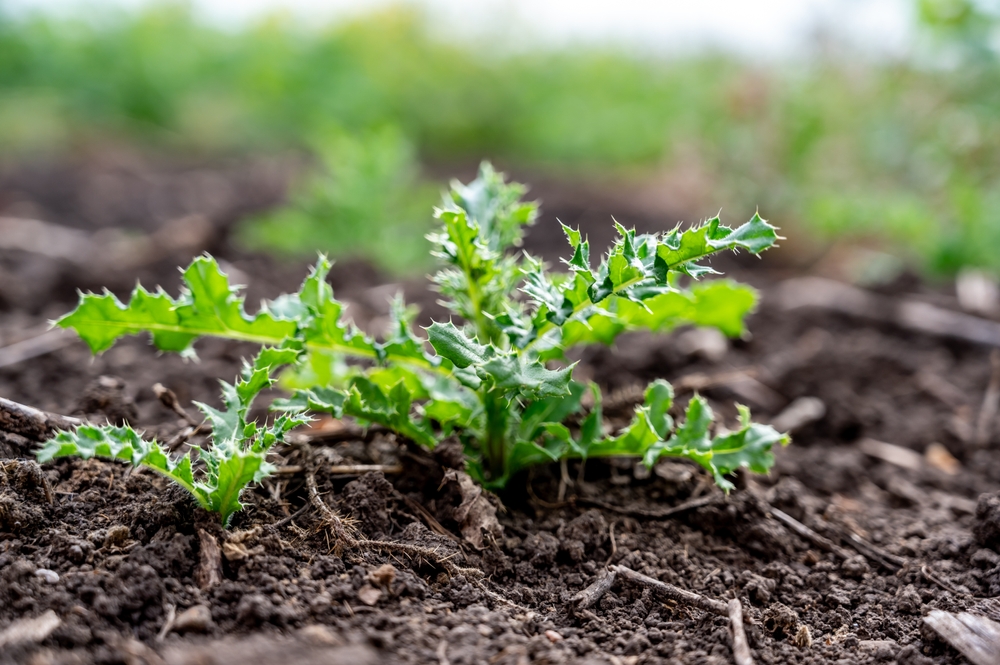
The first green that pushes through cold soil rarely belongs to roses or tomatoes. It belongs to weeds that wake up before almost anything else, staking their claim while frost still bites the air. Early spring weeds do not wait for permission. They rush in, grow fast, and often surprise even seasoned gardeners with their timing and tenacity.
These early arrivals reveal far more than simple nuisance growth. They signal soil conditions, moisture levels, and seasonal shifts long before shrubs leaf out. Anyone who understands what these plants say about the garden gains a serious advantage. Instead of reacting in frustration, gardeners can respond with strategy.
1. Henbit: The Purple Carpet That Loves Bare Ground
Henbit often spreads like a lavender mist across lawns and garden beds while winter still lingers. Square stems and rounded leaves that clasp those stems give it away immediately, and small purple tubular flowers cluster near the top. This plant belongs to the mint family, which explains its square stems and fast growth pattern. Henbit thrives in thin turf and compacted soil. It germinates in fall, survives winter as a small rosette, and then explodes in early spring before many grasses wake up. That life cycle gives it a head start. It flowers quickly and drops seed before summer heat shuts it down.
Gardeners can treat henbit as a diagnostic tool. Its presence often points to bare patches and soil compaction. Aerating the lawn in fall and thickening turf through proper fertilization and overseeding reduces future outbreaks dramatically. Pulling henbit before it sets seed works well in small beds, especially when soil feels moist and roots release easily. A sharp hand weeder or hori-hori knife slices under the shallow root system and removes it cleanly.
Instead of viewing henbit only as a problem, consider its role as early nectar for pollinators. Bees often visit those purple flowers when few other blooms exist. Removing it from high-traffic areas while allowing a controlled patch in less visible corners can support early pollinators without sacrificing curb appeal.
2. Hairy Bittercress: The Seed-Launching Speedster
Hairy bittercress wastes no time. This small plant forms a low rosette of delicate, rounded leaflets, then sends up thin stems topped with tiny white flowers. Within weeks, slender seed pods mature and react to touch by exploding, launching seeds several feet in every direction. That ballistic seed strategy makes early action critical. Hairy bittercress loves moist soil and frequently pops up in garden beds, container plants, and greenhouse trays. Cool, damp conditions give it ideal growing weather, which explains why it dominates in early spring.
Gardeners should remove hairy bittercress as soon as flowers appear and definitely before seed pods mature. Grabbing the base and lifting gently removes the shallow root with little effort. Mulching beds with two to three inches of organic mulch blocks light and prevents many seeds from germinating in the first place. Maintaining healthy, dense plantings also shades soil and limits opportunities for this weed to establish.
3. Purple Deadnettle: Soft Leaves, Serious Staying Power
Purple deadnettle often confuses gardeners at first glance. Its triangular leaves and reddish-purple tops give it a striking appearance, and its soft texture invites curiosity. Despite its name, it does not sting. Like henbit, it belongs to the mint family and sports square stems and small tubular flowers. Purple deadnettle germinates in fall and resumes rapid growth in early spring. It spreads across lawns, garden edges, and even cracks in sidewalks. It tolerates poor soil and cool temperatures with ease.
Rather than attacking it blindly, gardeners can view purple deadnettle as a soil messenger. It frequently appears in nutrient-poor or disturbed soil. A soil test provides clear guidance on nutrient deficiencies, and adding compost improves both structure and fertility. Thickening lawn grass through overseeding in fall reduces open space where deadnettle seedlings might sprout.
Hand pulling works well before flowering intensifies. Shallow roots allow easy removal when soil feels soft. Consistency matters most. Removing young plants each spring prevents heavy seed buildup and reduces future headaches.
4. Shepherd’s Purse: The Heart-Shaped Survivor
Shepherd’s purse stands out because of its tiny, heart-shaped seed pods that dangle along slender stems. A basal rosette of deeply lobed leaves hugs the ground first, then upright stems shoot up quickly once temperatures rise. This weed adapts to almost any soil and often grows along garden paths, driveways, and disturbed areas. It tolerates cold remarkably well and frequently flowers while frost still appears overnight.
Gardeners benefit from swift action. Pulling shepherd’s purse before seed pods mature prevents thousands of seeds from entering the soil seed bank. Cultivating soil lightly with a hand hoe on dry days disrupts seedlings and exposes roots to air, which stops growth. Thick mulching in garden beds also blocks sunlight and reduces germination rates.
Despite its persistence, shepherd’s purse reveals soil that experiences frequent disturbance. Reducing unnecessary tilling and protecting soil with cover crops in fall can limit opportunities for it to take hold.
5. Chickweed: The Low-Growing Green That Spreads Fast
Common chickweed forms dense mats of bright green growth that hug the soil surface. Small white star-shaped flowers dot its delicate stems, and a single line of fine hairs runs along one side of each stem, offering a reliable identification feature. Chickweed thrives in cool, moist weather and often dominates vegetable beds early in the season. It grows quickly and roots along creeping stems, which allows it to spread horizontally with impressive speed.
Gardeners can control chickweed effectively with shallow cultivation and regular monitoring. Pulling it before it flowers and sets seed dramatically reduces its return. Because it roots at nodes, removing entire stems matters more than simply breaking off tops. Mulch serves as a powerful preventive measure here as well. A consistent layer of organic mulch blocks light and keeps seeds dormant.
Interestingly, chickweed often signals fertile, moist soil. Some gardeners even compost it or use it as a green addition to compost piles, where it breaks down rapidly and contributes nutrients back to the system.
Turning Early Weeds Into Early Warnings
Early spring weeds do not arrive randomly. They respond to soil temperature, moisture, compaction, and nutrient balance. Observing which species dominate a yard offers insight into underlying conditions. Henbit and purple deadnettle may hint at thin turf. Hairy bittercress often signals damp soil. Shepherd’s purse suggests disturbance. Chickweed points toward cool, moist, fertile ground.
Gardeners who pay attention gain power. A simple hand weeder, sturdy gloves, and consistent timing form the most effective tools in early spring. Removing weeds while soil remains cool and moist allows roots to release easily and prevents seed production. Aeration in fall, overseeding lawns, adding compost, and applying mulch create long-term solutions rather than temporary fixes.
Rather than fighting weeds in frustration, smart gardeners treat them as indicators. Each plant tells a story about what the soil needs and how the garden functions. Adjusting care based on those clues builds healthier lawns and beds over time.
Winning the Spring Weed Race
Early spring weeds race ahead because they prepare months in advance. They germinate in fall, survive winter quietly, and surge forward as soon as light and temperature allow. That strategy explains their early dominance. Gardeners who match that foresight gain the upper hand.
Spring does not have to begin with a battle. It can begin with awareness and a plan. When unusual weeds pop up first, they offer a preview of the growing season ahead. Paying attention now shapes the months to come in powerful ways.
Which of these early spring weeds tends to show up first in your yard, and what do you think it reveals about your soil? We want to hear your advice in our comments section below.
You May Also Like…
March Weeds That Spread Quickly If You Ignore Them
10 Winter Weeds That Start Early and How to Stop Them
Here Are The 5 Most Aggressive Weeds During Winter
11 Sneaky Weeds That Look Innocent Until They Destroy Your Beds
Are You Accidentally Encouraging Weeds Without Realizing It?

Brandon Marcus is a staff writer for FrugalGardening.com at District Media, Inc., where he delivers practical gardening advice with a relatable, no-nonsense style. An avid amateur gardener, he holds a BA degree and with over ten years of professional writing experience, he is also an award-winning published author whose first book, Questions For Deep Thinkers, was released by Adams Media. His work has appeared in major publications including Fandom.com, CHUD.com, TheColdWire.com, and Fansided.com.
Leave a Reply