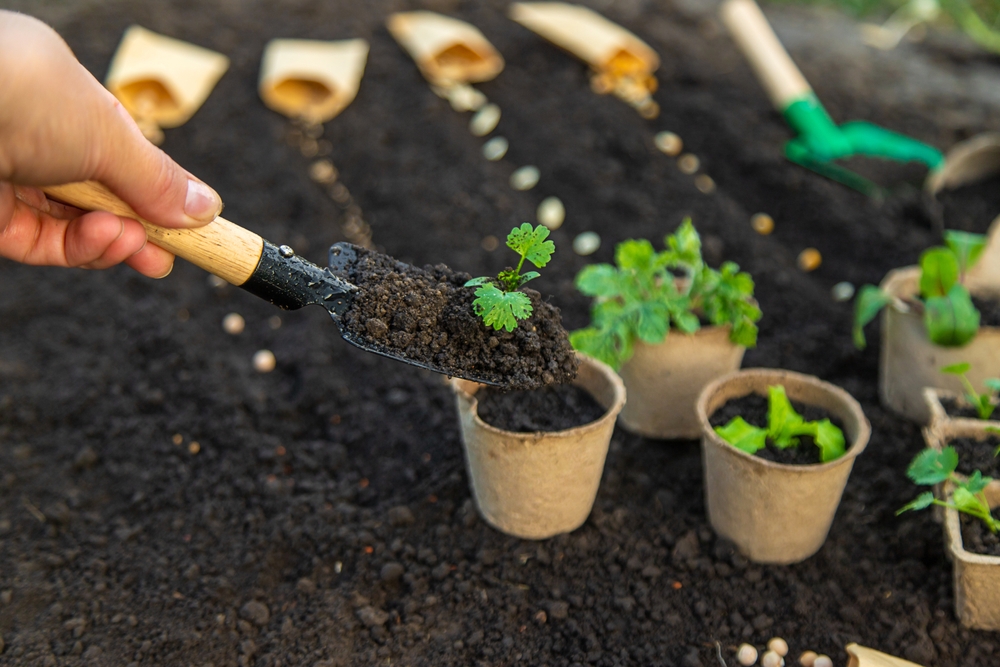
March launches the most exciting stretch of the gardening season. Tiny green sprouts push through soil, trays crowd windowsills, and gardeners start dreaming about towering tomatoes, crunchy cucumbers, and armloads of herbs. Those tiny seedlings promise big harvests later in the season, but they also attract a lineup of microscopic troublemakers that wait for exactly this moment.
Seedlings grow fast, but diseases move even faster. A healthy tray can turn into a sad patch of collapsed stems or spotted leaves in a matter of days when the wrong conditions settle in. Cool temperatures, damp soil, crowded trays, and still air give plant diseases everything they want. March delivers those conditions almost perfectly, especially when seed trays live indoors under lights or near windows.
1. Damping Off: The Seedling Assassin
Few gardening frustrations match the heartbreak of damping off. Seedlings stand tall one day and collapse the next, leaving behind a row of fallen stems that look pinched or melted right at the soil line. Several soilborne fungi trigger this disease, and they thrive in the exact environment that seed starting often creates.
Wet soil, cool temperatures, and limited airflow give these fungi a perfect playground. Seedlings start strong, push out their first leaves, and then suddenly flop over as the stems weaken. The stem base often turns dark and thin, almost like someone tightened an invisible wire around it. Once damping off grabs a seedling, that plant rarely recovers, so prevention matters far more than rescue.
Good seed-starting habits cut the risk dramatically. Use clean containers, fresh seed-starting mix, and trays that drain well. Gardeners who reuse pots should scrub them thoroughly before planting. Strong airflow helps a lot too, so a small fan near seed trays can make a huge difference by keeping air moving across the soil surface.
Crowded seedlings invite trouble as well. Thin them early so each plant gets breathing room and light. Water seedlings carefully instead of soaking trays repeatedly. Many experienced growers water from the bottom by filling the tray underneath and letting the soil absorb moisture upward. That method keeps the soil surface drier and less welcoming to fungal growth.
2. Gray Mold Throws a Party in Damp Conditions
Gray mold loves cool, damp environments, and early spring provides plenty of both. Gardeners know this disease as botrytis, and it attacks a wide range of plants, including young vegetable seedlings and herbs. The fungus spreads through airborne spores, which means it travels easily between trays once conditions turn favorable.
Look closely at affected plants, and gray mold reveals itself quickly. Leaves develop soft brown patches, and a fuzzy gray coating spreads across stems, leaves, or even the soil surface. That dusty-looking fuzz contains millions of spores ready to jump onto neighboring plants.
The fungus spreads quickly in crowded trays where moisture lingers on leaves. Humidity drives this disease more than anything else. Seedlings packed under grow lights or clustered near windows often trap moisture overnight, especially when watering happens late in the day. Water droplets cling to leaves, and botrytis jumps into action.
Simple adjustments help prevent the problem. Increase airflow around plants with a fan or wider spacing between trays. Water seedlings early in the day so leaves dry before evening arrives. Remove any dying leaves immediately because decaying plant material gives gray mold a perfect launchpad.
Good sanitation also keeps botrytis under control. Clean tools, wipe down shelves, and avoid letting old plant debris pile up around the seed-starting area. Healthy seedlings grow faster and resist infection better, so strong light and balanced watering play a major role in prevention.
3. Powdery Mildew Starts Earlier Than Many Expect
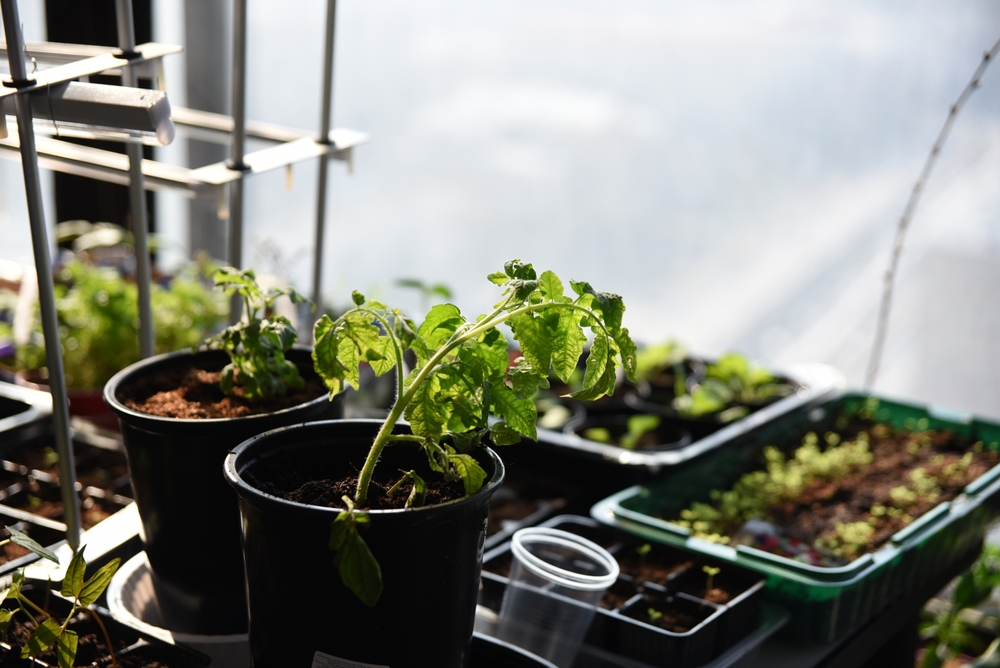
Many gardeners associate powdery mildew with late summer gardens, but the fungus sometimes shows up surprisingly early. Indoor seedlings occasionally face powdery mildew during March, especially when airflow remains poor and plants grow too close together.
Powdery mildew leaves an unmistakable signature. Leaves develop pale patches that slowly turn into a white powdery coating. That powder contains fungal spores that spread quickly to nearby plants. The disease weakens seedlings by blocking sunlight from reaching leaf surfaces, which slows growth and stresses young plants.
Crowded trays create ideal conditions for this fungus. Seedlings stretch toward light, leaves overlap, and airflow disappears. The fungus then spreads from leaf to leaf while gardeners wonder why plants suddenly look dusty. Several easy strategies reduce the risk. Provide strong light so seedlings grow sturdy instead of tall and floppy. Space trays so air moves freely around the plants. A gentle fan helps again here because moving air discourages fungal growth.
Water management matters too. Wet foliage encourages many plant diseases, so careful watering keeps leaves dry and healthy. If powdery mildew appears, remove infected leaves quickly and increase airflow right away. Early action often stops the spread before the fungus dominates the entire tray.
4. Bacterial Leaf Spot and the Trouble with Splashing Water
Fungal diseases get most of the attention during seed-starting season, but bacteria also cause problems in early spring trays. Bacterial leaf spot hits many vegetable seedlings, including peppers, tomatoes, and leafy greens. The disease spreads quickly when water splashes between plants. Leaves show the first warning signs. Small dark spots appear, often surrounded by yellow halos that expand over time. Those spots multiply rapidly when water droplets carry bacteria from one leaf to another. The disease rarely kills seedlings outright, but it weakens them and slows their development before transplant season arrives.
Overhead watering often triggers the problem. When water splashes across trays, bacteria hitch a ride from leaf to leaf and tray to tray. Gardeners sometimes spread the disease accidentally while handling wet plants or using contaminated tools. Careful watering solves much of the issue. Bottom watering reduces splash and keeps leaves dry. Gardeners should also avoid handling seedlings while leaves remain wet because moisture helps bacteria travel easily. Clean tools and trays remove another major pathway for infection.
Healthy growing conditions help seedlings resist bacterial attacks as well. Strong light, moderate watering, and proper spacing all strengthen plants and reduce stress. Stressed seedlings struggle to fight infections, while vigorous plants bounce back much faster when problems appear.
5. Strong Seedlings Win the March Battle
March seed trays carry huge potential, but they also carry risk. Seedlings grow fast during this month, and diseases move quickly when conditions tilt in their favor. Damping off, gray mold, powdery mildew, and bacterial leaf spot all wait patiently for cool air, damp soil, and crowded trays.
Smart gardeners flip those conditions around. Good airflow keeps leaves dry and discourages fungal growth. Careful watering protects stems and prevents splash spread. Clean containers and fresh soil remove hidden pathogens before seeds even sprout.
What early seedling problems show up most often in your garden each spring, and what tricks or strategies keep those tiny plants healthy? Give us your thoughts or best seed-starting tips below in the comments.
You May Also Like…
How to Stop Birds From Digging Up Seeds
How to Strengthen Seedlings Without Buying Products
Low-Cost Ways to Protect Seedlings From March Cold Snaps
March Fungal Diseases to Watch For
Wildlife Officials Say This Popular Bird Feeder Setup Is Spreading Disease

Brandon Marcus is a staff writer for FrugalGardening.com at District Media, Inc., where he delivers practical gardening advice with a relatable, no-nonsense style. An avid amateur gardener, he holds a BA degree and with over ten years of professional writing experience, he is also an award-winning published author whose first book, Questions For Deep Thinkers, was released by Adams Media. His work has appeared in major publications including Fandom.com, CHUD.com, TheColdWire.com, and Fansided.com.
Leave a Reply