A garden can become much more than a collection of flowers and vegetables when it welcomes the tiny helpers that keep nature moving. Insect hotels, bee baths, and mini ponds create inviting spaces for pollinators, predators of garden pests, and other beneficial creatures that make outdoor spaces more lively.
Many gardeners focus on what plants need, but the hidden visitors around those plants deserve attention too. A few simple additions can transform a plain backyard into a buzzing, fluttering neighborhood for insects, birds, and other small wildlife.
Small Shelters Create Big Opportunities for Garden Guests
Insect hotels give solitary bees, ladybugs, and other helpful insects a safe place to rest, hide, and lay eggs during different parts of their life cycles. These structures often feature materials such as hollow bamboo tubes, untreated wood blocks with drilled holes, pinecones, and small bundles of twigs. A well-made insect hotel does not need fancy decorations because the right materials matter more than a polished appearance. Gardeners can place these shelters in sunny spots with protection from heavy rain, giving tiny visitors a dependable corner of the yard. A simple wooden box filled with natural materials can turn into a busy apartment complex for insects, minus the noisy neighbors.
Building an insect hotel also gives gardeners a fun weekend project that works well for adults and children. The key involves avoiding materials treated with chemicals or anything that holds too much moisture, because damp conditions can create problems for insects. Regular checks help remove damaged materials and keep the structure clean without disturbing active residents. These small shelters work best alongside flowering plants that provide food nearby. A hotel without a food source resembles a cozy restaurant sitting miles away from any hungry customers.
Bee Baths Offer Pollinators a Refreshing Garden Stop
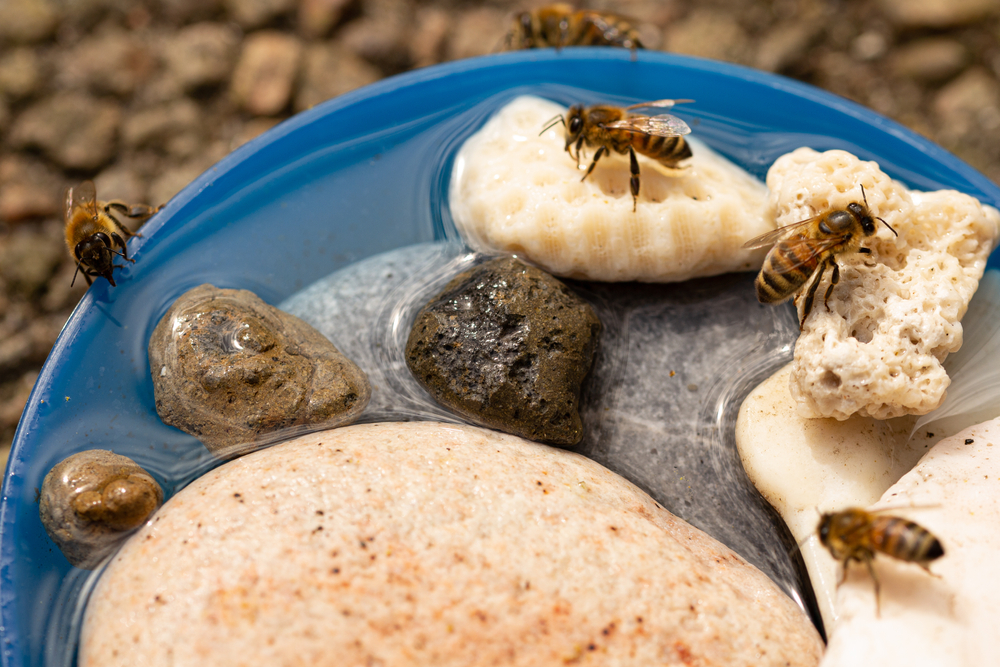
Bees need water just like other creatures, but a shallow bee bath gives them a safer option than deeper containers where they might struggle to escape. A simple dish filled with clean water and small stones creates landing spots where bees can drink without taking an accidental swim. Gardeners can place these baths near flowering plants so pollinators find hydration while moving through the yard. Fresh water matters, so regular refilling and cleaning help prevent algae buildup and keep the area inviting. Even a small container can make a difference when summer temperatures climb and natural water sources become harder to find.
Choosing the right location helps a bee bath become a reliable garden feature instead of a forgotten decoration. A spot with morning sun and some nearby cover gives bees a comfortable place to visit throughout the day. Adding pebbles, marbles, or flat stones creates texture that helps insects stand safely above the water line. Gardeners should avoid sugary water or artificial additives because bees need simple, clean hydration. The goal remains easy access, not a complicated spa treatment for tiny wings.
Mini Ponds Bring New Life Into Outdoor Spaces
A mini pond can introduce another layer of wildlife support without requiring a large backyard or expensive equipment. A container pond made from a large pot, tub, or waterproof planter can attract dragonflies, frogs, birds, and aquatic insects when gardeners design it carefully. Plants such as water lilies, rushes, and native aquatic species provide cover and help create a balanced environment. A shallow edge allows smaller creatures to approach the water safely while adding visual interest to the garden. These little water features often become fascinating places where gardeners notice more activity over time.
Gardeners should think about safety and maintenance before adding a mini pond. Standing water needs occasional attention because mosquitoes can multiply in neglected containers, especially when water lacks movement or natural predators. Adding aquatic plants, changing some water regularly, and keeping debris under control helps maintain healthier conditions. A small pond does not need constant work, but it does reward consistent care. The gentle sound of water and the arrival of new visitors can make a backyard feel like a miniature nature reserve.
A Wildlife-Friendly Garden Starts With Simple Changes
Creating a wildlife haven does not require replacing an entire landscape or turning every corner into a wilderness zone. A few thoughtful choices, such as planting native flowers, leaving small natural areas, and adding habitat features, can encourage more garden visitors. Beneficial creatures often need the same basics people value in a home: food, water, shelter, and a safe place to settle. Gardeners can start with one project, such as a bee bath or insect hotel, and expand as their outdoor space grows. Small improvements often create noticeable changes in the garden’s daily activity.
A welcoming wildlife garden also helps gardeners see nature from a different angle. Instead of viewing every insect as a problem, it becomes easier to recognize the difference between pests and helpful species. Ladybugs, lacewings, and many solitary bees contribute valuable work among flowers and vegetables. A balanced garden does not chase away every creature that arrives because many visitors bring benefits. The backyard becomes a living classroom where every season reveals something new.
Turn Your Backyard Into a Tiny Nature Neighborhood
A garden filled with insect hotels, bee baths, and mini ponds offers more than pretty scenery because it creates a place where helpful creatures can find resources. These features encourage biodiversity while giving gardeners a closer connection to the natural world around them. The best wildlife gardens grow from patience, observation, and small improvements rather than complicated designs. Every added shelter, water source, and native plant creates another reason for beneficial visitors to stop by. A backyard can become a welcoming destination for nature with a little creativity and care.
What wildlife-friendly feature would you add first to your garden: an insect hotel, a bee bath, or a mini pond?
You May Also Like…
7 Natural Repellents That Help Keep Insects Away
10 Selections That Attract Bees, Butterflies, and Beneficial Insects
March Bugs That Target Tender New Leaves
No‑Mow Flowering Lawns Attract Pollinators and Reduce Maintenance—Here’s How to Start
8 Pollinator-Friendly Plants That Bloom for Months

Brandon Marcus is a staff writer for FrugalGardening.com at District Media, Inc., where he delivers practical gardening advice with a relatable, no-nonsense style. An avid amateur gardener, he holds a BA degree and with over ten years of professional writing experience, he is also an award-winning published author whose first book, Questions For Deep Thinkers, was released by Adams Media. His work has appeared in major publications including Fandom.com, CHUD.com, TheColdWire.com, and Fansided.com.
Leave a Reply