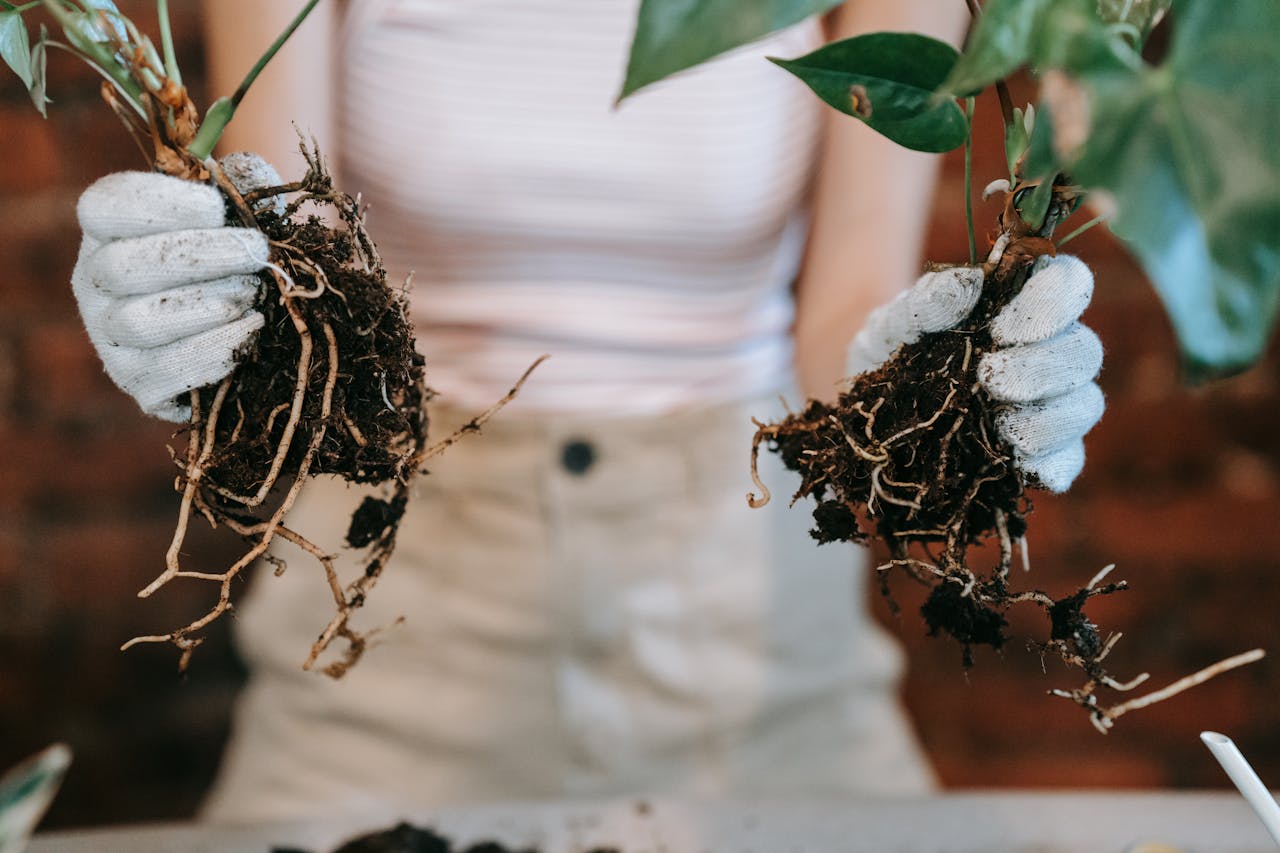
Roots demand one thing almost as much as water: oxygen. When soil stays soggy for days, roots suffocate because water fills every tiny air pocket underground. Plants begin to panic in slow motion, even while the surface still looks deceptively green. Leaves droop, growth slows, and stems weaken because the root system cannot perform basic functions anymore. Many gardeners blame fertilizer, pests, or bad weather first, while poor drainage quietly causes the real damage underground.
Root rot enters the picture once excess moisture creates the perfect environment for fungal pathogens. Organisms like Pythium and Phytophthora thrive in soaked soil and attack stressed roots with alarming speed. Healthy white roots gradually turn brown, mushy, and foul-smelling as the infection spreads through the plant. Tomatoes, roses, peppers, herbs, and even sturdy shrubs often collapse after long periods of waterlogged conditions. One heavy week of rain combined with compacted soil can trigger problems that linger for an entire growing season.
Stunted Growth Often Starts Beneath the Surface
Plants with weak roots cannot support strong top growth, no matter how much fertilizer enters the soil. Gardeners frequently dump extra nutrients onto struggling plants, but damaged roots cannot absorb them properly. Instead of lush growth, plants produce tiny leaves, weak stems, and disappointing blooms because the underground system struggles to stay alive. A pepper plant sitting in soggy soil often stays half the size of a neighboring plant growing in well-drained conditions. The difference becomes obvious by midsummer when healthy plants explode with flowers and fruit while stressed plants barely limp along.
Drainage issues also interfere with nutrient balance inside the soil itself. Constant saturation washes away nitrogen and limits microbial activity that helps roots access key minerals. Soil compaction makes the situation even worse because dense earth traps water around the root zone like a soaked sponge. Lawns reveal the same problem through yellow patches, thinning grass, and shallow root systems that fail during summer heat. Poor drainage creates a chain reaction that weakens every part of the garden from the ground up.
Containers Suffer Faster Than Backyard Beds
Container plants often decline dramatically because pots leave little room for drainage mistakes. A decorative planter without adequate drainage holes turns into a swamp after just one heavy watering session. Herbs like basil and rosemary usually react quickly by yellowing, wilting, or dropping leaves despite receiving plenty of water. Many gardeners accidentally kill container plants with kindness because frequent watering feels responsible during hot weather. Unfortunately, soggy potting mix traps roots in a humid environment that encourages fungal disease almost immediately.
Cheap potting soil also contributes to drainage trouble because dense mixes retain too much moisture. Quality container blends usually include ingredients like perlite, bark, or coconut coir that create airflow around roots. Oversized saucers under pots can create another hidden problem by holding standing water against the bottom of the container for days. Even indoor houseplants struggle when excess water collects near the root zone repeatedly. A simple drainage hole often makes the difference between a thriving plant and a slow-motion funeral.
Certain Warning Signs Demand Immediate Action
Plants rarely stay quiet about drainage problems for long, although the symptoms sometimes confuse gardeners. Yellow leaves usually appear first because stressed roots cannot move nutrients effectively through the plant. Wilting also creates confusion because gardeners often interpret drooping leaves as thirst instead of oversaturation. Soft stems, leaf drop, blackened roots, and moldy soil surfaces usually follow once root damage intensifies. A sour smell rising from the soil often signals serious root decay already underway.
Timing matters enormously once symptoms appear because root rot spreads aggressively in warm, wet conditions. Pulling back on watering immediately helps prevent additional stress while the soil begins drying out. Gardeners often rescue mildly affected plants by improving airflow, trimming damaged roots, and transplanting into better-draining soil. Raised beds provide another reliable solution because elevated soil sheds excess moisture far more effectively than compacted ground. Fast action frequently saves plants before permanent damage destroys the entire root system.
Smart Drainage Fixes Create Stronger Gardens
Improving drainage does not require a complete backyard overhaul in most situations. Adding organic matter like compost helps loosen compacted soil and improves water movement naturally over time. Many experienced gardeners also mix coarse sand or pine fines into stubborn clay-heavy beds to create better structure underground. Raised beds offer one of the fastest fixes because they lift roots above saturated ground and warm up faster in spring. Even a modest six-inch elevation dramatically improves growing conditions for vegetables and flowers.
Watering habits matter just as much as soil quality when preventing root problems. Deep, infrequent watering encourages roots to grow downward instead of clustering near the wet surface. Morning watering also gives plants time to dry before cooler nighttime temperatures increase fungal risk. Smart gardeners check soil moisture manually instead of following rigid watering schedules because weather conditions constantly change. Healthy drainage creates resilient plants that tolerate heat, disease, and seasonal stress far more effectively.
The Secret Ingredient Behind Bigger, Healthier Plants
Great gardens rarely depend on luck, expensive tools, or miracle fertilizers. Healthy roots power every leaf, bloom, vegetable, and branch that grows above the soil line. Poor drainage quietly sabotages that process by drowning roots, inviting disease, and weakening plants from the inside out. Once gardeners recognize the warning signs early, they can prevent major losses with surprisingly simple fixes. Better drainage often transforms struggling gardens into productive, vibrant spaces within a single season.
What drainage problems have caused the biggest headaches in the garden, and which fixes worked best? Now is the time to share your experience and advice with fellow gardeners below.
You May Also Like…
How to Test Soil Drainage Before Planting
The Real Reasons Your Garden Drainage Isn’t Working Like It Should
The Watering Myth: Why More Moisture Can Hurt Root Development
How to Protect Roots From Late Frosts Without Covers
9 Types of Mulch That Best Protect Roots from Winter Freeze

Brandon Marcus is a staff writer for FrugalGardening.com at District Media, Inc., where he delivers practical gardening advice with a relatable, no-nonsense style. An avid amateur gardener, he holds a BA degree and with over ten years of professional writing experience, he is also an award-winning published author whose first book, Questions For Deep Thinkers, was released by Adams Media. His work has appeared in major publications including Fandom.com, CHUD.com, TheColdWire.com, and Fansided.com.
Leave a Reply