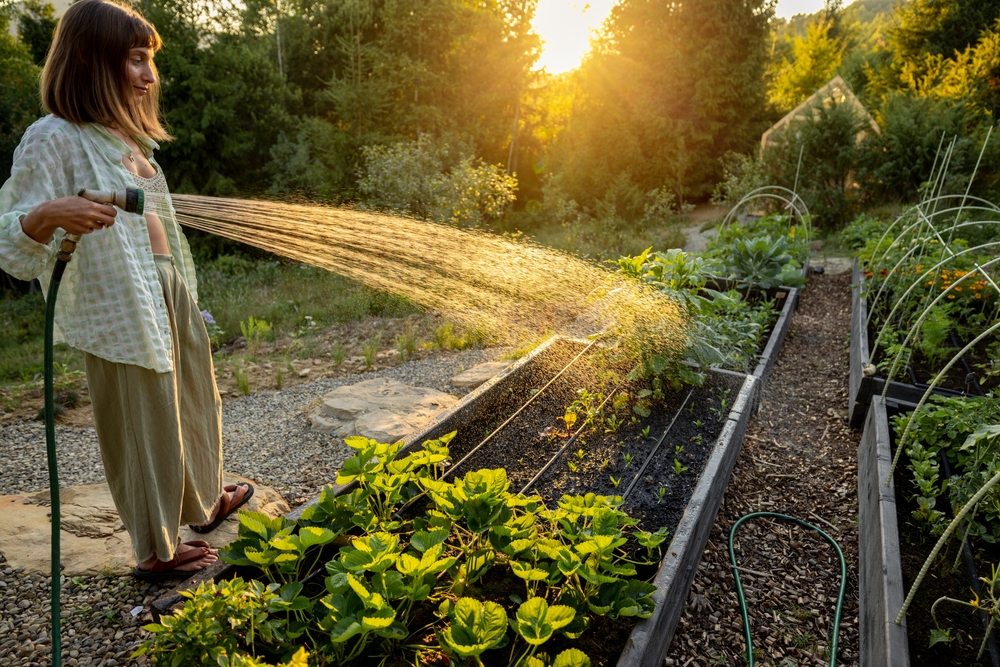
The coolest part of the day offers the biggest opportunity for gardeners. A few well-timed tasks before breakfast can protect plants from scorching afternoon temperatures while keeping gardening safer and far more enjoyable.
Summer gardens never seem to hit the pause button. Tomatoes ripen overnight, weeds appear as if they received an invitation, and thirsty plants quickly reveal which areas need attention. Instead of battling blazing sunshine later in the day, an early morning routine tackles the most important jobs when both gardeners and plants benefit from cooler conditions.
1. Water Deeply Before the Sun Gets Strong
Morning watering gives moisture time to soak into the soil before intense heat speeds up evaporation. Deep watering encourages roots to grow farther into the ground where soil stays cooler and retains moisture longer. Leaves also dry quickly after sunrise, which helps reduce the chance of many fungal diseases that spread in damp conditions. Aim the water at the base of each plant instead of spraying the foliage for the most efficient results. A slow soak every few days usually serves gardens better than light daily sprinkling that barely reaches the root zone.
Morning also makes it easier to judge which plants actually need water. Wilted leaves during the hottest afternoon hours often recover by evening, so they do not always signal a watering emergency. Soil tells the real story. A quick finger test several inches below the surface reveals whether moisture remains available or whether the plant genuinely needs a drink.
2. Harvest Vegetables While They Are Cool
Fresh vegetables picked before breakfast usually taste better and store longer because they still hold plenty of natural moisture. Lettuce stays crisp, cucumbers remain firm, and beans snap cleanly instead of bending. Cooler temperatures also reduce stress on fruiting plants because gardeners remove ripe produce before the day’s heat demands more energy from the plant. Regular harvesting encourages many vegetables, including zucchini, beans, peppers, and cucumbers, to continue producing. A basket filled before coffee often saves another trip outside during the hottest part of the day.
Morning harvesting also reveals developing problems before they become serious. Small holes in leaves, early signs of blossom-end rot on tomatoes, or insect damage stand out more clearly in the soft morning light. Spotting issues early allows quick action before they spread across the garden.
3. Pull Young Weeds Before They Take Over
Tiny weeds surrender much more easily than mature ones with thick root systems. Morning soil often contains enough overnight moisture to release unwanted plants without much effort. Removing weeds early also prevents them from competing with vegetables and flowers for precious water during hot weather. A few minutes each morning often eliminates the need for exhausting weekend weed marathons. Small victories every day produce surprisingly tidy gardens.
Young weeds also disappear before they develop flowers and scatter seeds. That simple habit pays off throughout the growing season because fewer seedlings emerge later. Keeping beds clean also improves airflow around desirable plants, which helps leaves dry faster after watering.
4. Refresh Mulch Where Soil Shows Through
Bare soil heats up quickly under direct sunlight, which increases moisture loss and places extra stress on plant roots. Adding a fresh layer of shredded bark, straw, chopped leaves, or untreated grass clippings helps keep the soil cooler throughout the day. Mulch also reduces weed growth and softens the impact of heavy summer rain that can compact exposed soil. Check around tomatoes, peppers, squash, and other vegetables for thin spots where mulch has shifted. Even an extra inch of coverage can make a noticeable difference during long heat waves.
Morning temperatures make this chore much more comfortable than spreading mulch under a blazing afternoon sun. Cooler conditions also allow gardeners to inspect irrigation lines and plant stems without rushing. While refreshing mulch, keep it a few inches away from stems and trunks to discourage rot and unwanted pests.
5. Check for Pests Before They Multiply
Many insects become easier to spot before temperatures climb. Aphids often gather on tender new growth, while slugs leave shiny trails from overnight feeding. Early inspection allows gardeners to remove pests by hand or spray them with a strong stream of water before populations explode. Looking beneath leaves takes only a few minutes but often prevents much larger problems later. Healthy plants recover much faster when damage remains small.
Morning walks also reveal beneficial insects hard at work. Lady beetles, lacewings, and praying mantises frequently patrol gardens in search of pests. Recognizing these helpful allies helps gardeners avoid unnecessary treatments that could remove insects working for free.
6. Tie Up Tall Plants and Inspect Supports
Tomatoes, pole beans, cucumbers, and climbing flowers grow surprisingly fast during warm weather. Loose stems can bend, snap, or sprawl across the ground if gardeners wait too long to secure them. Morning offers calm conditions for adding soft ties, adjusting cages, or tightening trellises before afternoon winds arrive. Supporting plants properly improves air circulation and keeps fruit cleaner. A few careful adjustments now often prevent broken branches loaded with nearly ripe vegetables.
This quick inspection also catches weak stakes before they fail. Heavy tomato vines can suddenly lean after a summer storm or strong gust of wind. Reinforcing supports early protects weeks of careful growing from disappearing in one rough afternoon.
7. Plan the Day While Walking the Garden
A slow morning stroll often becomes the most valuable garden chore of all. Fresh blooms, developing fruit, dry spots, and fading leaves all tell a story about what needs attention. Instead of rushing from task to task, gardeners can prioritize jobs that truly matter and postpone projects that can wait for cooler weather. That simple habit prevents wasted effort while keeping the garden healthier over the long run. Every successful growing season starts with careful observation.
This quiet walk also brings a pleasant bonus. Birds search for breakfast, bees begin visiting flowers, and cool air makes the garden feel peaceful before the day’s heat arrives. Spending even ten thoughtful minutes outdoors often leads to better decisions than hours of hurried work later.
Build a Morning Routine That Beats the Heat
Summer gardening does not require endless hours under a blazing sun. A focused early morning routine handles the most important chores while protecting both plants and gardeners from dangerous heat. Watering, harvesting, weeding, mulching, inspecting, supporting, and simply observing all deliver better results before breakfast than during the hottest hours of the day. Those small daily habits add up to healthier vegetables, stronger flowers, and far less stress throughout the season. The alarm clock may ring a little earlier, but the garden usually rewards every minute.
What early morning garden chore makes the biggest difference in the yard, and would any other sunrise task join this list? Let’s hear about it below in our comments.
You May Also Like…
Why Deep Watering Matters More Than Daily Sprinkling During Hot Weeks
The Cheap Backyard Upgrade That Makes Summer Nights Better
The Heat-Wave Watering Mistake That Can Kill Container Gardens
8 Flowers That Keep Blooming Through the Worst Summer Heat
Why Heat-Tolerant Gardening Is Becoming Essential Across the U.S.

Brandon Marcus is a staff writer for FrugalGardening.com at District Media, Inc., where he delivers practical gardening advice with a relatable, no-nonsense style. An avid amateur gardener, he holds a BA degree and with over ten years of professional writing experience, he is also an award-winning published author whose first book, Questions For Deep Thinkers, was released by Adams Media. His work has appeared in major publications including Fandom.com, CHUD.com, TheColdWire.com, and Fansided.com.
Leave a Reply