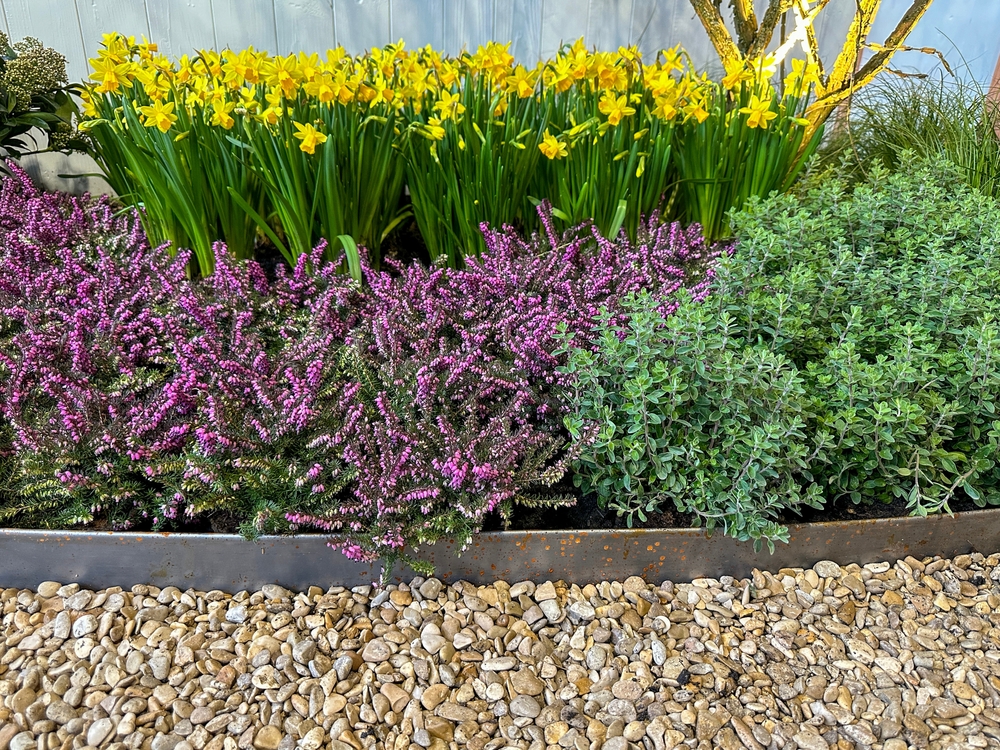
Wildfire safety has changed the way many gardeners think about the edge of a property. Instead of treating a garden border as nothing more than a pretty transition between lawn and flower beds, gardeners increasingly design these spaces to create separation between vegetation, buildings, and potential fire paths.
A fire-smart border will not make a property fireproof, and no plant deserves the magical label of “fireproof.” Good garden design can, however, reduce the amount of combustible material around a home and make it harder for flames to move directly from one plant to another. The result can still look lush, colorful, and welcoming, which proves that sensible landscaping does not have to resemble a parking lot with three sad shrubs.
A Border Can Do More Than Look Pretty
A traditional garden border often packs plants together for maximum visual impact. That approach works beautifully for color and texture, but dense vegetation can create a continuous path for flames, especially when dry leaves, dead stems, mulch, and branches collect beneath the plants. A fire-smart border instead creates deliberate breaks and keeps combustible material away from vulnerable parts of the home. The goal involves managing vegetation rather than eliminating it.
Gardeners can start by looking at the space between the house and the outer landscape as a series of zones rather than one giant planting bed. Areas closest to the house deserve especially careful attention because embers can land on dry plant material, mulch, roofs, decks, and other surfaces. A thoughtfully designed border uses spacing, pruning, plant placement, and surface materials to interrupt that chain.
That approach also changes how gardeners shop for plants. Instead of asking only whether a shrub looks fabulous in May, consider how much dead material it produces, whether it holds dry leaves, how easily it sheds branches, and how much maintenance it needs during hot, dry weather. A beautiful plant that requires constant cleanup can create more work than a gardener bargained for.
Plant Choice Matters, But No Plant Gets a Free Pass
Fire-smart gardening often favors plants with relatively high moisture content in their leaves and stems, along with species that do not accumulate large amounts of dry, fine material. Deciduous plants can offer useful characteristics in some landscapes, while plants with resinous, oily, or highly flammable foliage deserve extra caution near structures. Local growing conditions matter enormously, so gardeners should choose species suited to their climate rather than grabbing a generic “fire-resistant” plant list from the internet.
Plant structure matters just as much as the plant’s name. A well-maintained tree with branches separated from the roof and other vegetation presents a different fire scenario than an overgrown tree with dead limbs touching shrubs underneath it. Even a plant with favorable characteristics can burn when drought dries its tissues or when piles of dead leaves, twigs, and branches collect around its base.
Gardeners should also resist the temptation to create a monoculture of supposedly fire-resistant plants. Diversity still matters for garden health, appearance, pollinators, and long-term resilience. A smart border combines suitable plants with good spacing and regular maintenance instead of betting everything on one supposedly magical species.
Spacing Creates Breathing Room
One of the simplest fire-smart improvements involves giving plants room instead of squeezing every available inch into a botanical traffic jam. When shrubs, grasses, trees, fences, and structures sit tightly together, fire can move through connected vegetation more easily. Strategic spacing creates breaks that can interrupt that continuity.
Spacing does not mean turning the garden into a collection of lonely plants sitting six feet apart and wondering what went wrong. Gardeners can use gravel paths, patios, stone edging, carefully maintained lawn, and other low-combustibility features to create attractive interruptions between planting groups. Those breaks can also make a landscape easier to walk through, prune, water, and inspect.
Vertical spacing deserves attention, too. Remove lower tree branches when appropriate, keep shrubs from growing directly beneath tree canopies, and prevent vegetation from touching roofs, siding, decks, chimneys, and other structures. A border should frame the house, not form a green ladder leading straight to it.
Maintenance Is the Secret Ingredient
Even an excellent fire-smart planting plan can lose its value when dead material piles up. Dry leaves, fallen branches, dead perennial stems, ornamental grass blades, and accumulated debris can provide exactly the fine, dry fuel that a carefully designed border tries to avoid. Regular cleanup therefore matters just as much as selecting the right plants.
Mulch also deserves a closer look because different materials behave differently around structures during wildfire conditions. Gardeners should follow local wildfire guidance when choosing mulch and keep combustible mulch away from buildings where recommended, particularly near decks, walls, doors, and other vulnerable areas. Gravel, stone, or other noncombustible surfaces can provide useful breaks in strategic locations.
Pruning should focus on removing dead or damaged material and maintaining sensible separation rather than giving every shrub an aggressive haircut. Trees need particular attention because dead branches and low limbs can connect vegetation to structures or create additional fuel. A five-minute inspection after a windy or unusually dry spell can reveal fallen branches, accumulated debris, or plants that have quietly crossed a boundary they should not cross.
The Best Fire-Smart Border Still Looks Like a Garden
Fire-smart landscaping does not require sacrificing personality. A border can combine flowering perennials, carefully selected shrubs, trees, paths, stone, and open spaces while still creating a more thoughtful relationship between vegetation and the home. In fact, the added spacing often gives individual plants more room to show off instead of forcing them into one enormous green blob.
The biggest mistake involves treating fire-smart gardening as a plant-shopping problem. The better approach treats it as a design and maintenance problem that starts with the house, considers how vegetation connects across the property, and then chooses plants that fit the conditions. Gardeners who plan the border around spacing, moisture, pruning, cleanup, and low-combustibility breaks can create a landscape that looks intentional rather than defensive.
That mindset also helps eliminate a dangerous misconception: no landscape can guarantee protection from wildfire. Wind can carry embers far beyond the edge of a property, and conditions can change rapidly during an active fire. Fire-smart borders simply give gardeners another practical way to reduce available fuel and create separation.
Give the Garden a Little Breathing Room
The most effective fire-smart border may not be the one packed with the most flowers or the one marketed with the fanciest “fire-resistant” plant label. It is the border that interrupts continuous vegetation, limits dry debris, keeps plants away from structures, and gives gardeners enough access to maintain everything properly. That combination turns ordinary landscaping into a practical layer of wildfire preparedness.
A garden can still have roses, shrubs, shade trees, pollinator plants, stone paths, and plenty of personality. The trick involves arranging those pieces with fire behavior in mind instead of waiting until a wildfire warning makes the garden suddenly look very different. Good design rarely shouts for attention, but in a fire-prone landscape, those quiet choices can matter.
What changes would you make to your garden border to create more space between vegetation and your home?
You May Also Like…
Why Are Gardeners Adding Fire-Safe Planting Zones Around Homes?
The Backyard Fire Pit Trend That’s Making Some Experts Nervous
7 Ways to Prepare a Garden Shed for Fall Without Buying Organizers
9 Garden Layout Mistakes Beginners Always Regret
Fire Departments Say These Common Garden Tool Storage Habits Is Causing Accidents

Brandon Marcus is a staff writer for FrugalGardening.com at District Media, Inc., where he delivers practical gardening advice with a relatable, no-nonsense style. An avid amateur gardener, he holds a BA degree and with over ten years of professional writing experience, he is also an award-winning published author whose first book, Questions For Deep Thinkers, was released by Adams Media. His work has appeared in major publications including Fandom.com, CHUD.com, TheColdWire.com, and Fansided.com.
Leave a Reply