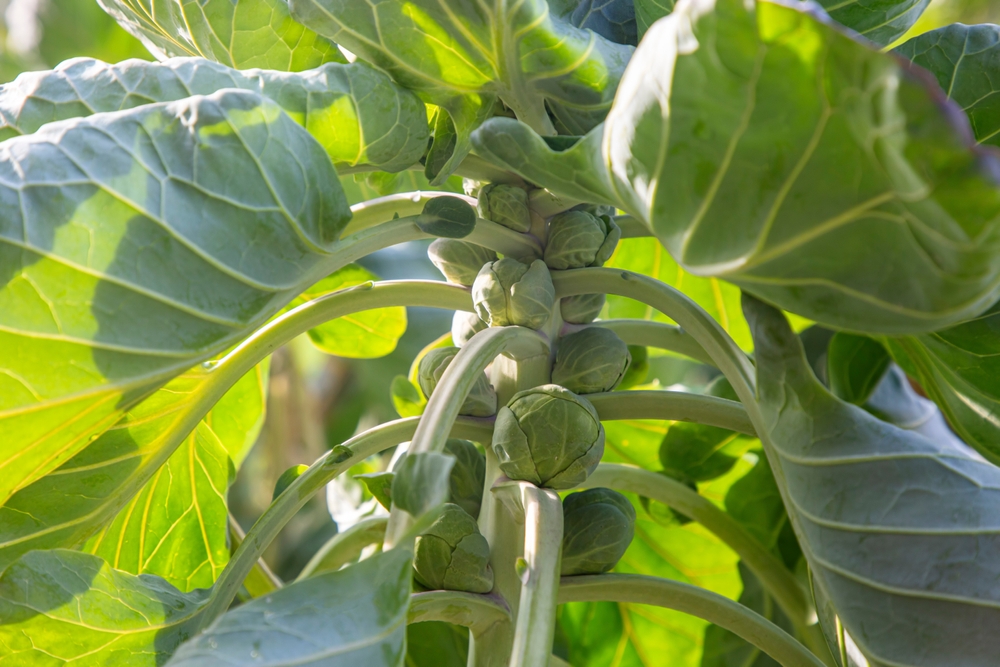
Brussels sprouts grow in a wonderfully odd fashion, with little cabbage-like buds tucked into the leaf axils along a tall central stalk. The lower sprouts mature first while newer ones develop higher up, which makes leaf removal more nuanced than grabbing pruning shears and giving the plant a haircut.
A few well-timed cuts can make harvest easier, but healthy leaves deserve to stay. It’s important to understand the process of removing lower leaves on your Brussels sprouts before you dig into the garden.
Green Leaves Are Doing Real Work
Those broad leaves may look like clutter once sprouts appear, but they act as the plant’s solar panels. Healthy leaves capture light and turn that energy into sugars that support growth throughout the plant, including developing sprouts. That makes a completely stripped stalk a poor goal for a home gardener who wants a strong plant and a steady harvest.
Commercial growers remove leaves to accelerate harvest, while home gardeners do not need to copy that practice. Some pros advise gardeners not to strip lower leaves because the plant needs them for continued growth. The plant does not receive a medal for looking tidy, and a leafy stalk can prove more useful than a bare one.
When Removing Lower Leaves Makes Sense
The best time to remove a lower leaf usually arrives when it has turned yellow, become damaged, or interferes with harvesting. Those leaves contribute less than vigorous green foliage, and damaged tissue can create a messy spot around the stalk. Removing a leaf also makes sense when you pick a mature sprout, because the leaf beneath it no longer needs to remain attached.
Gardeners can also remove a limited number of healthy lower leaves as sprouts develop, particularly when the goal involves speeding development toward harvest. University of Maryland Extension says removing the lowest leaves can hasten sprout development, while Illinois Extension describes gradual leaf removal as optional rather than required. A little pruning can help, but aggressive stripping can remove more working foliage than the plant needs.
The Leaves That Should Stay Put
The upper leaves deserve special protection because they remain major sources of energy while the plant enlarges its sprouts. Illinois Extension recommends leaving several of the largest, healthiest, fully expanded leaves near the top intact, even when gardeners remove some lower foliage. Those leaves keep capturing sunlight while the stalk fills with sprouts, so they are valuable garden machinery, not decorative extras.
A practical approach starts with restraint: remove yellow or badly damaged leaves first, then consider a few lower healthy leaves only if the plant needs easier harvest access or you want to encourage lower sprouts to finish. Avoid pulling leaves simply because the stalk looks crowded, and never strip the plant down to a naked stem while it still has substantial growing to do. If a leaf looks healthy, green, and useful, leaving it alone usually gives the plant another working solar panel.
Timing Matters More Than the Shears
Brussels sprouts reward patience because cool weather helps the buds develop good flavor and firm texture. The sprouts mature from the bottom upward, so gardeners can harvest the lowest firm, tightly closed sprouts while leaving smaller upper sprouts to develop. Removing lower leaves during harvest can gradually clear the stalk without turning pruning into a separate gardening chore.
Near the end of the season, another technique can help remaining sprouts finish: topping the plant. University of Minnesota Extension recommends removing roughly the top inch or two once the lowest sprouts reach about an inch across, which shifts the plant’s focus toward enlarging developing sprouts higher on the stalk. That job differs from removing lower leaves, so gardeners should not confuse topping with stripping foliage, especially when the plant still has healthy leaves doing useful work.
Give the Brussels Sprouts a Little Breathing Room
The simplest answer sounds almost boring, but it works: remove lower leaves when they turn yellow, become damaged, interfere with harvest, or when careful pruning makes sense for the crop’s stage. Keep healthy upper foliage, avoid unnecessary stripping, and let the plant continue collecting sunlight while sprouts swell along the stalk. The goal involves managing the plant, not giving it a dramatic makeover.
A Brussels sprout plant should look purposeful rather than perfectly naked. A few missing lower leaves will not ruin a crop, but wholesale defoliation offers little reason for excitement in a home garden. When sprouts feel firm and remain tightly closed, harvest from the bottom upward and remove the leaf beneath each harvested sprout as needed, keeping the remaining green canopy intact.
What do you do with the lower leaves on your Brussels sprouts, and have you noticed a difference after removing them?
You May Also Like…
5 Vegetables That Can Handle a Shadier Summer Corner
5 Reasons Tabletop Vegetable Gardens Work Well for Renters
Is It Time to Stop Encouraging New Growth on Perennials?
5 Ways to Turn an Overgrown Herb Bed Into a Fall Harvest
Why Are Gardeners Growing Skirret and Other Forgotten Edibles?

Brandon Marcus is a staff writer for FrugalGardening.com at District Media, Inc., where he delivers practical gardening advice with a relatable, no-nonsense style. An avid amateur gardener, he holds a BA degree and with over ten years of professional writing experience, he is also an award-winning published author whose first book, Questions For Deep Thinkers, was released by Adams Media. His work has appeared in major publications including Fandom.com, CHUD.com, TheColdWire.com, and Fansided.com.
Leave a Reply