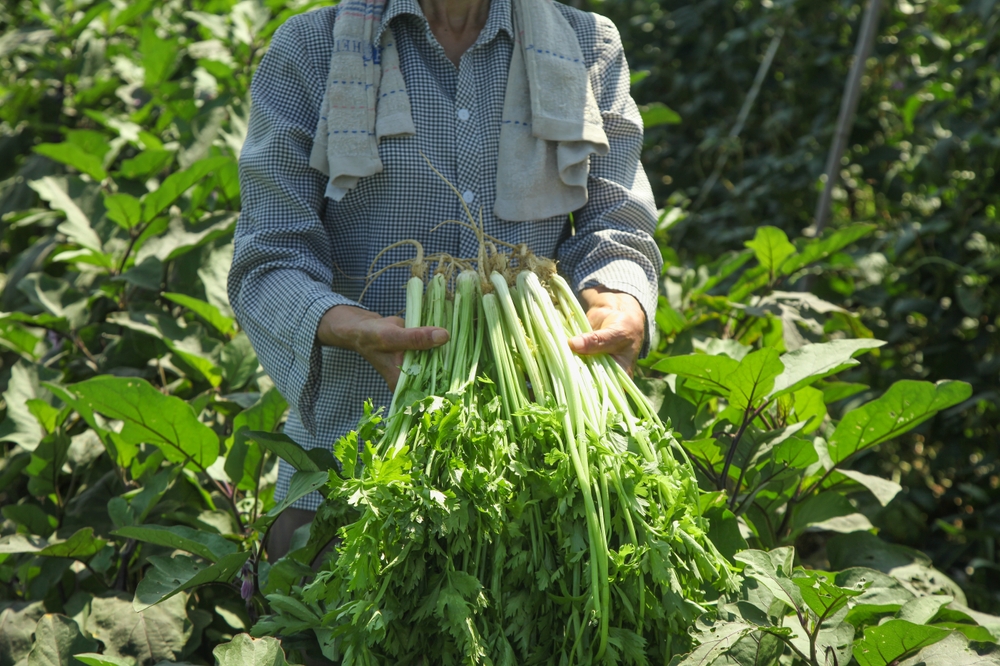
Celery should deliver crisp crunch and a clean, fresh flavor, not the experience of chewing on green fishing line. When garden-grown celery turns tough, stringy, bitter, or unusually strong, growing conditions usually deserve some suspicion, particularly moisture and heat.
That matters because celery can look perfectly healthy above the soil while quietly struggling around its shallow roots. A few changes in watering, harvest timing, variety selection, and summer protection can make a surprising difference, turning those fibrous stalks into something worth grabbing for a snack instead of immediately tossing into the soup pot.
Water Stress Can Turn Celery Into a Chew Toy
Celery has a small, shallow root system, so it needs steady moisture throughout the growing season. When soil dries out and then receives a large drink, the plant experiences moisture stress that can produce stringier stalks and stronger flavor. Utah State University Extension specifically connects water stress with stringiness and strong flavor in celery, making inconsistent irrigation one of the first clues to investigate. A quick surface sprinkle often cannot reach enough of the root zone.
Instead, check the soil below the surface and water thoroughly when needed, aiming for consistently moist soil rather than a cycle of bone-dry and waterlogged conditions. Organic mulch can slow evaporation and help stabilize moisture, while drip irrigation or a soaker hose can deliver water directly to the root zone. Celery generally needs about 1 to 2 inches of water each week, although rainfall, soil type, plant size, and temperature can change that need.
Heat Makes Celery Much Less Charming
Celery prefers cool growing conditions, and hot, dry weather can push the plant toward tougher texture and harsher flavor. Utah State University Extension places the ideal growing temperature around 55 to 65 degrees Fahrenheit and notes that temperatures above 85 degrees can increase water needs and fiber development. That creates an irritating garden trap because hot weather increases water demand just as evaporation speeds up.
A layer of organic mulch can help keep the soil cooler and reduce moisture loss during hot spells. Gardeners can also monitor soil moisture more closely when temperatures climb and increase watering frequency when necessary. If a plant already endured a long stretch of heat and drought, better conditions can help new growth, but older stalks may keep their tougher texture.
Variety and Harvest Timing Matter More Than They Seem
Not every celery variety produces identical texture, and some homegrown celery naturally develops a more intense flavor than the mild stalks commonly found at the grocery store. Oregon State University Extension notes that variety seems to play a major role in stringiness, while erratic watering can add to the problem. Perfect irrigation cannot always transform a naturally fibrous variety into delicate, snack-worthy celery.
Harvest timing also affects the eating experience because the inner stalks generally offer the most tender texture. Harvesting individual outer stalks allows gardeners to use the plant gradually instead of waiting for every stalk to reach maximum size. If older stalks already resemble vegetable twine, peeling away the strings can still make them useful in salads, snacks, soups, and other cooked dishes.
Strong Flavor Does Not Always Mean Something Went Wrong
Homegrown celery can taste noticeably stronger than grocery-store celery, and that difference does not automatically indicate a problem. Variety, maturity, growing conditions, and weather all influence flavor, so a garden stalk can deliver considerably more celery punch simply because it grew under different conditions. A sudden change toward bitter, tough stalks after hot, dry weather, however, points more strongly toward environmental stress.
Look for patterns across the garden rather than judging one stalk in isolation. If the plants tasted mild earlier but became fibrous after several hot, dry weeks, moisture and temperature deserve close attention; if every plant produces stringy stalks despite consistent care, variety becomes a stronger suspect. Celery can also lose eating quality as it moves toward flowering and seed production, so harvest it rather than letting it linger indefinitely once the plant starts making that transition.
Give Next Season’s Celery a Better Start
For better celery next season, choose a variety known for tender stalks, grow it during a cooler part of the season, and prepare soil that holds moisture without remaining soggy. Add organic matter where appropriate, keep competing weeds under control, and mulch around the plants as summer temperatures rise. Regular irrigation matters much more than occasional rescue watering, especially because celery’s shallow roots can dry quickly. A simple soil check with a finger or trowel can reveal trouble before the stalks announce it with a mouthful of strings.
Do not judge the crop solely by supermarket standards, either. Garden celery can pack more flavor, while the leaves can add excellent savory character to stocks, soups, sauces, and other dishes. The goal remains tender, crisp stalks, but even a stubborn batch can earn its place in the kitchen when the garden refuses to cooperate.
The Garden Clue Hiding in Those Strings
Stringy celery usually tells a story involving heat, inconsistent moisture, variety, harvest timing, or some combination of those factors. Start with the basics: keep soil consistently moist, protect the root zone with mulch, watch plants closely during hot weather, and harvest tender inner stalks at a useful size. If those changes fail to improve texture, investigate the variety because genetics can play a significant role in how fibrous the stalks become. A little garden detective work can turn a frustrating celery patch into a much more dependable crop.
What has your garden celery taught you about watering, heat, varieties, or harvest timing? Share what worked, what failed, and whether your toughest stalks ended up in the salad bowl or the soup pot.
You May Also Like…
5 Vegetables That Can Handle a Shadier Summer Corner
5 Reasons Tabletop Vegetable Gardens Work Well for Renters
Can Reflective Mulch Improve Harvests in Small Vegetable Beds?
5 Ways to Use Shade From Mature Crops Before They Come Out
Should You Remove Old Strawberry Leaves After Fruiting?

Brandon Marcus is a staff writer for FrugalGardening.com at District Media, Inc., where he delivers practical gardening advice with a relatable, no-nonsense style. An avid amateur gardener, he holds a BA degree and with over ten years of professional writing experience, he is also an award-winning published author whose first book, Questions For Deep Thinkers, was released by Adams Media. His work has appeared in major publications including Fandom.com, CHUD.com, TheColdWire.com, and Fansided.com.
Leave a Reply