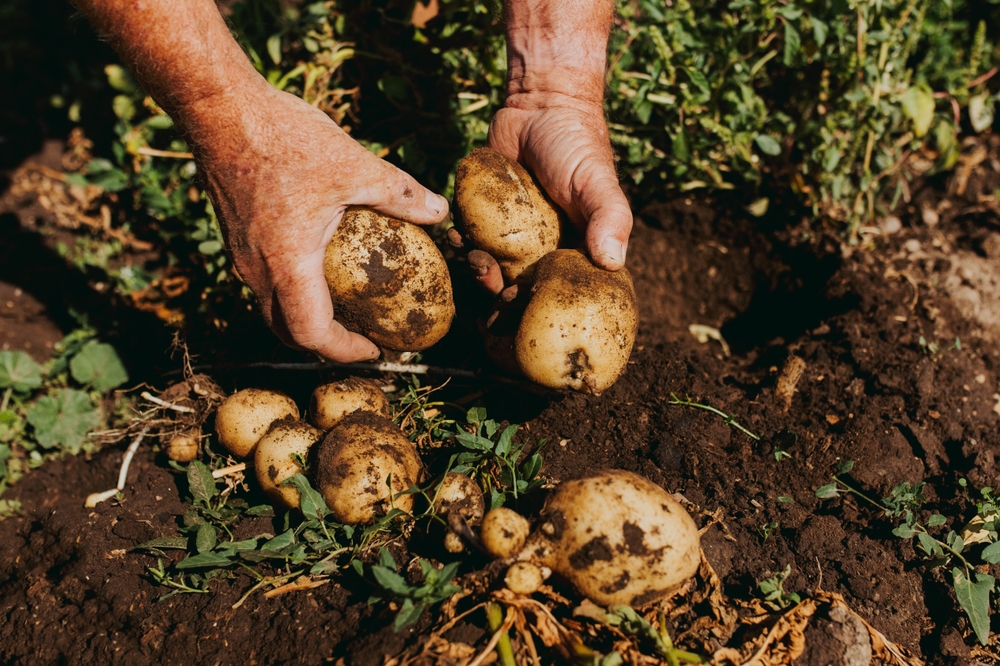
A potato can look flawless on the outside, only to reveal a strange empty pocket when the knife reaches the middle. Gardeners call this condition hollow heart, and it can turn a perfectly ordinary spud into a potato with what looks suspiciously like a tiny underground cave. The good news is that the hollow spot usually does not mean the potato has a disease or has gone bad.
Hollow heart usually develops because the tuber experiences a sudden change in its growing conditions, especially when soil moisture swings from too little to too much. Rapid tuber growth can pull the developing tissues apart in the center, leaving an irregular cavity that may look star-shaped, angular, or surrounded by slightly brown tissue. Once the cause makes sense, the mystery becomes much less mysterious, and a few changes in watering and fertilizing can reduce the odds of seeing those potato caverns again.
When a Potato Decides to Build a Secret Room
Hollow heart begins underground, during the period when potato tubers rapidly enlarge. A dry spell can slow that growth, then a soaking rain or heavy irrigation can suddenly give the plant access to abundant moisture, causing the tuber to accelerate its expansion. The tissues near the center cannot always keep pace with that rapid change, so the developing potato can pull apart internally and leave a cavity behind. Cool conditions followed by rapid growth can contribute to the problem as well, which explains why weather patterns can play such a large role even when the garden receives otherwise competent care.
The cavity often looks irregular rather than like a neat, round hole drilled through the potato. It may resemble a star, a triangle, or an oddly shaped pocket, and the surrounding flesh can remain firm and healthy. That appearance helps distinguish hollow heart from problems such as soft rot, which causes decay rather than simply leaving an empty space. A potato with hollow heart may look bizarre enough to inspire a second opinion at the cutting board, but the condition itself does not make the potato unsafe to eat.
Water Can Turn a Good Potato Into a Hollow One
Water management sits near the center of the hollow-heart mystery because potatoes dislike dramatic swings between drought and abundance while their tubers bulk up. That does not mean gardeners should keep the soil soggy, because excessive moisture creates its own problems and can encourage disease. Instead, the goal involves maintaining reasonably consistent soil moisture so the developing tubers do not bounce between growth slowdowns and sudden growth spurts.
A simple garden habit can help: check the soil before reaching for the hose. If recent rain has thoroughly moistened the root zone, more water may do more harm than good, while a genuinely drying soil profile deserves attention before the plants experience serious stress. Mulch can also help moderate soil moisture and reduce the dramatic swings that occur when summer weather alternates between hot, dry stretches and sudden downpours. The trick involves consistency, not turning the potato patch into a swamp.
Fertilizer Can Help, But More Is Not Always More
Nitrogen deserves a little suspicion when hollow potatoes appear, particularly if the plants received generous doses of fertilizer. Potatoes need nitrogen for healthy growth, but excessive nitrogen can encourage vigorous foliage, delay tuber development and contribute to misshapen or hollow tubers in some varieties. Gardeners sometimes assume that extra fertilizer equals extra potatoes, but plants do not follow that simple accounting system. Soil testing offers a much better guide than repeatedly adding fertilizer whenever the plants look hungry, especially when compost, manure or a previous nitrogen-rich crop already contributes nutrients.
Variety also matters because larger tubers tend to show hollow heart more often than smaller ones. A gardener growing a variety known for producing enormous baking potatoes may therefore encounter hollow centers more readily than someone harvesting smaller tubers. Closer spacing can encourage somewhat smaller tubers, while choosing a variety suited to the garden’s conditions can also reduce the problem.
The Potato Looks Fine, So Is It Still Dinner?
In most cases, yes, hollow heart creates a quality issue rather than a food-safety emergency. Cut away the cavity and any discolored tissue, then examine the remaining flesh for normal firmness, color and smell. A clean, firm potato surrounding an empty center does not need to go straight into the compost bin simply because its interior looks unusual.
The bigger concern comes when the interior shows actual decay, unpleasant odors, extensive discoloration or soft, collapsing tissue, because those signs point toward a different problem. Diseases and storage disorders can produce internal damage that looks nothing like the clean cavity associated with hollow heart, so the distinction matters. Gardeners should also inspect the growing conditions when several potatoes show the same defect, since a pattern across the crop often points toward environmental stress rather than an isolated bad potato. Keep soil moisture steadier during tuber bulking, avoid unnecessary fertilizer, and harvest varieties at an appropriate size instead of chasing the biggest potato possible.
Keep the Potato Patch Steady and the Caverns Smaller
Hollow spots inside healthy-looking potatoes usually trace back to rapid, uneven tuber growth rather than some mysterious potato disease. Fluctuating moisture ranks among the biggest culprits, while large-tuber varieties and stressful growing conditions can increase the risk. The best defense starts with consistent soil moisture, sensible irrigation and fertilizer decisions based on the soil and crop rather than guesswork.
A hollow-centered potato may look dramatic when sliced open, but if the surrounding flesh remains sound, it can still make perfectly respectable mashed potatoes, fries or a baked dinner. In other words, the potato did not fail at gardening science, it simply had a growth spurt that left a little extra architectural space in the middle.
Have you ever sliced open a potato and discovered a hollow center hiding inside? Share what your potatoes looked like and what the weather or watering conditions were like that season in the comments.
You May Also Like…
Why More Americans Are Growing Potatoes Again
It’s Not Too Late! Start Sweet Potatoes and Pumpkins Now With Money-Saving Tips
The Calorie King: Why Potatoes are the Highest ROI Crop for Budget Growers
Why Are Gardeners Growing Skirret and Other Forgotten Edibles?
What Is Making Your Zucchini Fruit Shrivel Before Growing?

Brandon Marcus is a staff writer for FrugalGardening.com at District Media, Inc., where he delivers practical gardening advice with a relatable, no-nonsense style. An avid amateur gardener, he holds a BA degree and with over ten years of professional writing experience, he is also an award-winning published author whose first book, Questions For Deep Thinkers, was released by Adams Media. His work has appeared in major publications including Fandom.com, CHUD.com, TheColdWire.com, and Fansided.com.
Leave a Reply