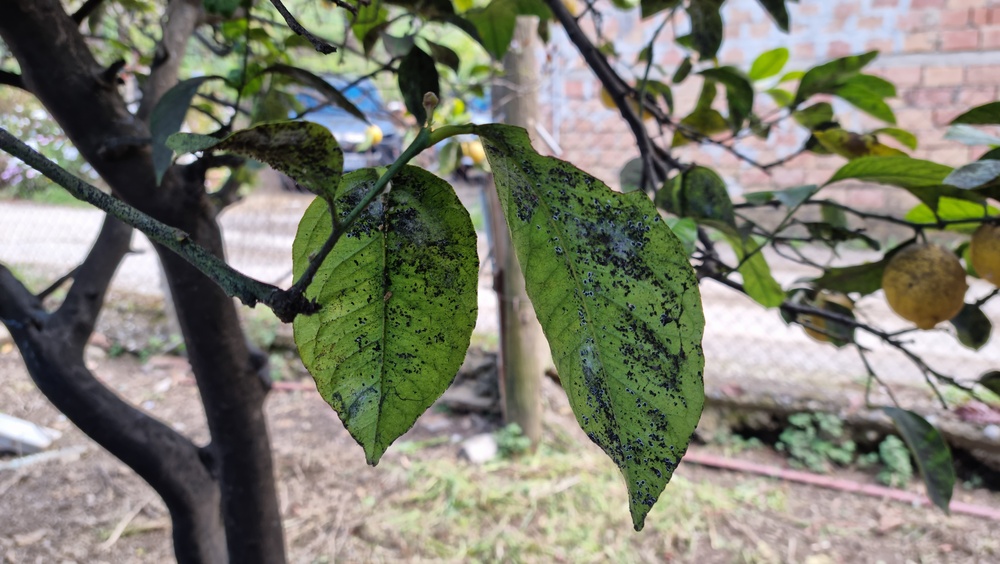
Black residue on leaves beneath a tree can look like someone dusted the garden with fireplace ash. The culprit often has a much more interesting story: sap-sucking insects feed high in the canopy, leave behind sticky honeydew, and sooty mold grows on that sugary mess as it falls onto lower leaves. Aphids and soft scale insects commonly create this chain reaction, and the black coating can show up on leaves, twigs, patio furniture, cars, and anything else sitting beneath the tree.
The good news is that the black material usually does not mean the tree itself has caught some mysterious black-leaf disease. Sooty mold does not attack plant tissue the way many disease-causing fungi do, although a heavy coating can interfere with photosynthesis and signal that a substantial insect population sits somewhere above. The trick involves finding the insects instead of simply scrubbing away the evidence.
The Black Stuff Often Starts With a Sticky Insect Problem
Aphids, scale insects, whiteflies, leafhoppers, and some other sap-feeding insects tap into plant fluids with piercing mouthparts. Their diet contains more sugar than they need, so they excrete the excess as honeydew, a clear, sticky substance that can coat leaves and objects underneath the tree.
Sooty mold fungi love that sugary coating and colonize it, creating the familiar black, gray, or brown film. This explains an important clue: the worst blackening often appears on foliage below an affected branch rather than directly beside the insects. University of Minnesota Extension notes that honeydew can coat objects beneath infested plants, while Penn State describes sooty mold on lower leaves after honeydew drips from aphids higher in a tree.
Look Up Before Reaching for the Hose
The smartest detective work starts above the blackened leaves. Inspect the undersides of leaves, young shoots, twigs, and branches for clusters of tiny insects, sticky spots, distorted foliage, or unusual bumps that resemble little brown shields. Aphids often gather on tender growth and leaf undersides, while soft scales can cling to twigs and produce surprisingly generous amounts of honeydew.
Ants provide another useful clue because honeydew attracts them, along with insects such as yellowjackets and wasps. If ants march steadily up the trunk and the foliage below looks suspiciously soot-covered, the combination deserves a closer inspection. A hand lens makes tiny pests much easier to spot, and a white sheet of paper held beneath a branch can make crawling insects easier to see when a branch gets gently tapped.
Not Every Black Leaf Needs a Pesticide
A black coating can look alarming, but the mold itself usually causes less trouble than the insect infestation that supplies its food. Aphid honeydew generally does not harm plants directly, and many aphid populations receive plenty of attention from lady beetles, lacewings, flower-fly larvae, and tiny parasitic wasps.
That makes restraint a useful gardening tool. A strong stream of water can knock aphids from foliage and wash away some honeydew and sooty mold, while beneficial insects can help reduce pest numbers naturally. Spraying every visible insect can backfire when broad-spectrum products also eliminate the predators that keep pest populations in check, so identification should come before treatment.
Scale Insects Deserve Special Attention
Scale insects can create an especially convincing black-residue mystery because some species spend much of their lives looking less like insects and more like tiny bumps glued to branches. Soft scales produce honeydew, and heavy infestations can leave branches, leaves, and nearby surfaces coated with sooty mold. Cottony maple scale, for example, can produce conspicuous honeydew and sooty mold while often causing little serious damage when natural enemies keep populations under control.
Other scale species can cause much more trouble, particularly when populations become heavy. Feeding can lead to yellowing foliage, premature leaf drop, twig dieback, or declining branches depending on the species and host plant. Because scale insects have different life cycles, identifying the species matters before choosing a treatment, especially when horticultural oil or another insect-control product enters the picture.
The Cleanup Starts Above, Not Below
Washing blackened leaves can improve the appearance of a plant, but cleanup alone will not solve the problem if insects continue producing honeydew overhead. Once the insect source declines, fresh honeydew stops arriving and weather, rain, and normal leaf growth gradually remove much of the sooty coating. A hose can help speed that process, particularly on sturdy plants that can handle a firm spray.
The bigger job involves monitoring the tree and deciding whether the pest population actually threatens plant health. Check new growth, leaf undersides, and branches regularly, and look for yellowing, curling, premature leaf drop, dieback, or large insect colonies. If treatment becomes necessary, choose a product labeled for the specific pest and plant, then follow every label direction carefully rather than reaching for the strongest option on the shelf.
A Little Black Residue Can Tell a Big Story
That mysterious black film beneath a tree often acts like garden evidence left at the scene of a crime. Instead of blaming the residue itself, trace the sticky honeydew upward and look for aphids, scale insects, or another sap-feeding pest. Sooty mold simply takes advantage of the sugary surface, which means the real solution usually involves addressing the insect source rather than trying to wage war on every blackened leaf.
Have you ever found black residue beneath a tree and traced it back to aphids, scale insects, or another pest? Share what happened in the comments.
You May Also Like…
6 Ways to Protect Young Trees From String-Trimmer Damage
8 Ways to Help Young Fruit Trees Through Dry Late-Summer Weeks
9 Backyard Habits That Can Accidentally Invite Pests
March Garden Pests That Hide Underground
Why More Homeowners Are Planting Fruit Trees Again

Brandon Marcus is a staff writer for FrugalGardening.com at District Media, Inc., where he delivers practical gardening advice with a relatable, no-nonsense style. An avid amateur gardener, he holds a BA degree and with over ten years of professional writing experience, he is also an award-winning published author whose first book, Questions For Deep Thinkers, was released by Adams Media. His work has appeared in major publications including Fandom.com, CHUD.com, TheColdWire.com, and Fansided.com.
Leave a Reply