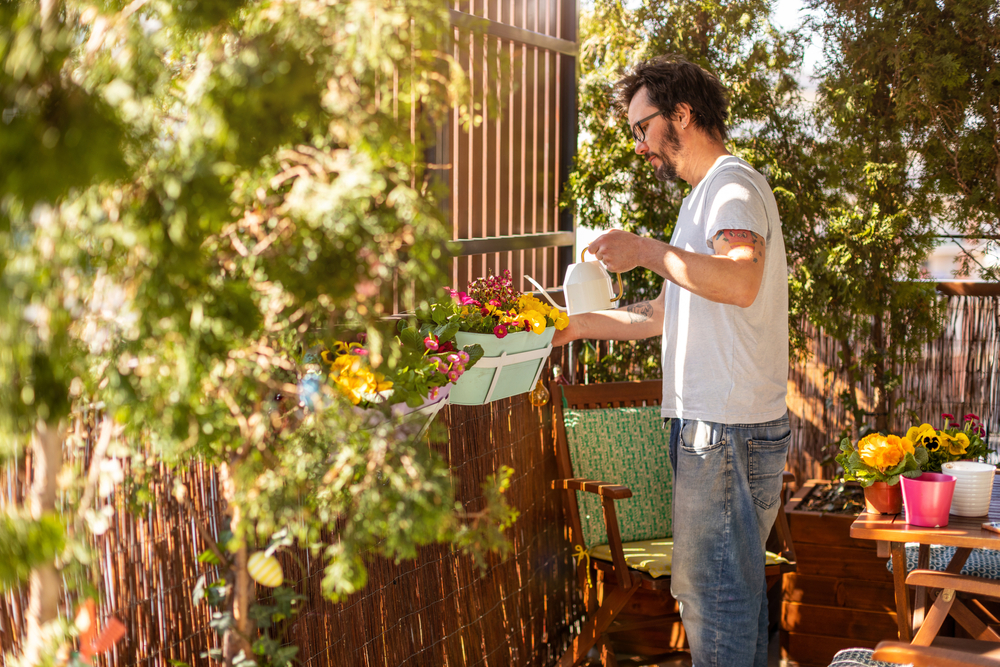
July pushes balcony gardens to their limits. A space that looked lush and productive in late spring can suddenly fill with drooping herbs, crispy leaves, and lettuce that shoots skyward instead of producing another tasty harvest. Tiny growing spaces heat up faster than traditional garden beds, and balconies often face intense afternoon sun with very little protection from drying winds.
The good news starts with one simple fact. Most July balcony problems have practical solutions that take far less effort than replacing every struggling plant. Small adjustments to watering, plant placement, and shade can rescue many containers before the hottest part of summer steals the growing season. A balcony may create unique challenges, but it also gives gardeners complete control over every pot, every inch of shade, and every drop of water.
Why Balcony Gardens Heat Up So Quickly
Balconies create their own little climate, and that climate often feels several degrees hotter than a nearby backyard. Concrete, brick, glass, and metal absorb sunshine throughout the day, then radiate heat directly back toward plants. Containers add another challenge because their soil volume stays small, which means moisture disappears quickly and roots heat up much faster than roots growing in the ground.
Wind makes everything even tougher. While a pleasant breeze feels refreshing to people, it strips moisture from leaves and dries container soil at remarkable speed. Gardeners often blame the sun for wilted plants, but strong afternoon winds frequently cause just as much stress because leaves lose water faster than roots can replace it.
Why Lettuce Suddenly Starts Bolting
Lettuce grows best during cool weather, so July naturally pushes it toward the end of its growing cycle. Instead of producing tender new leaves, the plant sends up a tall flower stalk in an attempt to produce seed before conditions become even harsher. That process, called bolting, changes the flavor dramatically because the leaves develop a stronger, bitter taste.
Once bolting begins, reversing it rarely works. Harvesting the remaining edible leaves while they still taste acceptable usually offers the best option. Gardeners can also allow one or two healthy plants to flower and produce seed, then replace the rest with heat-loving vegetables or herbs that appreciate the warmer temperatures instead of fighting against them.
Smart Ways to Protect Plants From Sun and Wind
Shade does not have to mean darkness. Even a simple piece of shade cloth that blocks about 30 to 50 percent of sunlight during the hottest afternoon hours can lower leaf temperatures while still allowing vegetables to photosynthesize and continue growing. Moving containers behind a balcony railing, patio chair, or decorative screen often reduces wind exposure without sacrificing valuable sunlight.
Grouping containers together creates another surprisingly effective defense. Closely spaced pots shade one another’s soil and reduce moisture loss between plants. Larger containers also protect smaller ones from harsh afternoon conditions, creating tiny pockets of cooler air that help delicate greens and herbs survive July’s intense weather.
Watering the Right Way Makes a Huge Difference
Many gardeners react to wilted plants by reaching for the watering can immediately, but timing matters almost as much as the amount of water. Early morning watering allows moisture to soak deeply into the soil before temperatures climb. Plants begin the day hydrated instead of trying to recover during the hottest afternoon hours.
Deep watering works much better than frequent light sprinkling. Water should soak through the entire container until excess moisture drains from the bottom. That encourages roots to grow downward where temperatures stay slightly cooler. Adding a layer of mulch, shredded bark, or even decorative pebbles on top of the soil also slows evaporation and keeps roots more comfortable throughout the day.
Swap Out Struggling Crops Before Summer Wins
July does not have to mark the end of the gardening season. Instead of fighting to keep cool-season crops alive, many gardeners refresh containers with vegetables and herbs that actually enjoy summer weather. Basil, rosemary, thyme, peppers, eggplant, and many compact tomato varieties continue producing happily when temperatures remain high.
Quick changes also keep a balcony looking vibrant instead of tired. Removing exhausted lettuce creates room for colorful flowers that attract pollinators or fresh herbs that deliver months of harvests. Rather than viewing bolting as failure, successful gardeners often treat it as nature’s reminder that every season brings new opportunities to plant something better suited for current conditions.
A Better July Starts With Small Changes
A thriving July balcony garden rarely depends on luck. Success comes from paying attention to how sunlight moves across the space, noticing where wind hits hardest, and choosing plants that match those conditions instead of fighting them. Small adjustments often deliver surprisingly dramatic improvements within just a few days.
Balcony gardening rewards observation more than perfection. Every season teaches something new about the space, whether one corner stays cooler, one container dries faster, or one variety handles heat better than another. Those lessons build a stronger garden year after year, even during the hottest weeks of summer.
What changes have helped your balcony garden survive the hottest days of July? Share your favorite summer gardening trick in the comments below.
You May Also Like…
7 Backyard Gardening Ideas That Could Save Money All Summer Long
The Cheap Backyard Upgrade That Makes Summer Nights Better
The Heat-Wave Watering Mistake That Can Kill Container Gardens
Beaumont, CA Weed-Abatement Season Starts May 15: Ignore It and You’ll Get a Bill
The Gardening Warning Experts Are Issuing About Extreme Summer Heat

Brandon Marcus is a staff writer for FrugalGardening.com at District Media, Inc., where he delivers practical gardening advice with a relatable, no-nonsense style. An avid amateur gardener, he holds a BA degree and with over ten years of professional writing experience, he is also an award-winning published author whose first book, Questions For Deep Thinkers, was released by Adams Media. His work has appeared in major publications including Fandom.com, CHUD.com, TheColdWire.com, and Fansided.com.
Leave a Reply