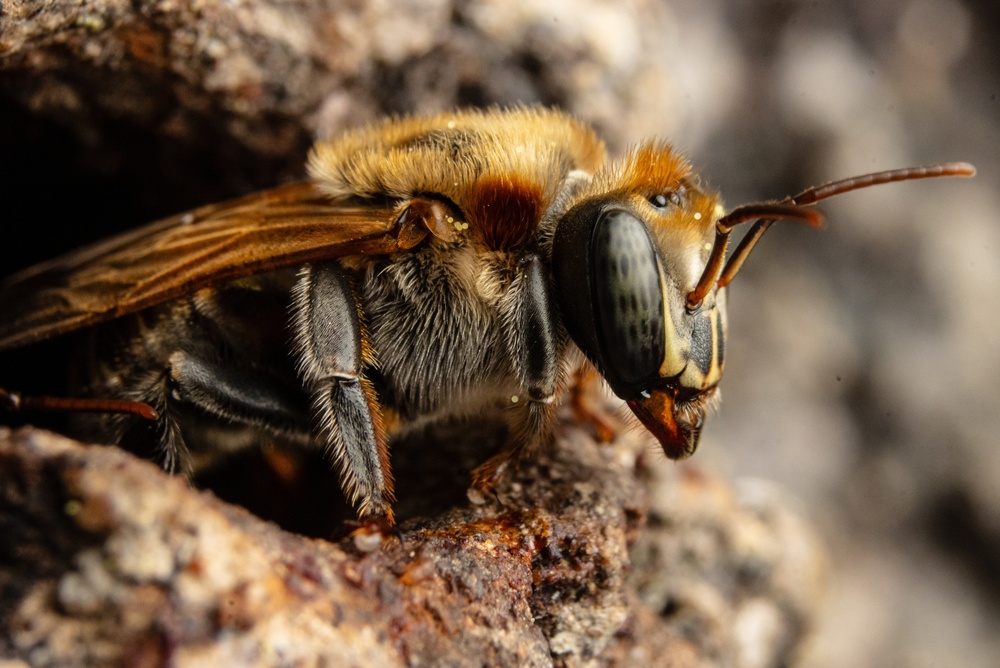
Before you cut every dead flower stalk down to the ground this fall, consider what’s hiding inside those dried stems. Some of the plants you were planning to throw away could become valuable nesting sites for native bees, including species that help pollinate your flowers, vegetables, and fruit trees.
Many gardeners focus on planting flowers that attract bees during spring and summer, but providing food is only part of creating a pollinator-friendly landscape. Native bees also need safe places to reproduce, shelter, and complete their life cycles.
According to the Xerces Society for Invertebrate Conservation, approximately 30% of native bee species nest in cavities, including hollow plant stems and tunnels inside dead wood. The remaining majority primarily nest underground, making both standing vegetation and undisturbed soil important.
The good news is that creating native bee nesting habitat doesn’t require expensive bee hotels or specialized gardening equipment. In many cases, simply leaving the right plants standing through winter is an excellent place to start.
Why Dead Plant Stems Matter More Than You Think
A dried flower stalk might look useless after the growing season ends, but its hollow or soft center can provide valuable nesting space. Cavity-nesting bees use hollow stems or excavate tunnels inside pithy plant material to create individual nesting chambers. Female bees deposit eggs along with stored pollen and nectar, giving their developing offspring food until they’re ready to emerge. Unlike honey bees, most native bee species live independently rather than in large colonies, so suitable nesting sites can be scattered throughout a garden. Preserving these natural structures helps create native bee nesting habitat without requiring gardeners to purchase or maintain artificial nesting boxes.
1. Raspberry and Blackberry Canes
Those older raspberry and blackberry canes that seem ready for the compost pile can be particularly useful to certain native bees. According to the Xerces Society, plants in the Rubus genus have soft, pithy stems that small carpenter bees can excavate for nesting. These bees create tunnels inside dead canes, making older growth valuable even after it stops producing fruit. When maintaining berry patches, avoid removing every dead cane immediately, but continue managing plants as needed to control disease and maintain fruit production. Leaving a few safe, dry sections standing in an out-of-the-way area can provide additional habitat without sacrificing your entire berry harvest.
2. Joe-Pye Weed Stems
Joe-Pye weed is already popular in pollinator gardens because its large clusters of flowers attract bees and butterflies during late summer. Joe-Pye weed is a plant with stems that can provide nesting opportunities for cavity-nesting bees. Once the flowers fade, its tall, sturdy stalks can remain standing through winter instead of being cut down during fall cleanup. Because mature plants can grow several feet tall, gardeners may prefer positioning them toward the back of perennial borders where dried stems won’t obstruct walkways. Keeping some of this old growth can support native bee nesting habitat while preserving natural winter structure in your garden.
3. Elderberry Branches
Elderberry shrubs offer more than attractive flowers and berries for backyard wildlife. According to North Carolina State University Extension, elderberry stems can support several groups of cavity-nesting bees, including small carpenter bees and mason bees. Their soft interior tissue makes older stems particularly useful for species capable of excavating their own nesting tunnels. Instead of aggressively removing every dead twig during routine pruning, consider retaining some sound, nonhazardous branches where they won’t interfere with the shrub’s health or appearance. Native elderberry species can also provide seasonal flowers and fruit for wildlife, making them a useful addition to appropriately sized landscapes.
4. Bee Balm and Wild Bergamot
Bee balm earns its place in pollinator gardens with colorful flowers that attract bees, butterflies, and hummingbirds throughout the growing season. However, the Xerces Society’s nesting habitat guide also identifies bee balm stems as potential nesting sites for small cavity-nesting species, including yellow-faced bees. These insects can use naturally hollow stems, making dried stalks worth preserving after flowering ends. Instead of cutting every stem flush with the soil in autumn, allow healthy plants to remain standing until their seasonal cleanup is necessary. This simple practice extends the usefulness of bee balm beyond its flowering period and contributes to a more complete native bee nesting habitat.
5. Sunflower Stalks
Sunflowers are famous for their large blooms and nutritious seeds, but their thick stems can also benefit native insects. Sunflowers are among plants whose hollow or pithy stems may be used by cavity-nesting bees. After the flowers finish producing seeds, leaving selected stalks standing can provide additional nesting opportunities as the plant material dries and ages. The seed heads may also attract goldfinches and other seed-eating birds, giving sunflowers multiple wildlife benefits after summer ends. If large stalks become unstable or threaten nearby structures, remove those hazards while preserving smaller, suitable stems elsewhere in the garden.
6. Native Thistles and Ironweed
Not every valuable pollinator plant is one that homeowners immediately recognize as ornamental. Native thistles are useful nesting plants for certain larger cavity-nesting bees, while ironweed is among plants associated with stem-nesting bees. Both groups can also provide nectar for pollinators when their flowers are in bloom. However, gardeners should distinguish desirable native thistles from invasive species that can spread aggressively and create problems for neighboring properties. Choosing regionally appropriate plants allows you to expand native bee nesting habitat without introducing troublesome weeds into your landscape.
7. Native Roses and Other Pithy Shrubs
Some of the best nesting opportunities come from shrubs that already provide structure and beauty throughout the growing season. The Xerces Society explains that small carpenter bees may excavate tunnels inside the dead, pithy stems of roses and other suitable woody plants. Native roses can offer additional benefits through flowers, fruit, and protective cover for wildlife. When pruning, avoid removing every older twig simply because it has stopped producing vigorous new growth, provided the material isn’t diseased or creating a hazard. Retaining a few suitable stems can create nesting opportunities while allowing you to maintain the overall shape and health of established shrubs.
When Should You Actually Cut the Stems?
One of the biggest misconceptions about bee-friendly gardening is that every dead stem must remain untouched indefinitely. According to North Carolina State University Extension, gardeners can trim first-year dead perennial stems during winter to create nesting openings for bees during the following growing season. The Xerces Society recommends cutting stems at varying heights of approximately 8 to 24 inches rather than removing them at ground level. Once bees begin nesting in those cut stems, the material should remain undisturbed through the following winter and long enough for developing bees to emerge. This means effective native bee nesting habitat requires patience, since newly cut stems may not become occupied until the next nesting season.
Don’t Forget the Bees That Nest Underground
Although hollow stems are valuable, they support only a portion of the native bee population. Approximately 70% of native bees nest in the ground rather than inside plant cavities. These species often need access to undisturbed soil, making heavily mulched landscapes and frequent tilling potential obstacles. Leaving small patches of suitable bare ground and reducing unnecessary soil disturbance can complement the benefits of preserving standing stems. A successful pollinator garden supports multiple nesting strategies rather than focusing exclusively on bee hotels or dried perennial stalks.
A Little Less Cleanup Can Mean More Bees Next Year
Creating native bee nesting habitat may be one of the easiest and least expensive improvements you can make to your garden this fall. By preserving selected raspberry canes, elderberry branches, bee balm stalks, sunflowers, and other suitable plants, you provide nesting opportunities that artificial bee hotels attempt to recreate. You can still remove diseased vegetation, manage invasive plants, and keep walkways clear without stripping every garden bed of useful natural material. Remember that bee-friendly maintenance is a year-round commitment, so avoid disturbing occupied stems before the next generation of bees has emerged.
Do you leave dried flower stems standing for native bees, or do you usually cut everything back in fall? Share your experiences and pollinator-friendly gardening tips in the comments.
What to Read Next
The Messy Garden Habit That Could Help Bees Survive Winter
Give Bees and Butterflies a Drink: Create a Pollinator Water Station From Recycled Dishes
10 Selections That Attract Bees, Butterflies, and Beneficial Insects
Leave a Reply