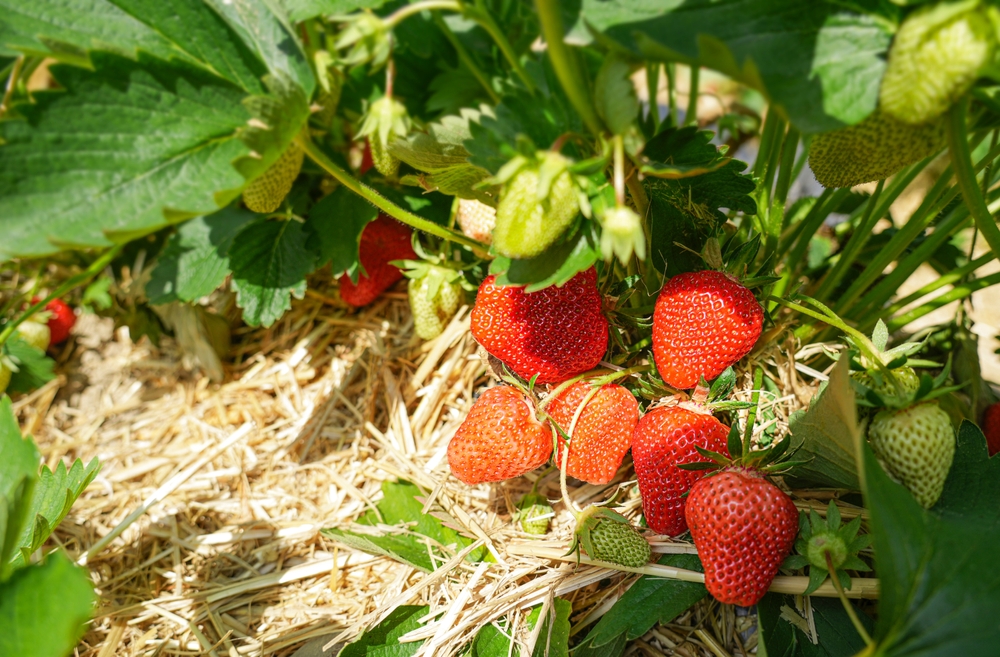
Your strawberry plants might look perfectly healthy heading into fall, but one harsh winter could undo months of gardening work. Unlike many perennial plants, strawberries have shallow roots and crowns that sit close to the soil surface, making them vulnerable to freezing temperatures and repeated freeze-thaw cycles. Without proper protection, those productive plants could struggle to return when spring arrives.
Fortunately, choosing the best mulch for strawberry beds is one of the easiest and most affordable ways to protect your investment. You don’t need expensive landscaping materials or specialty garden products to keep strawberries insulated through winter.
Winter mulch helps protect strawberry crowns from damaging cold while creating an insulating layer that doesn’t become excessively wet. However, not every material works equally well, and some common backyard mulches can actually cause more harm than good.
Here’s what experienced gardeners and university extension experts recommend using before freezing weather arrives.
Clean Wheat Straw Is the Best Overall Choice
When it comes to the best mulch for strawberry beds, clean wheat straw consistently ranks among the top recommendations from agricultural experts. Purdue University Extension specifically recommends clean, dry, weed-free wheat straw because it provides insulation without trapping excessive moisture around strawberry crowns. Its hollow stems create small air pockets that help moderate temperature changes while allowing the material to remain relatively loose. For a backyard gardener with a modest strawberry patch, a single bale may provide enough material to protect several rows, depending on their size. Avoid moldy straw or material containing large amounts of grain seed, since both can create additional problems when the growing season returns.
Pine Needles Are an Excellent Budget-Friendly Alternative
If you have pine trees nearby, fallen pine needles could provide a practically free winter covering for your strawberry plants. Pine needles are excellent winter mulch because they resist matting and can be removed easily in spring. Their loose structure allows air circulation while helping protect shallow roots from rapid temperature fluctuations. Gardeners sometimes worry that pine needles will dramatically increase soil acidity, but ordinary surface applications generally have little effect on established soil pH. Gather clean needles from untreated areas, avoid material contaminated with road salt or chemicals, and spread them loosely rather than packing them tightly around the plants.
Wood Shavings Can Work When Straw Isn’t Available
Wood shavings aren’t usually the first material gardeners consider for winter strawberry protection, but they can be useful under the right conditions. Wood shavings are an acceptable alternative when they remain loose and don’t form a compacted layer. Unlike heavy wood chips, lighter shavings can provide coverage without placing excessive weight on delicate strawberry crowns. However, gardeners should avoid treated wood, dyed landscaping products, and fine sawdust that becomes dense when wet. If wood shavings are your most affordable option, use clean, untreated material and monitor the bed for moisture buildup during winter.
Shredded Leaves Are Better Than Whole Leaves
Autumn leaves seem like the perfect free mulch, especially when trees are dropping them by the bagful. However, Iowa State University Extension warns that leaves can mat together and provide inadequate winter protection for strawberries. Whole maple leaves, for example, may form a wet blanket that traps moisture against the crowns and increases the risk of decay. Some extension programs allow shredded leaves as an alternative, provided they remain loose and well distributed. If leaves are your only option, chop them into smaller pieces, avoid thick compacted piles, and consider using clean straw or pine needles instead in especially wet climates.
Grass Clippings and Hay Are Usually Poor Choices
Two materials that frequently cause problems in strawberry beds are fresh grass clippings and ordinary hay. Grass clippings can become excessively wet and smother strawberry plants, potentially causing crown decay. Hay presents a different concern because it often contains weed seeds that can sprout throughout your planting bed the following spring. Imagine saving a few dollars on mulch only to spend hours pulling unwanted grass and weeds from between strawberry runners. For most home gardeners, purchasing a small amount of clean straw is a better investment than dealing with preventable plant damage and extra maintenance.
How Much Mulch Should You Apply?
Even the best mulch for strawberry beds won’t provide reliable winter protection if it’s applied incorrectly. Covering dormant strawberry plants with approximately 2 to 3 inches of straw is recommended for some areas, while some colder-region extension programs recommend a deeper loose layer that settles over time. The goal is to insulate the crowns and reduce repeated freezing and thawing without creating a dense, waterlogged covering. Gardeners in extremely cold climates or those using raised beds may need additional protection because elevated soil can lose heat more quickly. Follow your local extension service’s recommendations and check that the mulch remains evenly distributed after strong winds or heavy snowfall.
Timing Matters Just as Much as the Material
One of the biggest winter gardening mistakes is spreading mulch before strawberry plants have properly hardened off for cold weather. Gardeners should generally wait until soil temperatures remain at or below 40°F for three consecutive days. This allows plants to enter dormancy before the insulating layer protects them from more severe winter temperatures. Applying mulch too early can interfere with cold acclimation and may increase moisture-related problems around the crowns. In warmer growing regions, strawberry production systems may require different mulching schedules, so local climate matters more than any fixed calendar date.
Don’t Leave Heavy Winter Mulch in Place Too Long
Protecting strawberries during winter is only half the job because the mulch also needs attention when spring approaches. Removing winter straw is recommended when soil temperatures reach approximately 40°F and new leaves begin emerging. Leaving plants buried beneath thick mulch too long can delay flowering and reduce the eventual harvest. Instead of throwing the material away, rake excess straw into the spaces between rows, where it can help suppress weeds and keep developing berries away from bare soil. Keep some mulch nearby in case a late spring frost threatens newly emerging flower buds.
The Cheapest Mulch Could Save Your Next Strawberry Harvest
Choosing the best mulch for strawberry beds doesn’t mean buying the most expensive material at the garden center. Clean wheat straw is generally the most dependable choice, while pine needles offer an excellent alternative for gardeners who already have access to them. Whatever material you choose, proper timing, adequate coverage, and good drainage are essential for protecting strawberry crowns through winter. Spending a little time preparing your planting bed now could save you the expense of replacing damaged plants and help preserve next year’s harvest.
What do you use to mulch your strawberry plants before winter, and have you found an inexpensive material that works especially well? Share your gardening tips in the comments.
What to Read Next
Why Leaving Seed Heads Helps Birds Through Winter
Leave a Reply