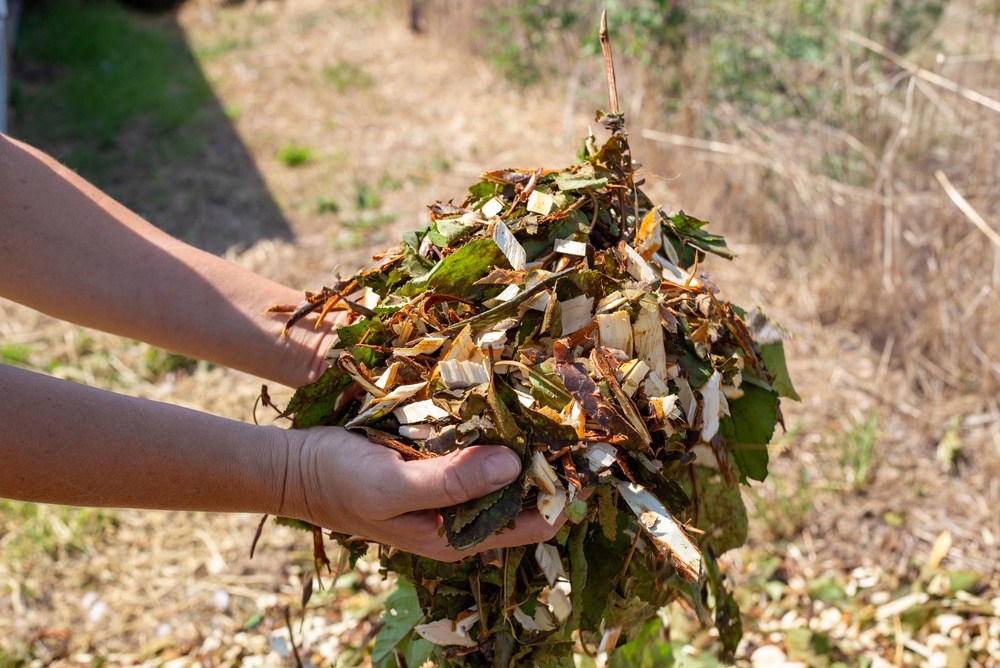
The mulch aisle at the garden center has a way of making ordinary tree debris look like a luxury product. Meanwhile, the leaves scattered across your lawn and the pile of small branches near the shed may already provide much of what those bags promise: moisture retention, weed suppression, temperature moderation, and organic matter for the soil.
Every random pile of yard waste does not belong around a prized rose bush. But beginning gardeners need to know which materials make good mulch, how to prepare them, and where to put them. Once that system clicks, the annual ritual of buying bag after bag of brown stuff can start looking a lot less necessary.
The Free Mulch Factory Hiding in Plain Sight
Leaves make some of the easiest mulch available, and they require remarkably little work. A mower can shred fallen leaves directly on the lawn, or a leaf shredder can turn a bigger pile into smaller pieces that settle around plants without forming a dense blanket. Shredded leaves gradually break down and add organic matter while helping the soil retain moisture.
Whole leaves can work too, particularly in naturalized areas, but thick layers can mat together and interfere with water and air movement. Shredding solves much of that problem, and it also makes the material easier to spread evenly. Grass clippings can contribute to the mulch stash as well, although gardeners should avoid clippings from lawns recently treated with herbicides.
Ask a Tree Company for the Good Stuff
For larger landscape beds, arborist wood chips can offer an even more useful freebie. Tree-service crews create these chips from branches, trunks, bark, and often leaves, and local companies sometimes need convenient places to unload them. Gardening professionals specifically note that arborist chips cost little or nothing, making a friendly conversation with a crew working nearby potentially more valuable than another trip to the garden center.
Fresh arborist chips work particularly well around trees, shrubs, and established perennial beds because their coarse texture resists compaction and helps conserve moisture. They also break down relatively slowly, so they can provide longer-lasting ground cover than shredded leaves. One important distinction matters: keep fresh wood chips on top of the soil rather than digging them into it, because incorporation can temporarily reduce nitrogen availability as the material decomposes.
Not Every Pile of Yard Waste Deserves a Garden Invitation
Free mulch still deserves a little quality control. You should avoid materials that contain obvious trash, treated lumber, or other questionable debris, and ask tree-service crews whether the material came from plants you would rather not introduce into the landscape.
Grass clippings also need some caution because herbicide residues can create problems for sensitive plants. Bagged mulch also deserves a sniff test when it has sat wet in storage, since improperly stored mulch can develop a sour smell and potentially damage plants. Free material should save money, not create a gardening mystery that requires three seasons of detective work to solve.
The Mulch Mistake That Keeps Showing Up Everywhere
Even excellent mulch can cause trouble when gardeners pile it against tree trunks and shrub stems. That famous “mulch volcano” creates a damp environment around bark, while a broad, shallow layer keeps the soil covered without smothering the base of the plant. For trees and shrubs, extension guidance commonly recommends a few inches of mulch and a clear gap around the trunk rather than a mound touching the bark.
Depth matters because a skimpy layer may not block enough light to suppress weeds, while excessive mulch can interfere with air and water movement. For arborist chips, Washington State University Extension recommends maintaining roughly 4 to 6 inches where strong weed suppression matters, while other extension guidance recommends shallower layers around established trees and shrubs depending on the material and setting. The practical answer depends on the mulch, the plant, and the location, but “more must be better” definitely does not belong in the gardening rulebook.
Put the Free Stuff Where It Actually Helps
A yard full of leaves does not need to become a giant mulch pile overnight. Shredded leaves can go around many garden plants, while coarse wood chips make especially good choices for paths, trees, shrubs, and permanent landscape beds where gardeners do not need to turn the soil frequently. In vegetable gardens, gardeners often choose materials such as straw or shredded leaves instead, particularly when they plan to work around annual crops.
The biggest advantage comes from matching the material to the job rather than chasing the prettiest bag at the store. Leaf mulch breaks down relatively quickly and needs replenishment, while wood chips last longer and gradually contribute organic matter as they decompose. A garden that uses both can turn routine yard cleanup into a steady supply of useful soil cover, which makes those expensive bags look a little less magical.
The Yard May Already Have the Mulch Budget Covered
Mulch does not need a barcode to be useful. Fallen leaves, properly sourced grass clippings, and arborist wood chips can all become valuable landscape materials, often with little more effort than collecting, shredding, or asking the right tree crew a simple question. The real savings come from treating yard debris as a resource instead of automatically treating it as something that needs a trip to the curb.
Before buying another stack of bags, take a tour of the property with a different eye. That pile of leaves may protect the soil, those branches may become wood chips, and the tree crew down the street may have a mountain of mulch looking for a new home.
What kind of free mulch does the yard already produce, and how do you put it to work?
You May Also Like…
Where Can Gardeners Find Free Mulch in Late Summer?
Can Reflective Mulch Improve Harvests in Small Vegetable Beds?
The Cheap Mulch Materials That Can Damage Plants or Soil
What Is Causing Black Residue on Leaves Beneath Trees?
Why Your Garden Is Growing Leaves But No Fruit

Brandon Marcus is a staff writer for FrugalGardening.com at District Media, Inc., where he delivers practical gardening advice with a relatable, no-nonsense style. An avid amateur gardener, he holds a BA degree and with over ten years of professional writing experience, he is also an award-winning published author whose first book, Questions For Deep Thinkers, was released by Adams Media. His work has appeared in major publications including Fandom.com, CHUD.com, TheColdWire.com, and Fansided.com.
Leave a Reply