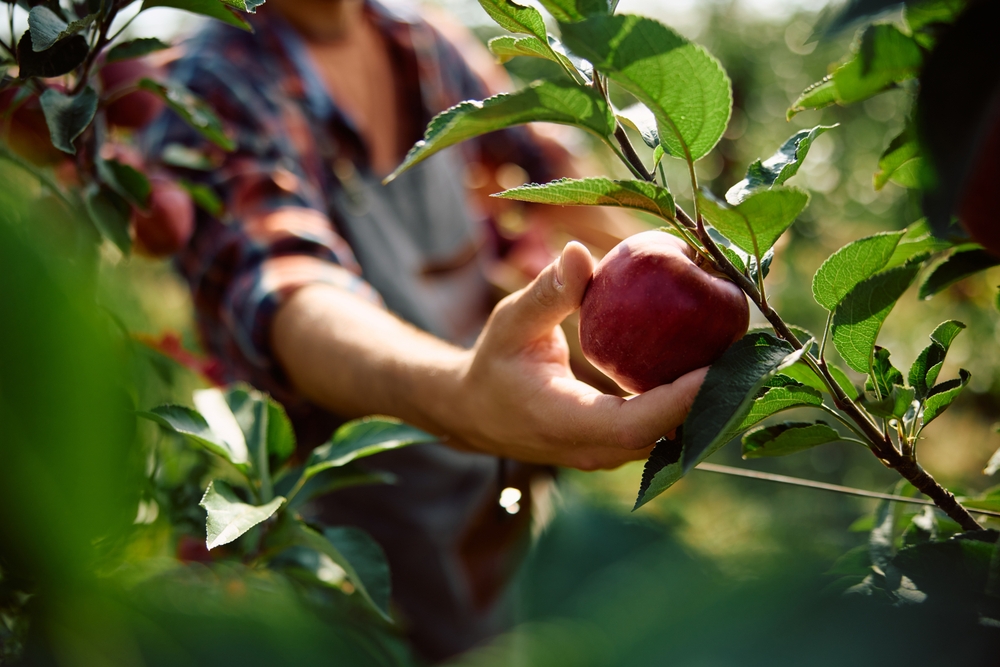
An apple can put on its red, yellow, or golden outfit and still need more time on the tree. Color offers a useful clue, but it does not automatically mean the fruit has reached its best eating stage. Picking too early can leave apples starchy and lacking flavor, while waiting too long can lead to soft fruit, drop, bruising, and a shorter storage life.
The good news is that the tree provides several clues, and gardeners do not need a laboratory coat to read them. A few simple checks involving background color, taste, firmness, and even the starch inside the apple can turn harvest day from a guessing game into a much more reliable decision.
Color Is a Clue, Not a Finish Line
The first mistake comes from treating the brightest part of the apple as the harvest signal. A red apple can develop plenty of red skin while the background color underneath remains green, and that green background can indicate that the fruit needs more time. For many varieties, the useful color change occurs on the background, or ground color, as it moves from green toward greenish-yellow or yellow.
That distinction matters because apple varieties behave differently. Some apples develop red color early, while others show maturity more clearly through changes from green to yellow in the areas without red coloring. Look at several apples rather than judging the prettiest one hanging at eye level, because fruit can mature at different rates even on the same tree.
Give One Apple the Taste Test
The simplest harvest test may also be the most satisfying: pick an apple and eat it. An immature apple often tastes noticeably starchy, while a mature apple should have developed the characteristic sweetness, tartness, aroma, and flavor expected from its variety.
Taste several apples from different parts of the tree before committing to a full harvest. If the fruit looks beautifully colored but still leaves a distinctly starchy sensation in the mouth, give the tree more time and check again after a few days. Gardeners may need to harvest the same tree in several passes over a week or two because individual fruit can reach maturity at different times.
The Stem Can Tell Part of the Story
Another useful clue involves how easily an apple separates from the tree. A mature apple generally releases from its spur with a gentle lift and twist, rather than requiring a determined tug that makes the gardener wonder whether the branch has filed a complaint.
That test works best when combined with the other signs rather than used alone. Check the background color, taste a representative apple, and look at the overall condition of the fruit before picking a large batch. If apples require force to come loose and still taste strongly starchy, the tree probably has more work to do.
Firmness Gets a Little Tricky
Firmness can help determine maturity, but backyard gardeners should avoid treating a particular amount of softness as a universal rule. Apple varieties differ considerably, and some varieties, including Honeycrisp, can remain remarkably firm and crisp even as they reach an appropriate harvest stage.
Commercial growers can combine firmness measurements with other maturity tests, but a home gardener can usually make a sound decision without specialized equipment. The goal involves finding the point where the fruit has developed its expected flavor and maturity while retaining the texture the variety should have. Harvesting too early can produce small, firm fruit with poor flavor, while harvesting too late can increase softening, damage, and storage problems.
Want a More Scientific Answer? Check the Starch
For gardeners who enjoy a little backyard detective work, the starch-iodine test offers a remarkably useful look inside the apple. As apples mature, starch in the flesh converts into sugars, and iodine reveals remaining starch by turning those areas dark blue-black.
The test can provide a more objective maturity check, but it requires care because iodine solutions can pose a poisoning hazard and should never touch skin or enter compost or animal feed. The maturity target also varies by apple variety and by whether the fruit will go into long-term storage or straight onto the kitchen counter. For most backyard gardeners, tasting fruit alongside color and harvest behavior provides a much simpler approach, while the starch test becomes particularly useful when precise harvest timing matters.
The Best Apple Is the One That Tastes Ready
So, should apples come off the tree as soon as they change color? Usually, no, because color marks an important stage of development rather than an automatic command to grab the picking basket. Look for the background color to shift away from solid green, taste a few apples, notice how easily the fruit separates, and consider the variety before making the call.
The right harvest moment depends on what happens inside the fruit as much as what happens on its skin. A gorgeous apple that tastes like a potato wearing perfume needs more time, while an apple with developed flavor, appropriate texture, and the right background color has earned its place in the basket. When those signs line up, pick gently by lifting and twisting the fruit rather than yanking it, then enjoy the particularly satisfying reward of an apple that never had to visit a grocery store.
What signs do you use to decide when the apples on your tree are ready to pick?
You May Also Like…
Why Are Your Pears Ripening From the Inside Out?
Pet‑Friendly Gardening: Non‑Toxic Plants and Shady Spots Make Your Yard Safe for Fido
8 Ways to Help Young Fruit Trees Through Dry Late-Summer Weeks
8 Backyard Fruits No One Knows You Can Grow in Small Spaces
The Orchard Hack: How to Grow Fruit Trees from Grocery Store Scraps

Brandon Marcus is a staff writer for FrugalGardening.com at District Media, Inc., where he delivers practical gardening advice with a relatable, no-nonsense style. An avid amateur gardener, he holds a BA degree and with over ten years of professional writing experience, he is also an award-winning published author whose first book, Questions For Deep Thinkers, was released by Adams Media. His work has appeared in major publications including Fandom.com, CHUD.com, TheColdWire.com, and Fansided.com.
Leave a Reply