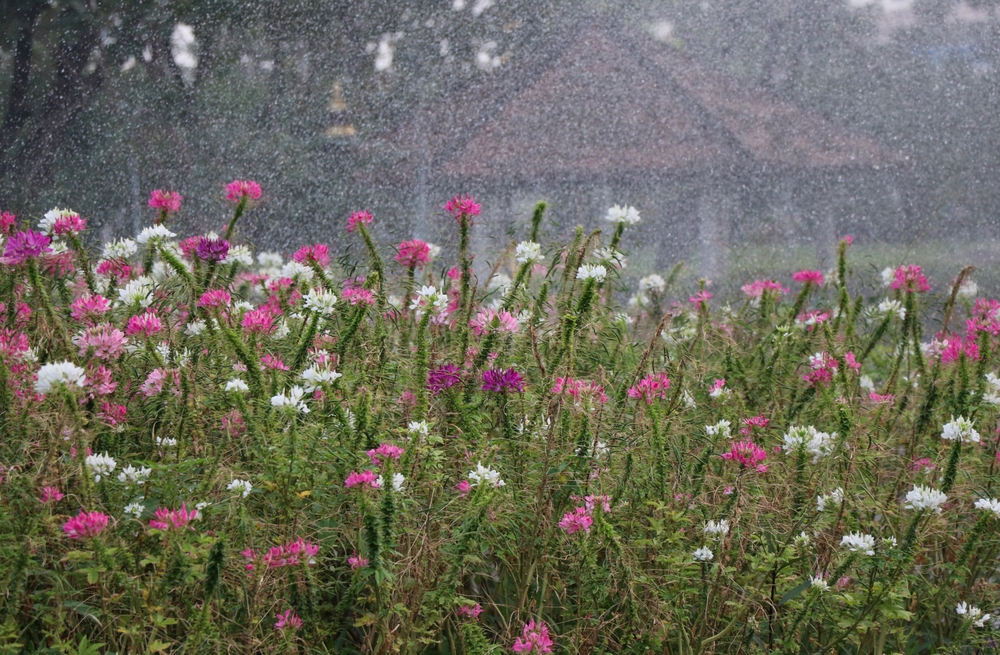
One pounding rainstorm can turn a picture-perfect flower bed into what looks like a botanical traffic accident. Tall stems lean sideways, blooms rest on the ground, and suddenly those carefully planned borders resemble a pile of spilled laundry. The temptation to grab the pruners and start cutting everything down feels almost impossible to resist.
That reaction often creates more problems than the rain itself. Some perennials bounce back with a little sunshine, while others benefit from a strategic trim. Knowing which plants deserve patience and which need a haircut can keep a garden looking attractive while helping plants stay healthy for the rest of the growing season.
Not Every Flopped Plant Needs a Haircut
Heavy rain weighs down flowers, leaves, and stems until gravity finally wins. Plants with large flower heads, hollow stems, or lush new growth often collapse first, especially after storms that arrive with strong wind. Peonies, delphiniums, garden phlox, and tall daisies frequently land on the casualty list after a summer downpour.
Resist the urge to judge the situation immediately after the clouds clear. Many perennials begin lifting themselves within a day or two as excess water evaporates and stems regain strength. Coneflowers, black-eyed Susans, and many salvias often surprise gardeners by standing back up almost as if nothing happened. Giving plants a little time prevents unnecessary pruning and preserves weeks of colorful blooms.
Look for Damage Instead of Drama
Appearance alone should not determine whether pruning makes sense. A plant lying sideways may look dramatic while suffering very little actual damage. Broken stems, crushed foliage, split crowns, or flower stalks bent completely in half deserve much closer attention than simple leaning.
Healthy stems rarely heal once they snap. Cleanly removing broken sections with sharp pruners keeps damaged tissue from becoming an invitation for disease and allows the plant to direct its energy toward healthy growth. Ragged tears deserve trimming back to an undamaged leaf node or the base of the stem, creating a clean cut that heals more efficiently than a shredded wound.
Some Perennials Actually Benefit From Midseason Pruning
Certain perennials welcome a midsummer trim, even when rain starts the conversation. Catmint often responds with a fresh flush of foliage and another round of blooms after gardeners cut it back by about one-third. Hardy geraniums, lady’s mantle, and creeping speedwell also reward timely pruning with tidier growth.
Other plants need a gentler touch. Bee balm, garden phlox, and yarrow may continue flowering beautifully if only damaged stems disappear while healthy stems remain in place. Cutting everything to the ground simply because the plant looks messy can eliminate weeks of flowers that pollinators eagerly visit. A little restraint often pays bigger dividends than enthusiastic pruning.
Support Can Save the Show
Sometimes the smartest gardening tool is not a pair of pruners at all. Soft plant ties, bamboo stakes, grow-through supports, or decorative cages can lift rain-soaked perennials back into position without removing a single flower. Once stems dry and strengthen, many plants continue blooming as though the storm never happened.
Support works best before another storm arrives. Tall perennials that flop every summer usually send a clear message that they need permanent support earlier in the season. Installing supports while plants still grow upright allows foliage to hide them naturally, creating a polished look instead of an emergency repair job after every thunderstorm.
Future Storms Start With Spring Planning
Gardens often reveal patterns after a few growing seasons. The same plants usually flop in the same places because the underlying conditions never change. Rich soil with abundant fertilizer can produce lush stems that look spectacular but lack the strength to support oversized blooms during rainy weather.
Simple adjustments make an enormous difference next season. Dividing overcrowded perennials improves air circulation and encourages sturdier growth. Reducing high-nitrogen fertilizer limits floppy, overly soft stems. Giving tall plants enough sunlight also helps them develop stronger structure instead of stretching toward available light. Even thoughtful spacing can reduce the domino effect that happens when one falling plant knocks over several neighbors.
A Slightly Messy Garden Can Still Be a Healthy Garden
Perfect gardens rarely exist outside magazine covers. Pollinators care very little whether a coneflower leans ten degrees to the left or whether a patch of asters looks perfectly symmetrical. A slightly untidy flower bed often continues producing nectar, supporting beneficial insects, and delivering plenty of beauty despite a few storm scars.
Gardeners sometimes create extra work by chasing perfection after every heavy rain. Allowing nature to recover before stepping in usually leads to better results than immediate intervention. Careful observation, selective pruning, and practical support keep perennial beds attractive without sacrificing future flowers. The next storm may still flatten a few favorites, but a thoughtful response helps the entire garden recover with far less stress.
Let the Plants Tell the Story
Every rainstorm offers a valuable lesson about the garden. Some perennials reveal impressive resilience, while others politely announce that they need stronger support, better spacing, or a different location altogether. Paying attention to those signals leads to healthier plants and fewer surprises when the next round of dark clouds rolls in.
The best gardeners rarely rush with pruners in hand. They pause, inspect the damage, and make careful decisions based on each plant rather than treating the entire flower bed the same way. That patient approach keeps more blooms on display, reduces unnecessary stress, and helps perennial gardens remain colorful long after the puddles disappear.
What perennial in your garden seems to flop after every heavy rain, and what trick has worked best to keep it standing tall? Share your experience in the comments.
You May Also Like…
Can Drought-Resistant Roses Handle Long Stretches Without Rain?
Can Biochar Help Sandy Soil Hold Water During Hot Weather?
Should You Let Cilantro Go to Seed in Hot Weather?
Turn Rain Barrels into Low-Tech Irrigation by “Puncturing” Them—Let Water Drip Slowly to Plant Roots
The Drainage Problem That Leads to Plant Loss

Brandon Marcus is a staff writer for FrugalGardening.com at District Media, Inc., where he delivers practical gardening advice with a relatable, no-nonsense style. An avid amateur gardener, he holds a BA degree and with over ten years of professional writing experience, he is also an award-winning published author whose first book, Questions For Deep Thinkers, was released by Adams Media. His work has appeared in major publications including Fandom.com, CHUD.com, TheColdWire.com, and Fansided.com.
Leave a Reply