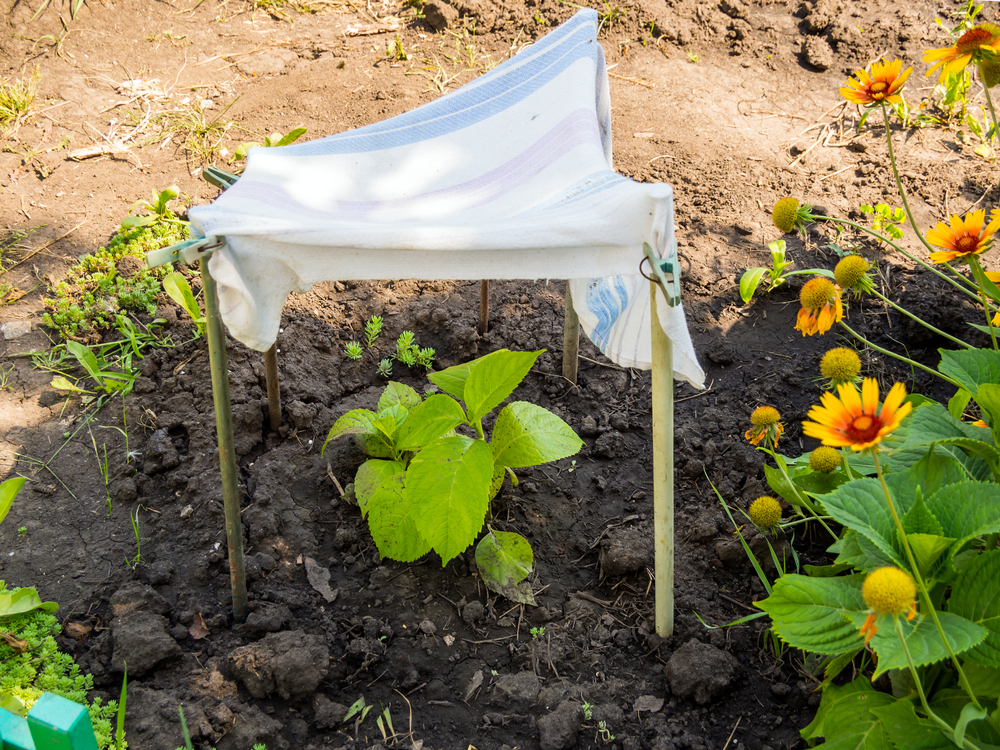
A vegetable garden does not need an elaborate pergola, pricey greenhouse kit, or backyard construction project to get a break from brutal summer sun. A few inexpensive materials, some strategic positioning, and a little garden ingenuity can create useful shade when heat starts stressing lettuce, spinach, young seedlings, and other vegetables that prefer cooler conditions.
It’s all about creating shade without turning the garden into a gloomy cave. Vegetables still need sunlight for photosynthesis, so the goal involves reducing the intensity of afternoon heat rather than blocking every ray from morning until supper. Fortunately, gardeners can accomplish that with materials that may already sit in a garage, shed, laundry room, or slightly chaotic pile of “useful someday” stuff.
Let Shade Cloth Do the Heavy Lifting
Shade cloth offers one of the simplest solutions because gardeners can drape it over a basic frame instead of building a permanent structure. Look for horticultural shade cloth rather than heavy outdoor fabric, and choose a percentage appropriate for the vegetables growing underneath it. Many vegetables need plenty of light, so moderate shade often makes more sense than extremely dense fabric, especially when the garden receives strong morning sun.
A basic frame can come together with garden stakes, flexible hoops, bamboo poles, or even sturdy lengths of PVC pipe. Secure the cloth so wind cannot turn it into a giant garden kite, but leave enough room between the fabric and foliage to allow air movement. The fabric should not rest directly on plants because trapped heat and poor circulation can create additional problems. For a temporary setup, clamps, clips, or sturdy clothespins can make installation and removal remarkably painless. That matters because shade needs often change as temperatures shift and crops grow taller.
Borrow Shade From Things Already Growing
Tall plants can provide natural shade without requiring a trip to the garden center. Corn, sunflowers, pole beans on a trellis, and other upright crops can cast useful shadows across shorter vegetables when gardeners place them thoughtfully. The key involves watching where those shadows land throughout the day rather than assuming a tall plant automatically solves the problem.
Place heat-sensitive crops where they can receive gentler morning light and some protection during the hottest afternoon hours. A row of tall sunflowers, for example, can help shelter lettuce or herbs positioned on the appropriate side, while a trellised cucumber or bean crop can cast shade across nearby soil. Keep an eye on the arrangement because the sun changes position as summer progresses, and yesterday’s perfect shadow can become today’s disappointment. Tall crops also compete for water and nutrients, so gardeners should leave enough space between plants and keep irrigation consistent. Think of the arrangement as living garden architecture, except the walls grow tomatoes instead of collecting dust.
Turn Everyday Household Items Into Temporary Shade
A patio umbrella can protect a small bed or container garden during a particularly hot afternoon, and it requires absolutely no carpentry degree. Gardeners can also use old bed sheets or lightweight fabric in a pinch, provided they secure the material carefully and keep it away from hot equipment, flames, and electrical hazards. Light-colored fabric generally reflects more sunlight than dark fabric, which can help reduce heat buildup underneath the covering.
The setup should allow air to circulate freely because still, trapped air can push temperatures upward rather than solve the problem. A simple frame of stakes can support fabric above a row of vegetables, while clamps can hold the edges in place without requiring permanent hardware. Remove improvised covers when strong winds arrive because loose fabric can damage plants or become a neighborhood projectile. Check plants beneath the cover regularly because shade can reduce evaporation and change watering needs. For containers, gardeners can simply move pots beside a building, fence, or larger plant to gain afternoon protection without constructing anything at all.
Use Shade Strategically, Not Around the Clock
Not every vegetable wants the same amount of protection, and that fact can save gardeners from accidentally overcorrecting. Lettuce, spinach, cilantro, radishes, and other cool-season crops generally appreciate protection from intense afternoon heat, while tomatoes, peppers, cucumbers, squash, and many other warm-season vegetables need substantial sunlight for strong growth and production. Young transplants also benefit from temporary shade while they adjust to outdoor conditions.
Morning sun often gives vegetables useful light without exposing them immediately to the day’s harshest temperatures. Gardeners can position shade so it arrives during the afternoon and then remove or adjust it when temperatures moderate. Watch the plants themselves for clues, including wilting during the hottest part of the day, scorched leaves, curled foliage, or flowers dropping during extreme heat. Keep in mind that midday wilting does not always mean a plant needs more water because some plants temporarily wilt during heat even when the soil contains adequate moisture. Check the soil before reaching for the hose, since constantly soggy roots create their own collection of headaches.
Make the Soil Part of the Cooling Strategy
Shade protects leaves, but gardeners can also reduce heat around the roots with a layer of organic mulch. Straw, shredded leaves, compost, and other suitable organic materials can cover exposed soil and help slow moisture loss from the surface. Mulch also keeps soil temperatures more stable, which gives roots a less dramatic environment during hot weather.
Apply mulch around plants while leaving a little space around stems to reduce the risk of moisture-related problems and stem rot. Water deeply when the soil needs moisture rather than relying on frequent, shallow sprinkles that wet only the surface. Gardeners should check moisture beneath the mulch because the surface can look dry while the soil underneath still holds plenty of water. During extreme heat, containers may need especially close attention because their limited soil volume can dry quickly. Combine smart watering, organic mulch, and afternoon shade, and a humble garden can handle a heat wave far better without adding an expensive structure.
Build a Shade System That Moves With the Season
The smartest garden shade setup does not need to look impressive. It needs to work, remain secure, allow airflow, and give plants relief during the hottest part of the day without stealing the sunlight they need. A few stakes and a piece of shade cloth can accomplish that job just as effectively as a complicated structure when gardeners place them thoughtfully.
Which inexpensive shade trick has worked best in the vegetable garden, or what clever setup would you recommend to other gardeners?
You May Also Like…
Why Are Gardeners Experimenting With In-and-Out Plants?
8 Garden Materials to Stock Up on When Stores Clear Summer Shelves
5 Ways to Use Shade From Mature Crops Before They Come Out
How to Build a Low-Cost Shade Setup for July Vegetables
8 Plants That Help Create Natural Backyard Shade

Brandon Marcus is a staff writer for FrugalGardening.com at District Media, Inc., where he delivers practical gardening advice with a relatable, no-nonsense style. An avid amateur gardener, he holds a BA degree and with over ten years of professional writing experience, he is also an award-winning published author whose first book, Questions For Deep Thinkers, was released by Adams Media. His work has appeared in major publications including Fandom.com, CHUD.com, TheColdWire.com, and Fansided.com.
Leave a Reply