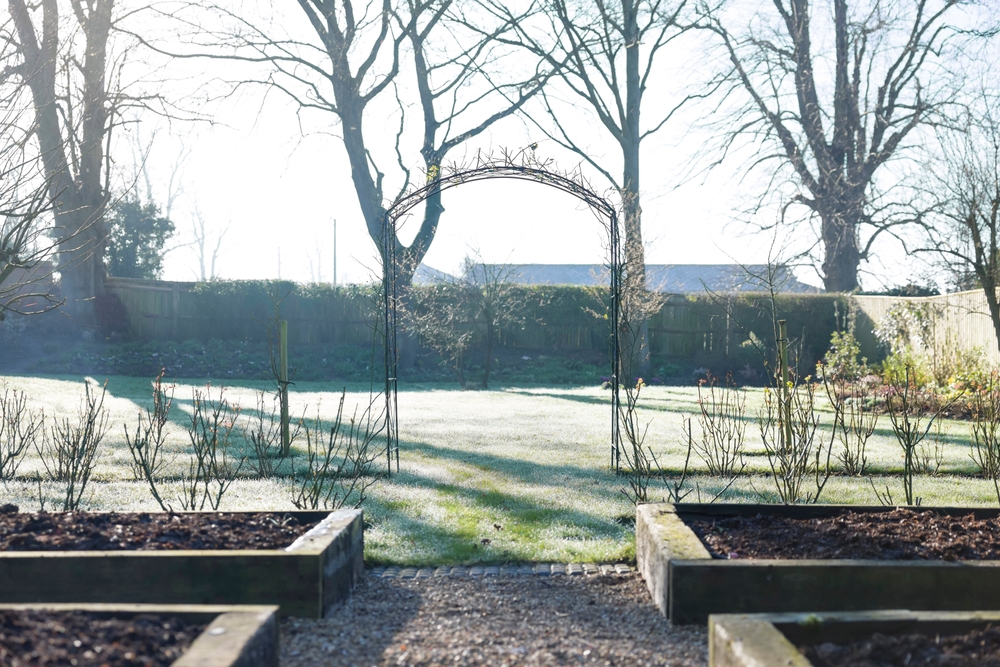
Your summer tomatoes may be finished, but that doesn’t necessarily mean your raised beds need to sit empty until spring. With the right crops and a few inexpensive adjustments, cold-weather raised beds can keep producing lettuce, spinach, kale, carrots and other hardy vegetables well beyond the traditional gardening season. Raised beds are particularly convenient for season extension because hoops, row covers and simple cold frames can be fitted directly over the existing structure. There’s a catch, though: raised beds can also lose heat faster than in-ground gardens once temperatures plunge. Preparing the soil, choosing genuinely cold-tolerant crops and having frost protection ready before you need it can turn an abandoned fall bed into productive garden space.
Start by Clearing the Bed, but Don’t Strip the Soil
Remove spent vegetable plants, diseased foliage and weeds before planting your winter crop, especially anything that could harbor pests or disease. Healthy plant material can go into the compost pile, while obviously diseased material is usually better handled according to recommendations for that particular disease rather than automatically composted. Once the bed is cleared, resist the urge to repeatedly dig or till the entire thing simply because summer is over. Oregon State University notes that established raised beds generally don’t need rototilling and recommends regularly replenishing organic matter as it decomposes. A light layer of finished compost can refresh cold-weather raised beds without destroying the loose soil structure you’ve spent previous seasons creating.
Choose Crops That Actually Like Cool Weather
No amount of frost cloth will turn tomatoes, peppers or cucumbers into dependable winter vegetables, so crop selection matters enormously. Oregon State University identifies hardy vegetables including kale, Brussels sprouts and leeks as crops capable of tolerating temperatures below 28°F once established. Semi-hardy options include carrots, beets, lettuce, chard, peas, parsley and several cabbage-family vegetables that can tolerate lighter frost. Exactly what survives winter depends heavily on your climate, variety, planting date and how severe the cold becomes. Start with vegetables suited to your local winter rather than spending money trying to protect a crop that simply isn’t built for freezing conditions.
Remember That Raised Beds Can Get Colder
Raised beds warm quickly in spring, which gardeners love, but that same exposure can work against them during cold weather. Oregon State explains that raised beds can both heat up and cool down more quickly than in-ground beds, with taller beds potentially requiring more frost protection during cool nights. Soil surrounded by cold air on several sides can lose heat differently than soil insulated by the surrounding ground. That doesn’t make cold-weather raised beds a bad choice; it simply means gardeners shouldn’t assume the raised structure itself provides winter protection. When a serious freeze is forecast, protecting the plants above the bed becomes much more important.
Add Hoops Before the Ground and Your Fingers Get Cold
One of the cheapest improvements you can make is installing simple hoops that turn the bed into a miniature low tunnel. PVC pipe, metal conduit or other suitable supports can hold frost cloth above plants instead of allowing the material to rest directly on delicate foliage. University of Minnesota specifically points to hoops with spun-bound row cover or plastic as an easy way to extend the growing season in raised beds. Build the supports while the weather is pleasant instead of wrestling with materials in the dark when an unexpected freeze warning arrives. Even if you leave the hoops uncovered initially, the structure will be ready when nighttime temperatures start becoming dangerous.
Match Your Row Cover to the Weather
Not all row covers provide the same amount of protection, and heavier isn’t automatically better for everyday use. University of Minnesota reports that the heaviest fabrics can protect plants around temperatures near 20°F, but they may also block 40% to 50% of sunlight. Medium-weight fabrics allow considerably more light through and can provide useful protection against lighter frost. Oregon State University similarly notes that heavier covers provide more temperature protection at the expense of light transmission. Think of row cover as adjustable clothing for cold-weather raised beds rather than something you put on in October and ignore until March.
Don’t Forget to Vent on Sunny Days
Cold protection can surprisingly become a heat problem when bright winter sunshine hits plastic-covered beds. Cold frames and tunnels trap solar energy, and temperatures underneath can climb far above the outdoor temperature even when the surrounding air feels chilly. The University of Minnesota warns that heavy covers can retain enough heat on warm days to damage plants underneath them, while cold frames should be designed so they can be opened for ventilation. A simple outdoor thermometer placed inside the structure makes it much easier to understand what’s actually happening around your vegetables. Check covered beds during sunny spells rather than assuming that cold outside air means the plants can’t possibly overheat.
Mulch Helps Buffer Temperature Swings
Organic mulch can help moderate soil temperatures while also conserving moisture and suppressing weeds. The University of Minnesota notes that organic mulch helps regulate soil temperature while reducing moisture loss and erosion. Shredded leaves and clean straw are particularly appealing for a frugal garden because fall leaves may be available by the bagful for free. Avoid burying tiny seedlings beneath a thick mat; place mulch around established crops while keeping growing points accessible. In cold-weather raised beds, you’re trying to buffer abrupt temperature changes rather than create a giant insulated pile over the vegetables.
Winter Watering Usually Needs to Slow Down
Cooler weather, shorter days and slower plant growth generally mean your raised bed won’t dry as quickly as it did in July. That makes automatic summer watering habits potentially problematic, especially where winter brings regular rainfall. Oregon State’s winter-vegetable guidance notes that crops need consistent irrigation while establishing but may no longer need supplemental irrigation once seasonal rains arrive in wetter climates. Stick a finger into the soil or check beneath the mulch before automatically turning on the hose. Cold, saturated soil can be just as troublesome as dry soil, so the goal is consistent moisture rather than keeping the bed perpetually wet.
A Cold Frame Can Take the Bed One Step Further
If you want more protection than floating row cover provides, consider converting the raised bed into a simple cold frame or cloche. A transparent top allows sunlight in while trapping some of that solar warmth around the plants, effectively creating a small unheated greenhouse. University of Minnesota says crops such as lettuce, kale, cabbage, cauliflower and broccoli can perform well in cold frames during cooler months. Oregon State University also offers plans for building a cloche directly over a raised bed, meaning you don’t necessarily need an expensive greenhouse. Reclaimed lumber and an old window or other appropriate transparent material can sometimes turn an existing bed into a surprisingly inexpensive season extender.
Your Raised Bed Doesn’t Have to Close for Winter
Successful cold-weather raised beds aren’t about defeating winter; they’re about choosing plants that naturally tolerate cool conditions and giving them a modest amount of extra protection. Clean and refresh the soil, plant appropriate crops, add hoops or a cold frame, mulch where useful and keep frost cloth ready for nights when temperatures drop sharply. Pay attention to moisture and ventilation too, because protecting vegetables from cold while accidentally drowning or overheating them doesn’t accomplish much. Even if winter eventually stops active growth, established hardy crops may remain harvestable or simply wait for longer days to resume growing.
Do you shut down your raised beds after the first frost, or have you tried keeping vegetables growing into winter?
What to Read Next
Fall Flowers That Keep Garden Beds Colorful After Summer Fades
Your Raised Bed Is Empty — Should You Cover It Before Winter?
7 Fall Crops You Can Grow in Containers Instead of Buying Raised Beds
Leave a Reply