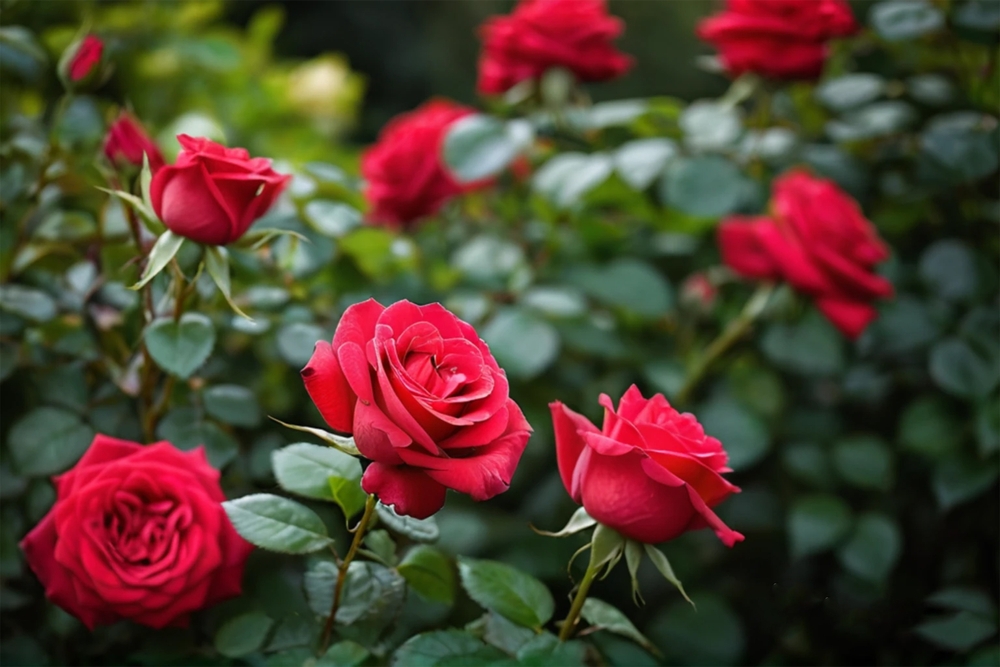
Roses bring the drama, and drought-tolerant grasses bring the cool confidence. Put them together, and a garden bed suddenly looks less like a collection of individual plants and more like a thoughtfully designed landscape, with lush flowers rising above ribbons of foliage that move when the breeze wanders through.
There is a practical reason for the pairing, too. Many ornamental grasses handle dry conditions with considerably less fuss than thirsty bedding plants, while roses still provide the flowers, fragrance, and color that make a garden feel abundant.
Roses Bring the Show, Grasses Provide the Supporting Cast
Roses naturally command attention, particularly when they burst into bloom, but a rose bed can look surprisingly bare between flushes of flowers. Ornamental grasses fill those quiet spaces with foliage, seed heads, and movement, giving the planting something interesting to look at even when the roses take a brief intermission. Colorado State University Extension notes that ornamental grasses offer a wide range of heights, textures, colors, and water requirements, while their seed heads and foliage can add interest well into fall and winter.
That texture matters more than it might seem at the garden center, where a rose in full bloom tends to steal the entire spotlight. Fine-leaved grasses can soften the heavier shape of a shrub rose, while upright varieties can create a crisp vertical accent behind or beside shorter roses. A planting of hardy shrub roses surrounded by carefully spaced clumps of grass can therefore feel relaxed rather than fussy, especially when the grasses sway and rustle instead of sitting stiffly in place.
The Water-Saving Angle Makes This Pairing Even Smarter
The biggest appeal comes from creating a garden that does not demand identical treatment from every plant. Roses generally appreciate consistent moisture, especially while establishing, and they perform best in sunny locations with well-drained soil. Oregon State University Extension recommends deep watering for roses and cautions against keeping the soil excessively wet, while a layer of mulch can help reduce moisture loss from the soil surface.
Drought-tolerant grasses can complement that approach when gardeners place plants according to their actual needs instead of watering the entire bed by habit. Little bluestem, for example, tolerates drought and suits sunny, drier sites, while other ornamental grasses prefer more moisture, so the label still matters. A gardener can give newly planted roses the extra attention they need while gradually reducing irrigation for established grasses that can handle drier conditions. That strategy can reduce unnecessary watering without forcing the roses to endure bone-dry soil.
Choose the Right Grasses, Then Give Everyone Room
Plant selection makes or breaks this combination, and the phrase “drought-tolerant grass” does not magically turn every grass into a desert plant. Little bluestem, prairie dropseed, and other grasses suited to dry conditions can work beautifully in sunny borders, but gardeners should match each species to local hardiness, soil drainage, mature size, and available moisture. In colder regions, gardeners also need to consider winter survival rather than choosing a grass simply because it looked fantastic in a midsummer nursery display.
Spacing deserves equal attention because roses and grasses both become much larger than their tiny nursery containers suggest. Give roses enough room for air circulation, since crowded foliage can encourage disease problems, and leave enough space between grass clumps that each plant can develop its natural form. Mulch the soil rather than piling it against rose stems, water new plants deeply during establishment, and resist the temptation to squeeze one more plant into every available inch. A little breathing room usually produces a much better-looking border than a botanical traffic jam.
Let the Combination Look a Little Wild
One reason this pairing feels so fresh involves the contrast between order and movement. Roses offer recognizable flowers and a familiar garden-romance quality, while grasses contribute loose shapes, fine foliage, and seed heads that change character as the seasons progress. Instead of arranging everything in identical rows, try repeating several grass clumps around a group of roses so the planting feels connected without looking overly manufactured.
The effect becomes especially appealing when gardeners select roses and grasses that share similar growing conditions. Hardy shrub roses can make practical choices in colder climates, and several hardy shrub and landscape rose groups are suited to northern gardens, including Canadian Explorer and Parkland roses. Pair those roses with an appropriately hardy grass for the site, add mulch, keep irrigation focused where plants actually need it, and let the foliage provide some of the garden’s personality. The result can look generous and relaxed while quietly using a more sensible approach to water.
The Garden Partnership Worth Planting
Roses and drought-tolerant grasses work because they solve different design problems at the same time. The roses deliver color and flowers, while the grasses supply structure, texture, movement, and seasonal interest when the blooms pause. Neither plant needs to steal the entire stage, which makes the combination particularly useful for gardeners who want a flower bed that looks good beyond peak bloom.
The smartest version of this planting does not mean abandoning water altogether or assuming every ornamental grass needs the same treatment. Choose roses suited to the local climate, select grasses that genuinely tolerate the site’s soil and moisture conditions, establish new plants carefully, and group plants according to their water needs. With those basics in place, a rose-and-grass border can look beautifully abundant without turning the garden hose into a permanent employee.
Which roses and ornamental grasses would make the perfect pairing in your garden? Share your favorite combination in the comments!
You May Also Like…
8 Plants That Add Structure After Summer Flowers Begin Fading
Can Drought-Resistant Roses Handle Long Stretches Without Rain?
8 Edible Flowers That Can Bridge the Gap Between Summer and Fall
Should You Cut Back Perennials That Flop After Heavy Rain?
Are Night-Blooming Flowers Worth Adding to a Small Yard?

Brandon Marcus is a staff writer for FrugalGardening.com at District Media, Inc., where he delivers practical gardening advice with a relatable, no-nonsense style. An avid amateur gardener, he holds a BA degree and with over ten years of professional writing experience, he is also an award-winning published author whose first book, Questions For Deep Thinkers, was released by Adams Media. His work has appeared in major publications including Fandom.com, CHUD.com, TheColdWire.com, and Fansided.com.
Leave a Reply