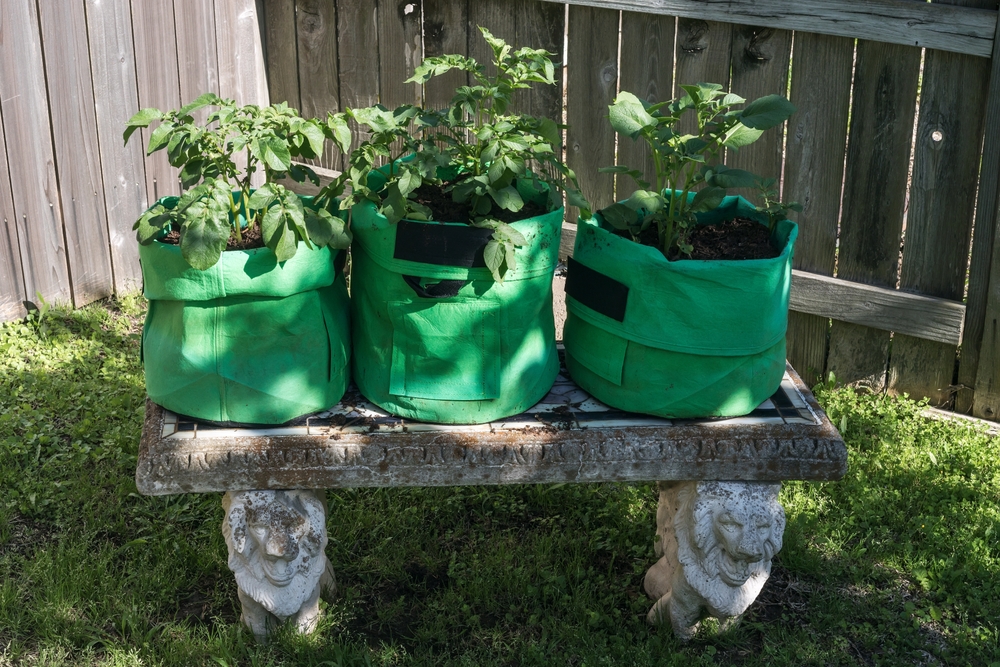
When summer tomatoes, peppers, cucumbers, and potatoes finish their garden careers, those floppy grow bags often end up looking like sad little gardening pancakes. Before tossing them into the trash, take a closer look because a quality grow bag can serve the garden for several more seasons, provided you clean it, inspect it, and store it properly. These fabric containers can also take on completely different jobs once their main crop has finished.
The trick involves knowing which bags deserve another season and which ones have reached the end of the road. A bag with sturdy fabric, intact handles, and good drainage can remain useful, while one covered in disease residue or riddled with tears deserves a different fate. A few minutes of cleanup now can save money and prevent a surprisingly annoying spring shopping trip later.
Give Each Bag a Proper End-of-Season Check
Start by emptying every bag completely and shaking out loose roots, stems, and chunks of old potting mix. A small hand trowel works well for stubborn roots that cling to the fabric, especially around the bottom where moisture and fine roots often gather. Do not assume that old potting mix needs immediate disposal, either, because healthy material can often contribute to compost or support ornamental plants, depending on its condition. Remove weeds, dead roots, and plant debris so nothing unpleasant hangs around inside the folds. Then inspect the bag from top to bottom for split seams, frayed handles, large holes, or areas where the fabric has become thin and brittle.
Pay particular attention to bags that held plants with obvious disease problems during the season. If a tomato plant developed a serious foliar disease, for example, removing the plant debris matters more than giving the bag a quick shake and calling the job finished. Wash reusable fabric bags according to the manufacturer’s instructions, or rinse them thoroughly with clean water when the material allows it. Avoid aggressive cleaners unless the manufacturer specifically recommends them, because leftover residues can cause problems for future plants. Let the bags dry completely before storing them, since damp fabric folded into a dark corner creates exactly the sort of environment gardeners should avoid.
Reuse Them for Fall and Cool-Season Crops
An empty summer grow bag does not automatically mean the growing season has ended. Many bags can move directly into a fall garden for crops such as lettuce, spinach, radishes, arugula, Swiss chard, or compact herbs, depending on the local climate and planting calendar. A large bag can also hold a cool-season ornamental plant or a small perennial that suits container culture. The key involves matching the container to the crop instead of stuffing every available bag with whatever seed packet happens to look tempting. Smaller bags suit shallow-rooted crops, while larger containers provide more room for roots and hold moisture longer.
Grow bags also offer a clever way to experiment with succession planting. Once a cucumber finishes, for instance, the cleaned container can hold salad greens rather than sitting empty until spring. Refresh the growing medium with fresh compost or an appropriate container mix, while avoiding the temptation to pack the bag with pure compost. Container plants need a growing medium that drains well and maintains enough air around the roots. A soggy grow bag can turn an otherwise promising fall planting into a miniature swamp, and lettuce has never asked for swamp conditions.
Turn Old Grow Bags Into Garden Workhorses
Some grow bags have plenty of life left but no longer look pretty enough for the patio. That hardly matters if the next assignment involves practical garden chores. A sturdy bag can hold weeds temporarily, collect spent annuals, store clean stakes, or corral hand tools while someone works through a garden bed. Bags with handles make particularly convenient carriers for lightweight garden debris, although sharp branches and heavy loads can rip fabric that survived perfectly well under a tomato plant. Think of these bags as flexible garden buckets with better drainage and fewer opportunities to roll dramatically downhill.
Old bags can also help organize gardening supplies during the off-season. Use one for plant labels and clips, another for hand tools, and another for empty pots or trellising materials. Keep anything that needs to stay dry in a separate sealed container rather than trusting breathable fabric to protect it from moisture. A grow bag should not become a permanent home for damp soil, wet leaves, or anything that can rot against the fabric. Give every reused bag a job that suits its strengths, and suddenly the pile of supposedly useless containers looks much more like a garden toolbox.
Know When a Grow Bag Has Earned Retirement
Reuse makes sense until the container starts creating more problems than it solves. A bag with major tears, badly weakened seams, deteriorated handles, or fabric that crumbles when handled may fail once it holds several gallons of wet growing medium. That failure can happen at the least convenient moment, such as while moving a mature pepper plant or carrying a heavy load across the yard. Inspect older bags before filling them, and test questionable handles gently rather than discovering their limits while carrying a fully loaded container. A little skepticism costs far less than chasing potting mix across a patio.
Disease history also deserves attention when deciding whether to reuse a bag for edible crops. Gardeners should remove diseased plant material and clean containers carefully, but some pathogens can persist in soil and organic debris despite ordinary cleaning. When a bag held a plant with a particularly troublesome soilborne disease, replacing the growing medium and using the container for a non-edible ornamental can offer a more cautious approach. Never reuse obviously contaminated plant debris in a home compost pile unless the composting process and pathogen involved make that practice appropriate. Sometimes retirement really is the smartest garden decision, and there is no prize for squeezing one more season out of a bag that has clearly called it quits.
Store Them So Spring Does Not Start With a Mess
Once the bags pass inspection, storage becomes the final piece of the puzzle. Make sure every bag dries completely, then fold or roll it loosely enough to avoid creating permanent creases in the fabric. Store the bags somewhere dry and protected from prolonged sunlight, since ultraviolet exposure can weaken some synthetic fabrics over time. A shelf, storage tote, covered shed area, or other dry garden-storage spot works better than leaving a stack exposed beside the house all winter. Keep rodents and other pests away from stored bags as well, particularly if bits of soil or plant material remain inside.
A simple storage system can make next spring dramatically easier. Group bags by size, keep damaged ones separate from ready-to-use containers, and label unusual sizes if the differences are difficult to spot once everything gets folded. Before planting season arrives, inspect them again and give them another rinse if dust or debris has accumulated. This small routine turns end-of-season cleanup into the first step of next year’s container garden. Instead of treating empty grow bags as disposable leftovers, treat them like reusable garden equipment that deserves a little maintenance.
The Empty Bag May Have Another Season in It
A grow bag does not become useless simply because the tomato plant inside it has finished producing. Clean, sturdy bags can support another round of crops, carry garden debris, organize supplies, or serve as containers for plants that suit their size and drainage characteristics. Careful inspection matters because damaged fabric, weak handles, and disease concerns can change the calculation. The best reuse strategy combines practicality with a little common sense, rather than forcing every old bag back into service.
That approach also makes the garden more economical and less wasteful without turning maintenance into a major project. Empty the bag, remove plant debris, inspect the fabric, clean it appropriately, let it dry, and store it somewhere protected. When spring arrives, those floppy fabric pancakes may suddenly look pretty useful again.
Which of your empty grow bags has the best chance of getting a second life in the garden?
You May Also Like…
Why Are More Gardeners Treating Dandelions as Edible Crops?
The 100-Pound Potato Secret: How One Bag of Spuds Feeds a Family
8 Beginning Gardening Tips That Will Make You a Better Grower
6 DIY Trellis Designs That Support Plants Without Breaking Your Budget
Why Are Gardeners Growing Skirret and Other Forgotten Edibles?

Brandon Marcus is a staff writer for FrugalGardening.com at District Media, Inc., where he delivers practical gardening advice with a relatable, no-nonsense style. An avid amateur gardener, he holds a BA degree and with over ten years of professional writing experience, he is also an award-winning published author whose first book, Questions For Deep Thinkers, was released by Adams Media. His work has appeared in major publications including Fandom.com, CHUD.com, TheColdWire.com, and Fansided.com.
Leave a Reply