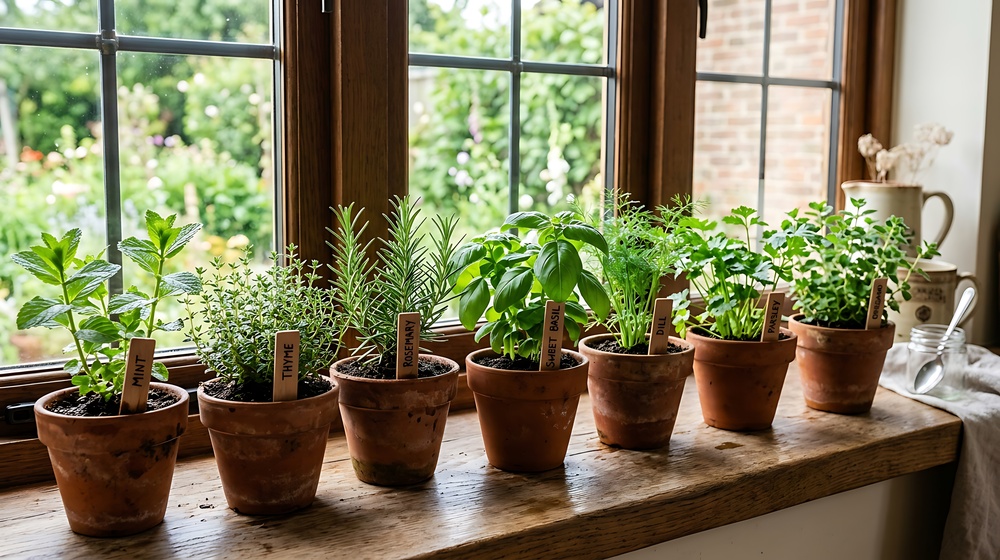
Your herb garden may still look beautiful in October, but one cold night could change everything. Basil leaves can turn black after exposure to frost, while rosemary, parsley, and other herbs may struggle when temperatures drop below their preferred growing conditions. If you’ve spent months growing fresh ingredients for your kitchen, letting them go to waste can feel like throwing money away.
Fortunately, several popular herbs can survive indoors during winter with the right preparation. According to Iowa State University Extension, basil, parsley, mint, chives, rosemary, thyme, and several other culinary herbs can grow successfully inside.
The trick is knowing which plants are worth rescuing, which can remain outdoors, and how to make the transition without damaging their roots.
If you’re considering potting herbs before frost, these nine options deserve a place on your list.
1. Basil Should Be One of Your First Priorities
Basil is among the most frost-sensitive herbs commonly grown in home gardens, making it a top priority when temperatures begin falling. According to Penn State Extension, basil can suffer damage when temperatures drop below approximately 50 degrees Fahrenheit, even before a hard freeze arrives. If your basil is growing in the ground, carefully dig around the root system and transfer a manageable portion into a container with drainage holes. Place it somewhere warm with strong natural light or a supplemental grow light, since basil often struggles in dim winter conditions. Because basil is typically grown as an annual, you can also root healthy stem cuttings or start fresh seeds indoors rather than expecting an aging outdoor plant to produce indefinitely.
2. Rosemary Is Worth Saving in Colder Climates
Rosemary is a perennial herb, but its ability to survive winter outdoors depends on the variety, local climate, and growing conditions. The University of Maryland Extension identifies rosemary as one of several tender herbs that may need indoor protection during colder winters. Unlike basil, rosemary prefers excellent drainage and can develop root problems when its soil remains consistently wet. Choose a container with drainage holes, use a well-draining potting mix, and position the plant near a bright window or suitable grow light. If you regularly use rosemary for roasted vegetables, potatoes, or chicken, protecting an established plant may save you from repeatedly buying expensive grocery-store packages.
3. Parsley Can Keep Producing Fresh Leaves Indoors
Parsley is another excellent candidate for potting herbs before frost, particularly if you enjoy adding fresh greens to soups and homemade meals. Parsley is among the easier herbs to grow indoors because it tolerates somewhat lower light levels than many Mediterranean herbs. Since parsley develops a substantial taproot, moving an established plant can be difficult without disturbing its roots. Dig deeply around the plant, transfer it carefully into a sufficiently deep container, and avoid aggressively breaking apart the root system. Parsley is biennial, meaning older plants may eventually flower and decline, so starting new seeds indoors can provide a longer-lasting supply.
4. Mint Is One of the Easiest Herbs to Divide
Mint’s vigorous growth habit makes it a practical option for gardeners who want fresh herbs throughout winter. The University of California Master Gardener Program recommends dividing and potting mint during summer or fall when preparing an indoor herb garden. Rather than digging up an entire sprawling plant, remove a healthy rooted section and place it in a container with fresh potting mix. Mint generally appreciates more consistent moisture than rosemary or thyme, although waterlogged soil can still cause problems. Growing mint in its own container also prevents its aggressive roots from competing with other herbs once you move everything back outside in spring.
5. Chives Are Perfect for a Small Kitchen Windowsill
Chives are particularly convenient for indoor gardening because their narrow leaves take up relatively little space. Container-grown chives may benefit from experiencing a light frost before being brought indoors because the cold can encourage a natural rest period. Carefully lift a small clump, divide it if necessary, and place the roots in a container with adequate drainage. A bright kitchen windowsill can provide a convenient location for harvesting small amounts to add to baked potatoes, eggs, and soups. Unlike tender basil, established chives are cold-hardy in many regions, so moving them indoors is often a matter of convenience rather than survival.
6. Thyme Can Thrive in a Compact Container
Thyme is another practical choice for gardeners interested in potting herbs before frost, especially when growing in areas with severe winters. Thyme is a suitable herb for indoor containers and it is recommended to prepare divisions during the growing season. Its relatively compact growth makes it useful for small spaces, but it requires excellent drainage and plenty of light. Avoid treating thyme like moisture-loving mint because allowing the potting mix to dry somewhat between waterings helps prevent root problems. Many thyme varieties survive outdoors in suitable climates, so gardeners should check their plant’s hardiness before deciding whether indoor protection is necessary.
7. Oregano Is a Budget-Friendly Herb to Overwinter
Oregano is a useful herb to preserve because even a small plant can provide plenty of flavorful leaves for cooking. According to Illinois Extension, oregano is among the culinary herbs that can grow indoors during the colder months. Established plants may be divided or propagated from cuttings, allowing gardeners to preserve their favorite varieties without purchasing replacements. Give oregano a sunny location, use well-drained potting soil, and avoid watering simply because the surface looks slightly dry. In many climates, oregano can survive winter outdoors, making indoor growing optional for gardeners who prefer having fresh leaves within reach.
8. Sage Can Be Saved for Winter Cooking
Sage is especially valuable during the colder months when many home cooks use it in stuffing, roasted vegetables, and holiday meals. Sage is among herbs that can be maintained indoors when provided adequate light and drainage. Since mature sage plants develop woody stems and substantial root systems, moving a large established specimen may be less successful than potting a smaller plant or rooting cuttings. Keep the plant in bright light and allow the potting mix to dry slightly between waterings to reduce the risk of root rot. If your sage is already growing in a protected garden bed within its appropriate hardiness range, it may be more economical to leave the original plant outside.
9. Lemongrass Is Worth Rescuing Before a Freeze
Lemongrass is a warm-season herb that can be particularly rewarding to preserve if you enjoy cooking soups, curries, or Asian-inspired dishes. Lemongrass is among the herbs that can be grown indoors during winter. Unlike smaller herbs, mature lemongrass can become quite large, so dividing a healthy clump may be more practical than moving the entire plant. Use a sturdy container with drainage holes and provide bright light, remembering that indoor growth will likely slow considerably during winter. Bringing a manageable division inside before freezing weather arrives can preserve the plant for transplanting outdoors when temperatures warm again.
Protect Your Herb Garden Without Spending a Fortune
Successfully potting herbs before frost doesn’t require a greenhouse, expensive containers, or a complicated indoor gardening setup. Most indoor herbs benefit from four to six hours of direct sunlight, well-drained potting soil, and careful watering, although some species require supplemental lighting. Before moving outdoor plants inside, inspect the foliage and soil for pests, and keep newly moved herbs separate from existing houseplants until you’re confident they’re healthy. Focus on saving tender or expensive-to-replace plants first, while leaving cold-hardy varieties outdoors when your climate allows.
Which herbs do you bring indoors before freezing temperatures arrive, and have you found one that grows especially well on your windowsill? Share your gardening experiences in the comments.
What to Read Next
How to Protect Tender Herbs From Sudden Frost
7 Herbs That Keep Producing After Summer Vegetables Slow Down
Leave a Reply