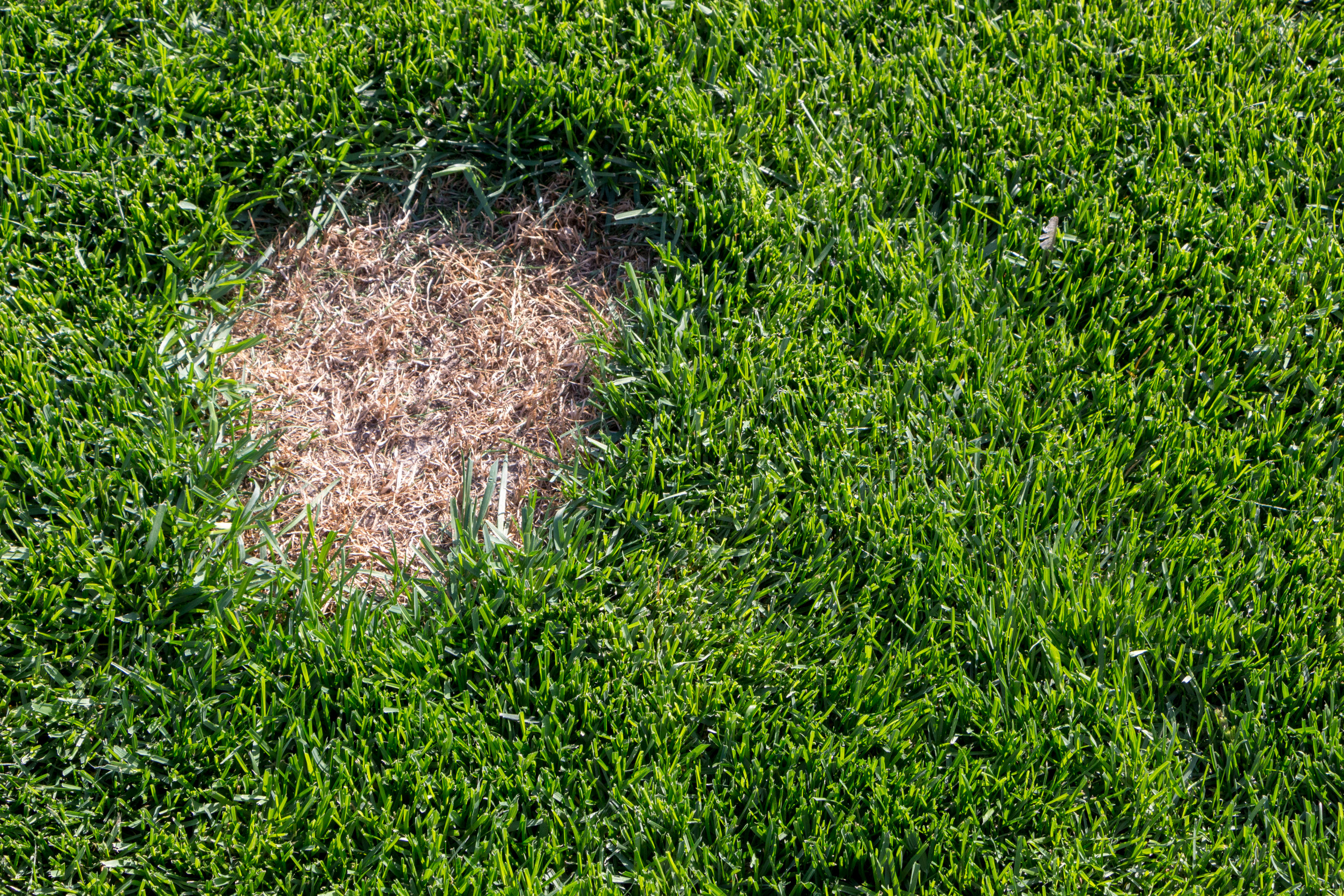
One of the most frustrating parts of lawncare are those pesky dead patches of grass. No matter what you do, it refuses to green up. It’s not just the weather. There are many other reasons for dead patches. They can be a sign of pests, soil problems, or even your own bad lawn care habits. Ignoring them only makes the problem spread and harder to fix. Here are nine surprising reasons your lawn may be struggling and what you can do about it.
1. Overwatering That Suffocates Roots
Too much water may seem like a good thing when there’s a dead patch. But it can actually choke your lawn. Grass roots need oxygen, and soggy soil prevents proper airflow. Plus, overwatering can lead to fungal diseases. It can also wash away essential nutrients your lawn needs to thrive. If you want a healthy lawn. You’ll have to water deeply but not as frequently. Try setting timers and skipping watering when it rains so that your lawn gets just enough water.
2. Pet Urine Damage
Brown spots can be due to pet urine. If the spots are irregular with green edges, it’s likely thanks to your pet. Dog urine is high in nitrogen, which can burn grass when concentrated in one area. You can train your pets not to go on the lawn can help. Or you can dilute urine with water. But you may have to reseed.
3. Insect Infestations
Certain lawn pests feed on grass roots, leaving behind dead, thinning patches. Grubs are one of the most common culprits. They are especially prevalent in late summer. As they chew through roots, grass lifts easily from the soil like a carpet. If wildlife, like birds, are digging up your lawn, they are probably searching for grub.
4. Fungal Diseases
Hot, humid conditions create the perfect breeding ground for fungi. Common lawn diseases like brown patch or dollar spot attack grass blades, creating dead circles or streaks. Fungal problems often look like water damage but worsen quickly without treatment. Prevention is key, since fungus spreads fast once established.
5. Compacted Soil
Grass struggles to grow in compacted soil where roots can’t penetrate. Heavy foot traffic can compress soil particles, limiting airflow and water movement. If there are dead patches in your lawn near pathways or play spaces, this is likely the cause. Aerating the lawn can relieve compaction and give roots room to expand.
6. Improper Mowing Habits
Mowing too short, known as scalping, weakens grass and exposes soil to heat stress. It may be time to sharpen your mower blades. Dull mower blades tear instead of cutting, leaving ragged edges that dry out quickly. Inconsistent mowing schedules further stress the lawn, leading to uneven growth and dead spots. Never cut more than one-third of the blade at a time. Healthy mowing habits will help keep grass resilient.
7. Chemical Burns from Fertilizer or Herbicides
Over-fertilizing may seem like a quick fix, but it can scorch grass. Similarly, misapplied herbicides may kill desirable grass along with weeds. These chemical burns appear as yellow or brown patches in otherwise green areas. Always follow product instructions carefully and apply evenly.
8. Shade Stress
Did you know that not all grass types tolerate heavy shade? Under trees, fences, or buildings, grass may thin out and die due to lack of sunlight. Moisture competition from tree roots can add to the struggle. You may need to plant shade-tolerant grasses or adjust your landscaping.
9. Thatch Buildup
Thatch is a layer of dead grass and roots that builds up between the soil and living turf. While a small amount is normal, excessive thatch blocks water and nutrients from reaching roots. This suffocates the lawn and creates patchy areas. Regular dethatching or aeration helps maintain balance. Don’t ignore thatch; it will only get worse over time.
A Healthy Lawn Takes Detective Work
Dead patches of grass are rarely random; they’re clues that something is wrong beneath the surface. From pests to poor lawn habits, these issues can often be fixed with careful observation and targeted action. Paying attention to the details now prevents long-term damage later. A healthy, green lawn is possible when you tackle the hidden causes head-on.
Have you spotted dead patches in your yard recently? What turned out to be the cause, and how did you fix it? Share your lawn care tips in the comments.
Read More
8 Outdoor Projects That Could Void Your Home Insurance
5 Things Growing in Your Yard That Could Get You Sued

Teri Monroe started her career in communications working for local government and nonprofits. Today, she is a freelance finance and lifestyle writer and small business owner. In her spare time, she loves golfing with her husband, taking her dog Milo on long walks, and playing pickleball with friends.
Leave a Reply