A garden does not need a trip to the garden center every time a tomato flops sideways or a young pepper plant starts leaning like it has had a very long day. Temporary plant supports can come from surprisingly ordinary materials, and many of the best options already sit in a garage, shed, recycling bin, or pile of yard debris.
The trick involves matching the material to the plant and the job. A heavy tomato plant needs more muscle than a delicate pea vine, while a cucumber needs something it can actually grab. With a little creativity, inexpensive materials can keep plants upright, off the soil, and easier to harvest without turning the garden into a construction project.
1. Fallen Branches Turn Into Rustic Garden Stakes
A few straight fallen branches can make excellent temporary supports for tomatoes, peppers, beans, flowers, and young fruit trees. Look for sturdy, reasonably straight wood without signs of rot, deep cracks, or obvious insect damage, then trim away small side branches that might snag clothing or plant stems. A branch does not need to look like a perfectly manufactured garden stake because plants have never shown much interest in matching furniture.
For a tomato plant, push the thicker end several inches into the soil and loosely tie the plant with soft cloth strips, garden twine, or stretchy plant tape. Avoid tight knots because stems expand as they grow, and a support that starts helpful can quickly become a botanical belt cinching around the plant. Fresh green branches can root in some situations, so dry, seasoned wood works better for a temporary support.
2. Bamboo Makes Lightweight Supports With Big Potential
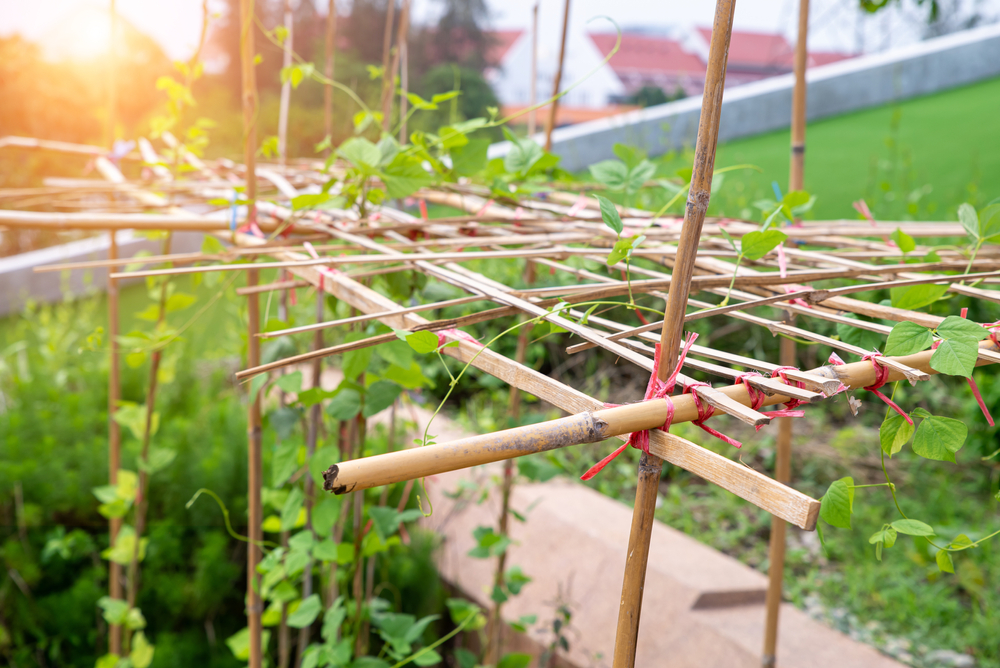
Bamboo poles offer one of the easiest ways to create quick supports for climbing plants, tomatoes, peppers, and flowers. Gardeners can use individual poles, create simple tripods, or tie several pieces together to form a small trellis for peas and beans. The material stays lightweight while offering enough strength for many seasonal jobs.
The biggest caution involves bamboo that grows aggressively in the local landscape, since some types can spread rapidly through underground rhizomes. Purchased bamboo stakes or carefully managed clumping bamboo provide a safer source for garden projects. Check each pole for sharp splinters before placing it near plants, and use soft ties instead of wire that could cut into stems.
3. Twine Can Create a Surprisingly Clever Plant Trellis
Strong garden twine can support climbing peas, beans, cucumbers, and lighter flowering vines when gardeners arrange it correctly. A few stakes at the ends of a row can anchor horizontal lines, while vertical strands give climbing plants something to grab or wrap around. Jute twine works well for many short-term projects, although natural fibers eventually break down outdoors.
The important detail involves tension, not brute force. Tighten the twine enough to prevent sagging, but do not pull it so tightly that it bends or pulls over the stakes. For heavier cucumbers or beans, use sturdy anchor points and inspect the structure after rain or strong wind, because a lush plant can turn a flimsy trellis into a sail.
4. Old Tomato Cages Can Rescue More Than Tomatoes
That bent, slightly lopsided tomato cage sitting in the shed still has plenty of garden life left in it. These cages can support peppers, eggplants, young shrubs, flowering plants, and even sprawling plants that need a little help staying off the ground. Turn a cage upside down, and its wide base can sometimes create a useful support for a plant that needs a broader footprint.
Inspect old cages for sharp or broken metal before using them. A damaged wire can scratch stems or become a hazard during weeding, so bend it away from the plant or remove the damaged section. Temporary supports work best when gardeners install them early, before a plant becomes a leafy tangle that makes every adjustment feel like a wrestling match.
5. Repurposed Wire Fencing Creates Instant Climbing Space
A leftover section of wire fencing can become a sturdy support for peas, beans, cucumbers, and other vines. Place it between strong stakes or lean it securely against a structure, making sure the bottom remains stable and the openings suit the plant. The open design gives tendrils plenty of places to grab.
Wire fencing deserves a quick safety check before it enters the garden. Cover sharp ends, avoid rusty sections that could scratch hands, and make sure the structure cannot tip onto a walkway. Gardeners should also remember that some vines grow heavy enough to pull down weak supports, so a little extra anchoring now can prevent a leafy collapse later.
6. Recycled Cardboard Can Help Young Plants Stand Tall
Cardboard does not make a long-term trellis, but it can provide a useful short-term windbreak or support for young seedlings. Cut sturdy cardboard into strips and place them around a plant, or create a simple collar that helps shield a tender stem from wind while roots establish. This option works particularly well during a brief spell of rough weather.
Keep cardboard away from constantly wet soil whenever possible because moisture quickly weakens it. Plain, untreated cardboard works best, while heavily coated, glossy, or chemically treated material does not belong in the vegetable garden. Once the plant gains strength or the weather settles, remove the cardboard before it becomes soggy garden confetti.
7. Old Broom Handles Can Become Sturdy Garden Stakes
A retired broom handle, wooden dowel, or unfinished tool handle can make a surprisingly useful plant stake. These materials work well for tall flowers, young trees, peppers, and individual tomato plants that need vertical support. A clean handle can provide a smooth, sturdy surface without requiring much preparation.
Avoid using handles with peeling finishes, sharp splinters, or chemical residue. Place the stake beside the plant rather than driving it through the root zone, then attach the stem with a loose figure-eight tie that keeps the plant from rubbing directly against the support. That small loop matters because wind can turn constant rubbing into stem damage.
8. Old Pantyhose Make Excellent Soft Plant Ties
Few materials offer more flexibility for tying plants than old pantyhose or similar stretchy fabric. Cut the material into strips, and it creates soft, elastic ties that hold stems without squeezing them as they grow. This trick works especially well for tomatoes, young trees, roses, and other plants that need gentle attachment to a stake.
The material should hold the plant upright without pulling the stem tightly against the support. Check ties periodically, especially during rapid growth, and loosen or replace them when they start to feel snug. A temporary support should solve a problem, not quietly create a new one while nobody looks.
The Best Garden Support May Already Be Waiting Nearby
Temporary plant supports do not need to look polished, expensive, or suspiciously similar to something from a garden catalog. A fallen branch, a piece of twine, an old cage, or a scrap of fencing can solve a very real garden problem when the material matches the plant and the support stays secure. The best approach involves checking for sharp edges, rot, chemical treatments, and weak anchor points before putting anything near growing stems.
A little planning also saves plants from the classic emergency support scramble, when a storm arrives and somebody suddenly searches the garage for anything that looks vaguely stake-shaped. Install supports early, use soft ties, inspect them after bad weather, and replace materials when they begin to fail. With those simple habits, the garden can stay upright without turning every plant problem into a shopping trip.
What unusual household item has saved a leaning, sprawling, or climbing plant in your garden? We want to hear your clever ideas below.
You May Also Like…
6 Reasons Gardeners Are Mixing Herbs Into Flower Borders
7 Fragrant Plants That Make Evening Gardens More Enjoyable
Should You Move Potted Plants Before a Severe Thunderstorm?
Why Sun Exposure Determines Growth Success
5 Simple Changes That Improve Overall Growth

Brandon Marcus is a staff writer for FrugalGardening.com at District Media, Inc., where he delivers practical gardening advice with a relatable, no-nonsense style. An avid amateur gardener, he holds a BA degree and with over ten years of professional writing experience, he is also an award-winning published author whose first book, Questions For Deep Thinkers, was released by Adams Media. His work has appeared in major publications including Fandom.com, CHUD.com, TheColdWire.com, and Fansided.com.
Leave a Reply