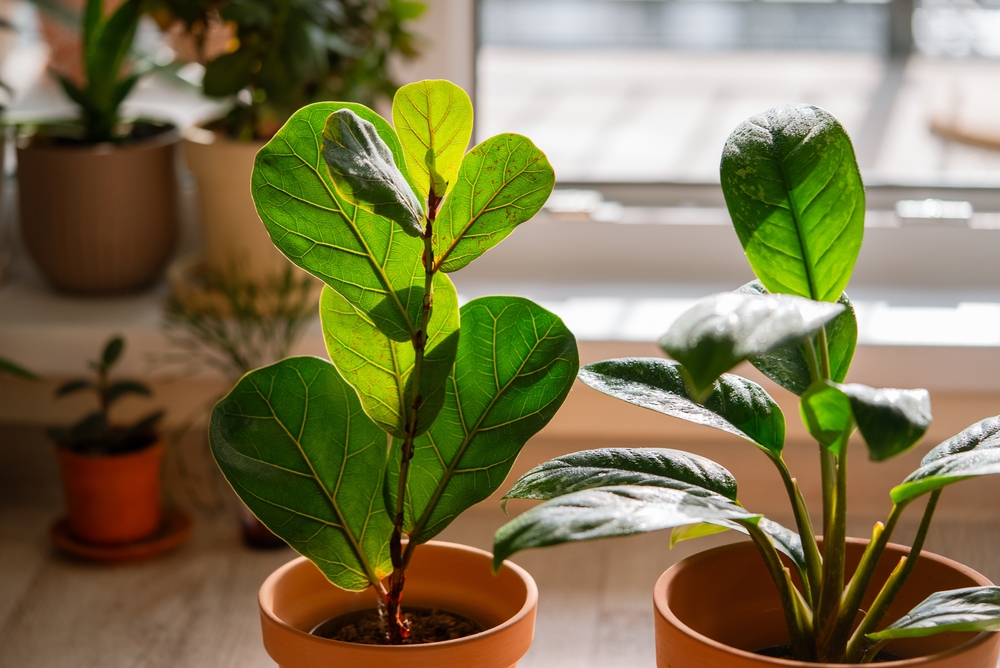
Winter doesn’t just turn sidewalks icy and mornings dark—it also cranks your home’s heating system into overdrive, transforming cozy rooms into plant-stressing deserts. One minute your houseplants look fine, and the next they’re drooping, browning, or throwing dramatic leaf tantrums. Dry, recycled air pulls moisture from leaves and soil faster than you can say “humidifier,” and some plants simply refuse to tolerate it. If your greenery looks personally offended by winter, you’re not imagining things.
These seven houseplants are especially sensitive to dry winter heat, and with a few smart adjustments, you can help them survive—and even thrive—until spring.
1. Fiddle Leaf Fig (Ficus Lyrata)
The fiddle leaf fig is famous for its bold, glossy leaves and equally bold opinions about its environment. Dry winter heat causes those big leaves to lose moisture rapidly, leading to brown edges, curling, and sudden leaf drop that feels personal. This plant evolved in warm, humid regions, so dry indoor air is basically its nemesis. To keep it happy, move it away from heating vents and radiators, even if the light there is tempting. Regular misting helps, but it’s not enough on its own—grouping it with other plants or using a humidifier nearby makes a huge difference.
Keep the soil evenly moist, but never soggy, because stressed roots plus dry air is a recipe for disaster. If your fiddle leaf fig survives winter looking decent, consider it a small miracle and a testament to your care skills.
2. Boston Fern (Nephrolepis Exaltata)
Boston ferns are lush, feathery, and utterly dramatic when humidity drops. Dry heat causes fronds to turn crispy and shed like confetti, leaving you with a sad, spindly center. These ferns crave moisture in both soil and air, making winter their toughest season indoors. Bathrooms with natural light are ideal winter homes because showers boost humidity naturally. If that’s not an option, a pebble tray filled with water beneath the pot helps raise moisture around the plant. Daily misting can help, but consistent humidity matters more than occasional sprays. Boston ferns are high-maintenance, but when their fronds arch gracefully and stay green all winter, they’re absolutely worth the effort.

3. Calathea (Prayer Plant Family)
Calatheas are adored for their striking patterns and dreaded for their intolerance of dry conditions. Dry winter heat makes their leaves curl, fade, or develop crispy edges, and they are not shy about showing displeasure. These plants need stable humidity and hate sudden environmental changes, including blasts of hot air. Keeping them away from vents is non-negotiable if you want them to survive winter intact. A humidifier is practically a requirement, not a luxury, for calathea owners. Water with room-temperature, filtered water to avoid compounding stress from minerals. When conditions are right, calatheas reward you with vibrant leaves that move subtly with light changes, which feels like magic in the middle of winter.
4. Peace Lily (Spathiphyllum)
Peace lilies are often marketed as easy plants, but dry winter heat quickly exposes their limits. Their dramatic wilting is usually a plea for moisture, either in the soil or the air. Prolonged exposure to dry heat leads to brown leaf tips and fewer blooms. Peace lilies prefer evenly moist soil and higher humidity, especially during winter heating season. Moving them slightly farther from windows at night can help avoid cold drafts that compound dry air stress. Misting helps temporarily, but consistent humidity is the real fix. When cared for properly, peace lilies bounce back quickly and continue producing their elegant white blooms even in the bleakest months.
5. Orchid (Especially Phalaenopsis)
Orchids may look delicate, but their real enemy in winter is dry, stagnant air. Heating systems zap humidity, causing orchid roots and aerial roots to dry out too quickly. This stress often leads to wrinkled leaves and stalled blooming cycles. Orchids thrive when humidity stays between 40 and 60 percent, which is higher than most heated homes provide. Grouping orchids together creates a small humid microclimate that benefits them all. Avoid placing them near vents or fireplaces, no matter how pretty that shelf looks. With adequate humidity and proper light, orchids can bloom through winter, bringing color when everything outside looks bleak.
6. Rubber Plant (Ficus Elastica)
Rubber plants are tougher than fiddle leaf figs, but dry winter heat still pushes their patience. Low humidity can cause leaf drop and dull-looking foliage, robbing them of their signature shine. These plants prefer stable environments, and fluctuating temperatures from heating systems stress them out. Wipe leaves regularly with a damp cloth to remove dust and boost moisture directly on the leaf surface. Keep the soil slightly moist but allow the top layer to dry between waterings to avoid root issues. Adding a humidifier nearby helps maintain that lush, healthy look all winter long. When conditions are right, rubber plants remain striking focal points even during the coldest months.
7. Areca Palm (Dypsis Lutescens)
Areca palms bring tropical vibes indoors, but winter heat tries its best to ruin the illusion. Dry air causes fronds to turn yellow or develop brown tips, making the plant look tired and stressed. These palms naturally grow in humid climates, so indoor heating feels wildly unnatural to them. Increasing humidity is essential, whether through humidifiers, pebble trays, or grouping with other plants. Keep the soil consistently moist but well-draining to avoid compounding stress. Rotate the plant occasionally to ensure even light exposure, which helps maintain balanced growth. With enough humidity, areca palms stay lush and brighten winter spaces beautifully.
Turning Winter Survival Into Plant Success
Dry winter heat doesn’t have to mean the end of your houseplant dreams. With a little awareness and a few humidity-boosting tricks, even the most sensitive plants can make it through winter looking surprisingly good. Pay attention to what your plants are telling you, adjust their placement, and don’t underestimate the power of added moisture. Every home and heating system is different, so part of the fun is figuring out what works best for your space.
If you’ve battled winter plant woes or discovered clever solutions, drop your experiences and tips in the comments below—plant lovers everywhere will appreciate it.
You May Also Like…
10 Houseplants That Clean the Air Better Than Purifiers
6 Houseplants That Thrive in Neglect and Still Impress Guests
Why Your Houseplants Need a “Vacation” from Fertilizer Right Now
10 Houseplants That Love Being Brought Inside Now
5 Houseplants That Won’t Waste Your Money

Brandon Marcus is a staff writer for FrugalGardening.com at District Media, Inc., where he delivers practical gardening advice with a relatable, no-nonsense style. An avid amateur gardener, he holds a BA degree and with over ten years of professional writing experience, he is also an award-winning published author whose first book, Questions For Deep Thinkers, was released by Adams Media. His work has appeared in major publications including Fandom.com, CHUD.com, TheColdWire.com, and Fansided.com.
Leave a Reply