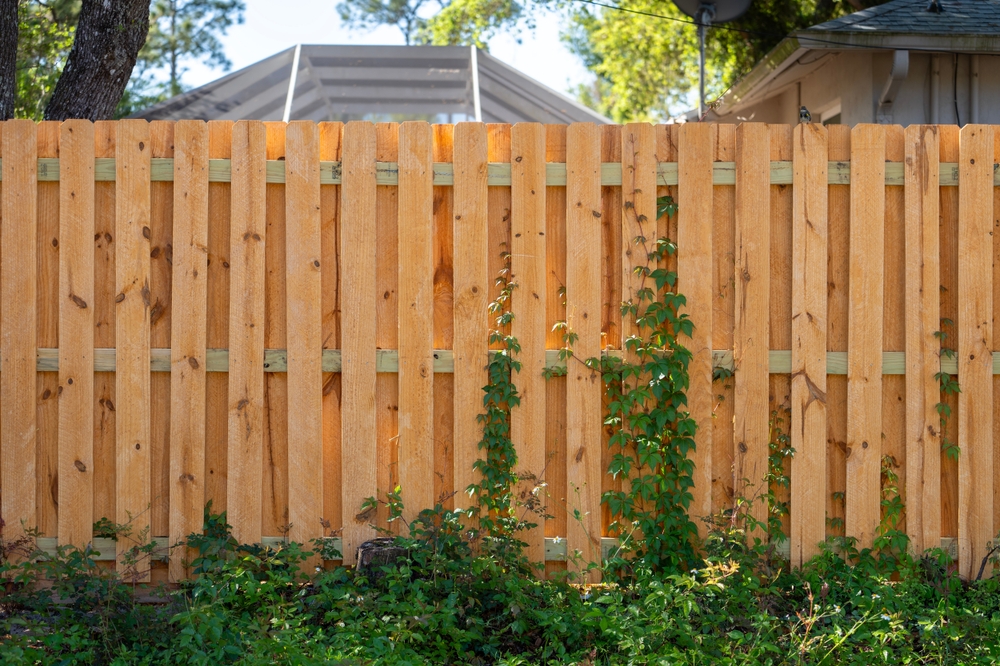
A bare fence does more than sit there looking like a giant wooden shrug. With the right plants, containers, supports, and a little planning, that unused vertical space can produce herbs, vegetables, berries, flowers, and even a surprising amount of food.
The trick involves matching the growing method to the fence and the plants instead of hanging a few pots wherever they fit and hoping for the best. A sunny fence can become a productive garden wall, while a shadier one can still support the right crops and useful plants. Think of the fence as a blank canvas with excellent height and absolutely no interest in paying rent.
1. Add Trellises for Climbers That Reach Upward
A fence creates a natural backdrop for climbing plants, but most vines still need a little help finding their way upward. Install a sturdy trellis a few inches in front of the fence, or attach a support system that gives stems something to grab without trapping moisture against the wood. Cucumbers, pole beans, small melons, flowering nasturtiums, and many ornamental vines can turn a flat fence into a living wall of leaves and produce.
Choose the support based on the crop rather than the other way around. Pole beans can climb strings, netting, or narrow trellises, while cucumbers need enough support to hold the weight of developing fruit. Check the fence for rot and structural weakness before adding heavy containers or dense vines, because a productive garden should not end with a dramatic fence collapse.
2. Hang Containers for Herbs and Compact Vegetables
A fence can hold a collection of containers, which makes it especially useful for gardeners with limited ground space. Wall-mounted planters, sturdy hanging baskets, railing-style boxes, and individual pots can all create growing pockets for basil, parsley, thyme, chives, lettuce, radishes, and compact peppers. Place containers where plants receive the light they need, and remember that a fence can cast a long shadow depending on its direction and nearby structures.
Container gardens need more attention than plants growing in the ground because pots dry out faster and offer less room for roots. Use containers with drainage holes, choose a quality potting mix, and avoid cramming large plants into tiny pots just because the arrangement looks cute in a photo. A simple row of matching containers can create a tidy garden, but a mismatched collection of useful pots can look just as charming when the plants take center stage.
3. Grow Berries Along the Fence Line
A fence can provide an excellent framework for certain berry plants, especially when gardeners train them along wires or other supports. Raspberries, blackberries, and some grape varieties can make good candidates for a productive fence-side planting, although each plant requires its own pruning and support approach. Gardeners should also check local growing conditions and choose varieties suited to their climate before committing to a long-term planting.
Keep the plants far enough from the fence to allow air movement and access for pruning, harvesting, and pest checks. A berry patch that grows into an impenetrable jungle may look impressive for a few weeks, but harvesting quickly turns into an expedition involving scratches and questionable decisions. Training canes or vines neatly along supports makes the space more productive and keeps maintenance from becoming a seasonal wrestling match.
4. Build a Vertical Garden With Pockets and Planters
Fabric pocket planters and modular vertical systems can transform a blank fence into a stack of small growing spaces. They work especially well for herbs, salad greens, strawberries, and other plants that do not need deep root systems. The setup also lets gardeners place plants at different heights, which can make harvesting easier and give a plain fence a much more interesting look.
Watering deserves serious attention because upper pockets can dry out faster while lower sections may collect runoff. Check the entire system regularly instead of assuming that one thorough watering at the top will reach every plant below. Choose a strong mounting system, keep heavy soil-filled containers secure, and remember that a vertical garden becomes heavier after watering, not lighter because the plants look cheerful.
5. Turn the Fence Into a Pollinator-Friendly Food Zone
A productive fence does not need to grow only food for people. Flowers such as calendula, nasturtiums, bee balm, sunflowers, and other regionally suitable plants can bring color and support pollinators while making nearby vegetable crops more inviting to beneficial insects. Some edible flowers and herbs can pull double duty, giving the fence both garden value and visual personality.
Place plants according to their mature size and sunlight needs rather than packing every available inch with greenery. Leave enough room to inspect leaves, harvest crops, and remove damaged growth before a small problem turns into a full-blown garden mystery. A fence-side planting can combine vegetables, herbs, flowers, and fruit in a way that looks intentional without requiring a landscape designer or a small fortune.
Give That Fence a Job Besides Standing There
The best fence gardens combine vertical space with practical access, suitable plants, and sturdy support. Start with the fence’s sunlight, strength, and condition, then choose crops that match the space instead of forcing a giant pumpkin vine into a tiny hanging planter. A bare fence can become a harvest zone, an herb wall, a berry support, or a colorful habitat for pollinators with a few thoughtful changes.
Which fence in the yard could use a productive makeover, and what would you plant there first? It’s time to share your ideas in the comments section below.
You May Also Like…
7 Cheap Garden Fence Alternatives That Actually Work
5 Proven Ways to Keep Rabbits Out of Your Garden Without Building Fences
6 Reasons Blackcurrants May Become the Next Backyard Superfruit
7 Backyard Gardening Ideas That Could Save Money All Summer Long
7 Backyard Features That Could Increase Outdoor Enjoyment Instantly

Brandon Marcus is a staff writer for FrugalGardening.com at District Media, Inc., where he delivers practical gardening advice with a relatable, no-nonsense style. An avid amateur gardener, he holds a BA degree and with over ten years of professional writing experience, he is also an award-winning published author whose first book, Questions For Deep Thinkers, was released by Adams Media. His work has appeared in major publications including Fandom.com, CHUD.com, TheColdWire.com, and Fansided.com.
Leave a Reply