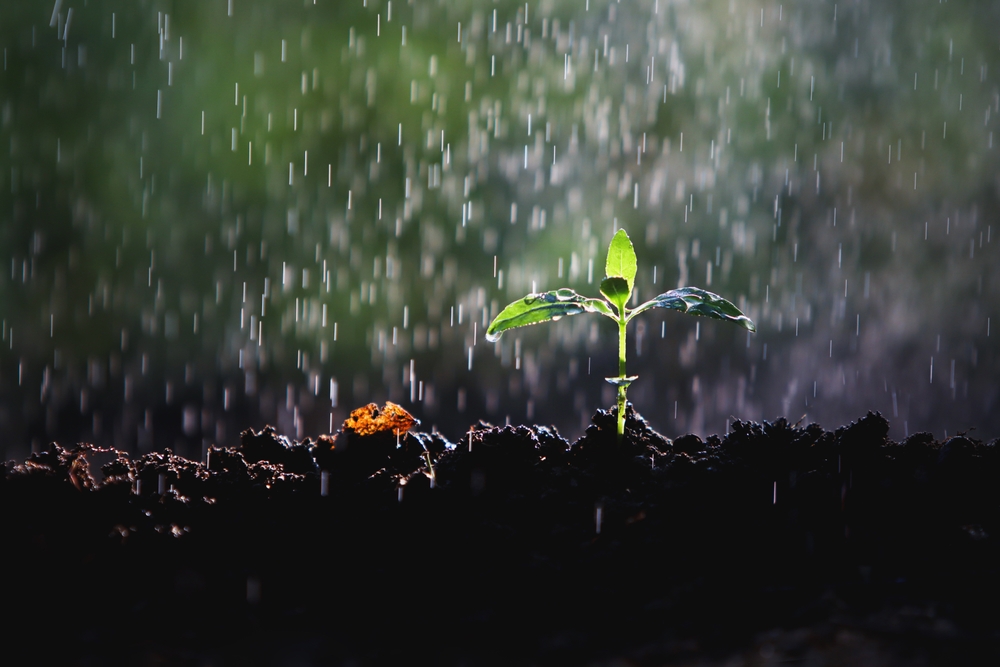
A sudden downpour can turn a promising batch of seedlings into a soggy mess in minutes, especially when young plants still have tiny roots and delicate stems. A little rain can help seedlings, but a hard storm can wash away soil, flatten plants, expose roots, and leave containers holding far more water than those tender roots can handle.
Thankfully, seedlings do not need a fortress, a greenhouse, or a backyard engineering degree to get through a nasty storm. Several moves can make a dramatic difference, whether the plants sit in a garden bed, a raised bed, a tray on the patio, or a collection of small pots that suddenly look alarmingly vulnerable when the sky turns black.
1. Move Container Seedlings Under Temporary Cover
The simplest protection often involves the least gardening drama: move the seedlings. Container-grown seedlings offer a major advantage because gardeners can shift them beneath a covered porch, under a table, beside a wall, or into another spot that blocks the worst of the rain while still allowing airflow.
Avoid sealing young plants inside a completely enclosed space for long periods, especially on warm days, because stagnant air and excess humidity can invite fungal problems. A covered location that keeps rain from hammering the leaves and soil while allowing plenty of ventilation usually works well. A patio table can even become a temporary storm shelter when gardeners place trays underneath it and keep the plants away from runoff pouring off the roof.
2. Create a Simple Rain Shield
When moving seedlings does not work, a temporary rain shield can soften the impact of falling water. An upside-down storage bin, a large plastic tote, a patio chair, or a piece of rigid plastic can block heavy drops, as long as the cover stays above the plants and allows air to move around them.
Do not drape plastic directly over seedlings, because the material can press against delicate stems and trap moisture around the foliage. Instead, create a small frame with garden stakes, tomato supports, overturned crates, or another sturdy structure, then place the cover above the plants like a tiny roof. Leave open sides whenever possible, and secure the setup so a gust of wind does not turn the protective cover into a backyard kite.
3. Stop Soil From Washing Away
Heavy rain can hit bare potting mix with surprising force, creating tiny craters and sending soil particles racing toward the nearest drain or garden edge. Seedlings with shallow roots may end up with exposed roots after just one storm, and that creates a problem long after the clouds disappear.
A thin layer of clean, fine-textured mulch can help reduce the force of falling rain around established young plants, although gardeners should avoid piling material against delicate stems. Small pieces of straw or finely shredded organic material can work in some garden settings, while a container may benefit from a light surface covering that still allows water to pass through. The goal involves slowing the raindrops, not creating a soggy blanket that keeps the soil wet forever.
4. Check Drainage Before the Storm Arrives
A seedling can suffer from too much water even when the plant itself looks perfectly fine at first. Containers with blocked drainage holes, trays sitting in standing water, or compacted soil can keep roots saturated long after the rain stops, which can reduce the oxygen available around the roots and create conditions for root problems.
Before a storm, lift pots and check that drainage holes remain clear, then move containers away from spots where water collects. Empty saucers after the storm instead of letting seedlings sit in a shallow pond. A container that drains freely gives excess water somewhere to go, while a container with nowhere to drain turns a rainstorm into an unwanted hydroponics experiment.
5. Use Wind Protection Along With Rain Protection
Sudden downpours often arrive with wind, and young seedlings can suffer more from the combination than from the rain alone. A small plant with a thin stem can bend sharply, snap, or become buried under splashing soil when gusts hit at the same time that water pounds the ground.
Place vulnerable seedlings near a wall, fence, or other structure that blocks the strongest wind without trapping excessive moisture. Gardeners can also use small stakes or plant supports for seedlings that have grown tall and leggy, but the support should remain loose enough to avoid rubbing or strangling the stem. A sheltered location can make the difference between a plant that stands upright after the storm and one that looks like it lost an argument with a lawn mower.
6. Inspect Seedlings After the Rain
The work does not end when the clouds clear. A quick inspection can reveal problems while gardeners can still correct them, including exposed roots, buried leaves, broken stems, washed-out soil, and water pooling around the base of a plant.
Gently brush away loose soil from foliage and carefully straighten seedlings that have fallen over, but avoid tugging on roots that have shifted in saturated soil. If a seedling has lost soil around its stem, add fresh growing medium or garden soil as appropriate for the growing location and firm it gently around the roots. Hold off on heavy fertilizing immediately after a stressful storm, particularly if the soil remains saturated, and give the plant time to recover while improving drainage and airflow.
A Little Shelter Can Save a Lot of Garden Work
Seedlings need water, but they also need the right amount of water delivered in the right way. A gentle soaking can help young plants, while a sudden storm can flatten stems, strip soil from roots, and leave containers waterlogged for days.
The smartest approach combines prevention with a quick response: move what can move, shield what cannot, protect the soil, check drainage, block harsh wind, and inspect the garden after the weather passes. A few minutes of preparation before dark clouds arrive can save weeks of careful seed starting, and that makes a simple plastic tote or patio table look like a surprisingly impressive piece of garden equipment.
What is the most useful way to protect young seedlings from sudden downpours in your garden? Share your best rain protection tips, clever homemade shelters, or hard-earned lessons in the comments.
You May Also Like…
Save Seeds, Save Money: Harvest, Dry and Store Seeds from This Year’s Favorite Heirloom Plants
Why Seed Swaps Are Suddenly Becoming Popular Again
Win the War on Weeds: Low-Cost Strategies to Shrink Your Weed Seed Bank
7 Quick-Germinating Seeds That Deliver Fast Results
The Little-Known Secret to Strong, Healthy Seedlings That Costs Almost Nothing

Brandon Marcus is a staff writer for FrugalGardening.com at District Media, Inc., where he delivers practical gardening advice with a relatable, no-nonsense style. An avid amateur gardener, he holds a BA degree and with over ten years of professional writing experience, he is also an award-winning published author whose first book, Questions For Deep Thinkers, was released by Adams Media. His work has appeared in major publications including Fandom.com, CHUD.com, TheColdWire.com, and Fansided.com.
Leave a Reply