A garden border does not have to choose between looking good and putting food on the table. Several edible crops bring enough color, texture, shape, or sheer personality to work beautifully along paths, flower beds, patios, and other highly visible spots.
That makes edible landscaping a particularly clever trick for gardeners who want every inch of growing space to earn its keep. Instead of hiding vegetables in a backyard plot, these five crops can frame a garden, soften a walkway, or add a splash of color while quietly producing something delicious for the kitchen.
1. Swiss Chard Brings the Drama
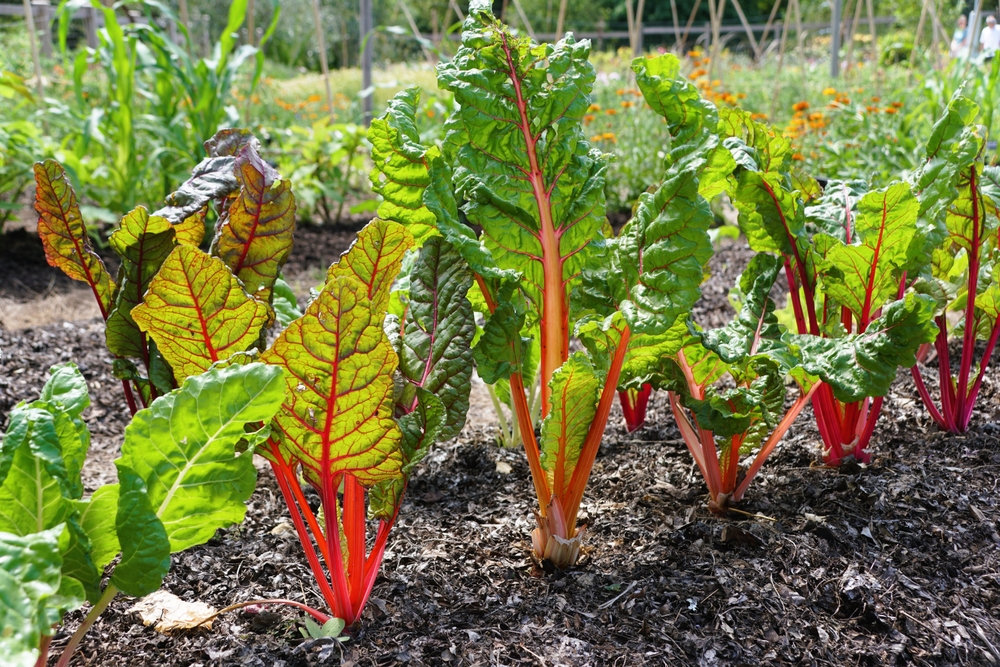
Swiss chard may technically belong in the vegetable garden, but some varieties look like they auditioned for a landscaping job. The upright leaves create a bold clump, while varieties with red, pink, orange, yellow, or white stems add color that can compete with many ornamental plants. Chard also produces large, ruffled leaves that give a border plenty of texture instead of the flat, predictable look that some edible plants bring. Plant it along a sunny path or at the front edge of a larger vegetable bed, and the plants create a surprisingly polished effect. Better yet, the garden gets an edible crop without sacrificing visual interest.
Chard also makes practical sense because gardeners can harvest individual outer leaves while leaving the central growing point intact. That approach keeps the plant producing new foliage rather than turning the entire border into a one-and-done harvest. Give it fertile, well-drained soil and consistent moisture, particularly during hot weather when growth can slow. A row of colorful chard beside green beans, tomatoes, or flowers can create a pleasing transition between different parts of the garden. Just keep an eye out for rabbits and other hungry visitors, because a gorgeous edible border can look like an all-you-can-eat buffet to wildlife.
2. Curly Parsley Makes a Surprisingly Good Edging Plant
Curly parsley deserves far more respect than the sad little garnish sitting beside a restaurant entrée. Its dense, ruffled foliage forms compact clumps that work especially well along borders, between larger plants, or around the edge of a mixed garden bed. Common curly parsley typically reaches about 8 to 14 inches tall, which puts it in a useful range for creating a low, leafy edge without blocking everything behind it. Its deep green texture also pairs beautifully with flowers, herbs, peppers, and taller vegetables. In other words, parsley can quietly do the job of a traditional edging plant while supplying the kitchen with fresh leaves.
Parsley prefers well-drained soil rich in organic matter and grows best with plenty of sunlight, although it can tolerate some light shade. Gardeners can harvest the outside stalks close to the ground, which encourages continued production throughout the season. That harvesting method also keeps the plant looking tidy instead of leaving a collection of awkwardly clipped stems. One useful trick involves planting several parsley plants at intervals rather than creating one solid row, which gives the border a more relaxed, natural appearance. With its soft texture and dependable green color, parsley makes an excellent supporting actor around showier crops.
3. Peppers Can Turn a Border Into a Color Show
Pepper plants bring something many edible crops lack: fruit that looks like miniature ornaments. Depending on the variety, peppers can produce fruits in green, yellow, orange, red, purple, or brown, and the plants themselves often develop a compact, upright shape that fits nicely into sunny borders. Small-fruited peppers can look especially striking when the fruits hang among the foliage like tiny decorations. That visual appeal makes peppers useful near patios, along paths, or at the front of a vegetable garden where people can actually see them. A border full of ripening peppers can look downright festive without a single petunia involved.
Peppers need warmth, so gardeners should wait until nighttime temperatures stay reliably above 50 degrees Fahrenheit before transplanting them outdoors. Choose sturdy plants, give them a sunny location, and protect them from strong winds when possible. Pinching some pepper varieties can encourage a bushier, more compact shape, which suits a border better than a sprawling plant. Keep in mind that hot peppers deserve thoughtful placement if children or pets frequently pass through the area, since the fruits contain capsaicin. Sweet peppers offer an easier choice when the border sits beside a busy walkway.
4. Kale Adds Texture When Flowers Start Looking Tired
Kale has the visual advantage of looking interesting even when it is not producing anything dramatic to harvest. Curly, ruffled, or deeply lobed leaves create texture, while different varieties can bring shades of green, blue-green, purple, or red into the garden. The plants also tolerate cool weather, which gives them an advantage when many warm-season annuals start looking exhausted. A line of kale can therefore help carry a border from late summer toward fall without demanding a complete garden makeover. That makes it particularly useful for gardeners who want edible plants to keep contributing after the first flush of summer color fades.
Kale performs best in cool conditions, and hot weather can slow growth while producing tougher, stronger-flavored leaves. Gardeners can harvest the lower leaves while leaving the growing point intact, allowing the plant to continue producing fresh foliage. Fall planting can work especially well because cooler weather generally improves the quality of the leaves. Place kale where its sculptural foliage can contrast with finer-textured plants such as parsley or flowers. A little spacing also helps each plant show off its shape instead of creating one giant green blob.
5. Basil Can Give a Border Serious Personality
Basil brings an entirely different trick to edible landscaping because fragrance joins the visual performance. Genovese basil supplies familiar green foliage, while purple-leaved varieties can create a striking contrast beside flowers and vegetables with lighter foliage. Basil also responds well to pinching, which encourages a bushier, more compact shape that works nicely in borders and containers. Place several plants near a walkway or patio, and brushing past them can release that unmistakable basil aroma. Suddenly the garden border has become dinner prep with better landscaping.
Basil needs warm conditions and plenty of sunlight, so it belongs in the garden after cold weather has passed rather than alongside early spring greens. Regular harvesting helps maintain a useful supply of leaves, while removing flower buds can keep the plant focused on leafy growth when that suits the gardener’s culinary plans. Good drainage matters, particularly in containers or areas where water tends to collect. Purple basil can make an especially handsome transition between ornamental flowers and edible crops. Just remember that basil dislikes chilly weather, so it plays the starring role during the warm part of the growing season rather than serving as a year-round border plant.
Let the Border Earn Its Dinner
The smartest edible borders combine plants with different heights, colors, textures, and harvest periods rather than lining everything up like soldiers. Swiss chard can provide bold foliage, parsley can create a low edge, peppers can supply colorful fruit, kale can carry the display into cooler weather, and basil can add fragrance and lush summer foliage. Match each crop to its preferred growing conditions, especially sunlight, soil drainage, moisture, and temperature. A beautiful border still needs to function as a healthy growing space, because decorative placement cannot compensate for poor conditions. When the right crop meets the right location, however, a food garden can look every bit as intentional as an ornamental one.
Which edible crop would you use as a border plant in your garden, and what variety gives you the best combination of looks and flavor?
You May Also Like…
7 Muted Flower Colors Showing Up in Modern Summer Borders
5 Ways to Stabilize Pepper Plants Loaded With Fruit
Low-Cost Cover Crops That Improve Soil Without Extra Work
Why Winter Cover Crops Boost Soil Health
Can Milk Jugs Protect Young Fall Crops From Hungry Rabbits?

Brandon Marcus is a staff writer for FrugalGardening.com at District Media, Inc., where he delivers practical gardening advice with a relatable, no-nonsense style. An avid amateur gardener, he holds a BA degree and with over ten years of professional writing experience, he is also an award-winning published author whose first book, Questions For Deep Thinkers, was released by Adams Media. His work has appeared in major publications including Fandom.com, CHUD.com, TheColdWire.com, and Fansided.com.
Leave a Reply