The best way to water a garden on sloped ground involves slowing water down before gravity turns it into a tiny downhill river. Drip irrigation, terracing, contour planting and careful watering habits can help moisture reach plant roots instead of racing across the soil and carrying precious topsoil with it.
A flat garden gives water a fairly simple job. A sloped garden adds gravity to the conversation, and gravity has never been known for patience. Pour on too much water too quickly, and the upper part of the garden may stay dry while the lower section becomes soggy, muddy and mysteriously talented at collecting every bit of soil that once lived uphill.
Slow the Water Down Before It Runs Away
The most effective watering strategy for a sloped garden starts with one simple goal: slow the water down. Instead of blasting the entire area with a hose or sprinkler, apply water gently enough for the soil to absorb it before runoff begins. Drip irrigation works especially well because it delivers water close to plant roots rather than throwing water across the entire slope. A soaker hose can also work, although gardeners should check that it distributes water evenly across the slope and does not send extra moisture toward the lowest point.
Short watering sessions often work better than one long, aggressive soaking. Water for a while, pause, and allow the moisture to move into the soil before watering again. This approach helps prevent the telltale muddy streams that carve little channels through the garden. If water begins pooling or running downhill, the garden has already delivered its review, and it is not a five-star rating.
Drip Irrigation Gives Hillside Gardens a Fighting Chance
A properly installed drip system can make watering sloped ground much easier because it places water where plants need it. Gardeners can position emitters near individual plants or run dripline along planting rows, depending on the garden layout. The system should deliver water slowly enough to prevent runoff, especially on compacted or clay-heavy soil that absorbs moisture at a slower pace.
Placement matters just as much as the equipment itself. On a slope, water can move downhill inside the soil, so plants at the bottom may receive extra moisture even when the upper plants look thirsty. Separate irrigation zones can help gardeners adjust watering for different sections of the slope. A top section may need a different schedule from a lower section, particularly after heavy rain or during hot, dry weather.
Terraces and Contour Beds Take the Drama Out of Gravity
For steeper ground, terracing can transform a difficult watering situation into a series of smaller, more manageable planting areas. Terraces interrupt the downhill path of water and create flatter spaces where soil can absorb moisture more effectively. Even modest contour beds can help, especially when they follow the natural shape of the slope instead of running straight up and down it.
Gardeners do not need to build a dramatic stone staircase worthy of a historic estate. Low berms, carefully shaped planting beds and small retaining structures can slow runoff when gardeners install them safely and appropriately for the site. Any larger retaining wall needs careful planning because poorly designed structures can fail under the pressure of wet soil. The goal involves giving water more time to soak in, not creating a backyard version of a dam project.
Mulch Helps Keep Moisture Where Plants Can Use It
A good layer of organic mulch can make a noticeable difference on sloped ground. Mulch protects the soil surface from the force of falling rain and irrigation water, which helps reduce splashing and erosion. It also slows evaporation, helping the soil stay moist for longer between watering sessions.
The type and placement of mulch matter on a slope. Chunkier organic materials often stay in place better than very fine materials that can wash downhill during heavy rain. Keep mulch a little away from plant stems and tree trunks to reduce the risk of excessive moisture against the plant tissue. On a steep slope, gardeners may need to refresh mulch after major storms because even the best mulch eventually decides to take a scenic trip downhill.
Choose Plants That Help Hold the Soil Together
Plant selection can become part of the irrigation strategy because living roots help stabilize soil. Ground covers, perennial plants and grasses can create a network of roots that helps hold soil in place while their foliage slows the impact of rain. Plants with different root depths can also help create a more layered planting system across the slope.
The best choices depend on the local climate, sunlight, soil and the steepness of the site. A garden center may offer plenty of attractive plants, but a plant that needs constant moisture can create extra work on a slope, especially if water quickly drains away from its roots. Grouping plants with similar water needs makes irrigation easier and prevents the classic gardening mistake of giving a thirsty plant a seat next to one that prefers a much drier lifestyle.
Water the Soil, Not the Leaves and the Street
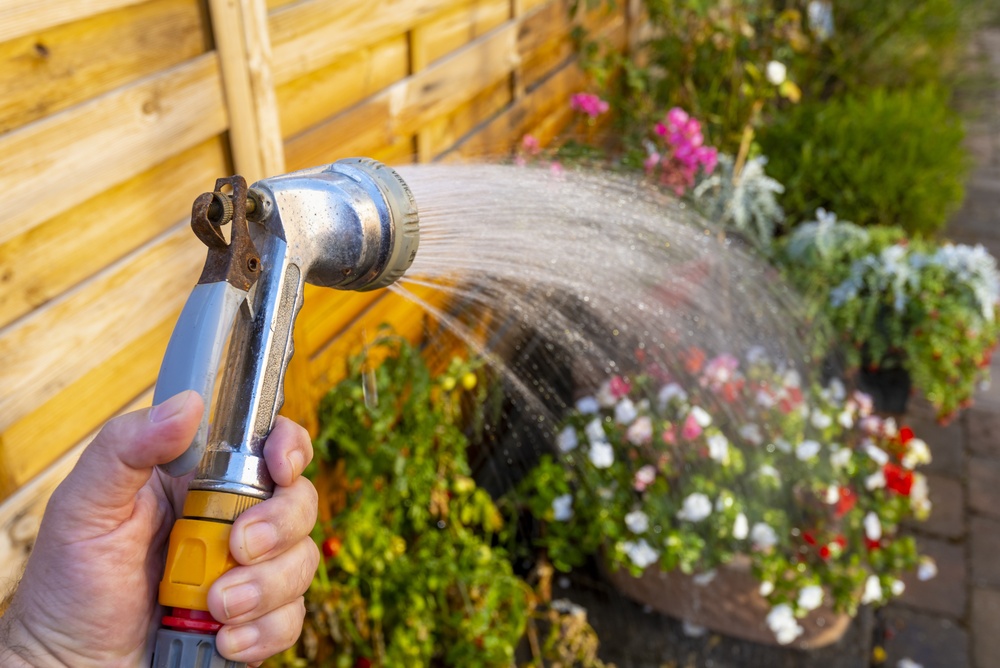
Aiming a hose at the base of plants usually gives sloped gardens a better chance than spraying water high into the air. Wind can push sprinkler spray away from the intended area, while large droplets can hit bare soil with enough force to encourage erosion. Gentle, targeted watering keeps more moisture near the root zone and reduces waste.
Morning often provides a useful watering window because plants have time to take up moisture before the hottest part of the day. Gardeners should still check the soil rather than follow a rigid schedule, since recent rain, temperature and soil type can change watering needs. Push a finger into the soil near a plant or check beneath the mulch before reaching for the hose. A dry surface does not always mean dry soil underneath, and a wet lower slope does not mean the upper garden received enough water.
The Best Sloped-Garden Watering Plan Works With Gravity
The best way to water a garden on sloped ground combines slow delivery, smart planting and physical features that interrupt runoff. Drip irrigation usually provides the most precise control, while mulch, contour beds and suitable plants help keep water and soil from making a downhill escape. Steeper slopes may require terracing or professional advice, especially when erosion threatens structures, pathways or neighboring property.
Which watering method has worked best in your sloped garden, and what trick has made the biggest difference?
You May Also Like…
Could a Gravel Garden Cut Watering Without Looking Bare?
How to Tell If You’re Watering Deeply Enough
Why Deep Watering Matters More Than Daily Sprinkling During Hot Weeks
Why Overwatering Is More Dangerous Than Underwatering
Growing with Graywater: Use Shower and Bath Water to Irrigate Ornamentals Safely

Brandon Marcus is a staff writer for FrugalGardening.com at District Media, Inc., where he delivers practical gardening advice with a relatable, no-nonsense style. An avid amateur gardener, he holds a BA degree and with over ten years of professional writing experience, he is also an award-winning published author whose first book, Questions For Deep Thinkers, was released by Adams Media. His work has appeared in major publications including Fandom.com, CHUD.com, TheColdWire.com, and Fansided.com.
Leave a Reply