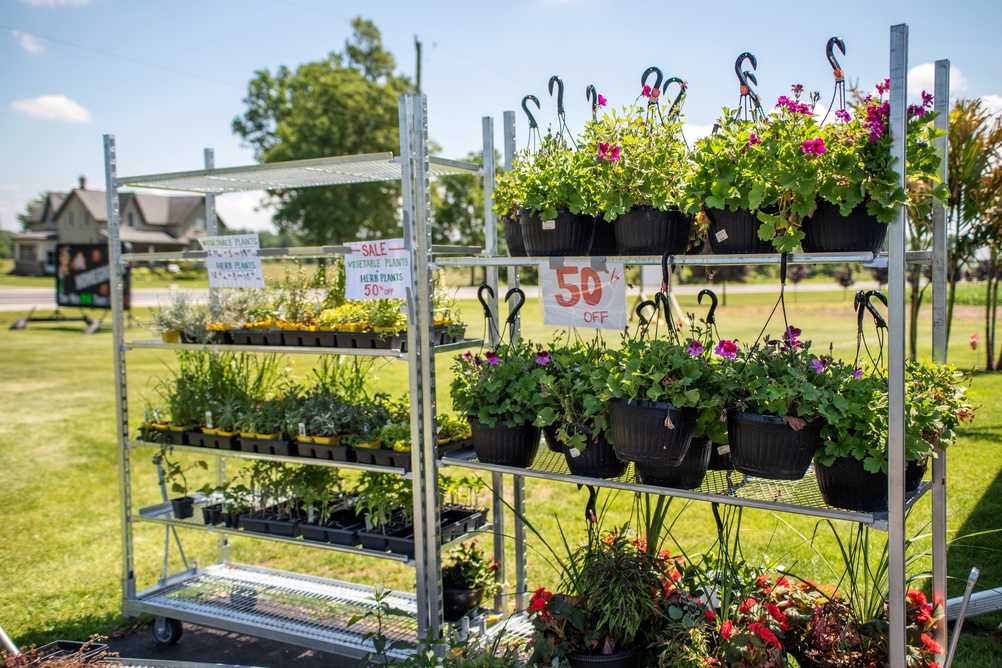
There is something dangerously tempting about the clearance rack at a garden center. A perennial that cost $15 in May is suddenly $3, its flowers are gone, half its leaves are brown, and the frugal gardener in you starts calculating how much money you could save if it survives. Sometimes that ugly little clearance plant really is one good watering and a little patience away from becoming a bargain. Other times you’re buying dead roots, a pest infestation, or a disease problem that could spread to healthy plants you already own. Before putting a discounted plant in your cart, spend two minutes inspecting these parts of it to figure out whether you’re buying a rescue project or $3 worth of compost.
Ignore the Ugly Leaves and Look at the Roots
Wilted foliage can be dramatic, but roots often tell you much more about whether a clearance plant has a future. University of Illinois recommends gently lifting container plants from their pots when possible and looking for healthy roots, which should generally appear white rather than dark, mushy, or foul-smelling. A root ball that holds together is encouraging, although an extremely dense mass of roots circling repeatedly around the pot indicates the plant has become root-bound. Circling roots aren’t always a dealbreaker because moderate problems can sometimes be corrected during planting, but severe circling can interfere with establishment, especially in trees and shrubs. If the roots are mostly firm and healthy while the top looks tired, you’ve found a much better rescue candidate than a leafy plant hiding rotten roots.
Learn the Difference Between Neglected and Diseased
Clearance plants frequently look terrible for perfectly fixable reasons, including missed watering, cramped containers, faded flowers, or simply reaching the end of their retail season. The danger is assuming every brown spot or wilted stem is merely cosmetic when some symptoms can indicate a disease you don’t want entering your garden. University of Minnesota recommends rejecting transplants with dark, discolored, or soft sunken areas on their leaves, stems, or roots. Look for dead, discolored, and wilted tissue because those symptoms can sometimes signal a larger problem. One crispy leaf from missed watering might not worry me nearly as much as spreading lesions, stem rot, widespread suspicious spotting, or several neighboring plants showing the same symptoms.
Check Under Every Leaf for Uninvited Passengers
Never put a clearance plant into your cart without turning over a few leaves, because that’s where an expensive “free bonus” may be hiding. Inspect both sides of leaves for feeding damage and look for pests such as fuzzy white mealybugs, scale insects that resemble small bumps, and whiteflies that may fly away when the plant is disturbed. For houseplants, make sure you check for insects, webbing, holes, eggs, discoloration, and sticky honeydew before bringing a plant home. Look along stems, new growth, leaf joints, pot rims, drainage holes, and the underside of the container rather than performing a quick glance from three feet away. A $3 plant isn’t cheap if controlling the spider mites, scale, or mealybugs that hitchhike home costs more than buying a healthy plant would have.
A Root-Bound Plant Isn’t Automatically a Lost Cause
Pull a neglected perennial out of its nursery pot and you may find roots wrapped around the container like a ball of string. Penn State says a fine network of healthy, firm, white or tan roots is ideal and cautions against black, slimy, foul-smelling roots or extremely dense circling roots. Moderate circling can sometimes be corrected by scoring or loosening the root ball at planting, while problematic circling roots can be pulled apart, cut, or otherwise corrected depending on the plant. That’s very different from a root system that has largely rotted away after sitting waterlogged for weeks. A severely root-bound clearance plant requires extra work, but a rotten one may have already passed the point where the discount makes sense.
Make Sure the Plant Actually Fits Your Garden
Saving a $12 plant by purchasing it for $3 isn’t really saving $9 if the plant cannot thrive anywhere on your property. Choose plants whose light, drainage, soil, moisture, and other requirements match the location where they’ll be planted. A shade-loving perennial placed in blazing afternoon sun may remain stressed even if you successfully nurse it back from its clearance-rack condition. The same applies to plants that aren’t reliably hardy in your climate or shrubs that will eventually outgrow the tiny space where you planned to squeeze them. Check the tag before buying, because the most frugal clearance plant is one that you already have an appropriate place to grow.
Ask Why It Was Marked Down
A markdown doesn’t necessarily mean anything is seriously wrong with the plant. Bargain plants sometimes appear simply because their selling season has ended, while others may have deteriorated after sitting at the retailer for an extended period. A perennial with finished flowers may look uninspiring on a retail shelf in September while still possessing perfectly healthy roots capable of returning next spring. Annuals being cleared shortly before frost are a different calculation because you may only get a few weeks of enjoyment regardless of their health. Ask an employee when possible, but still perform your own inspection because a bright clearance sticker tells you the price, not the condition.
Factor the Rescue Costs Into That $3 Price Tag
Frugal gardening works best when you calculate the total cost rather than getting hypnotized by the percentage printed on a clearance sign. Suppose your $3 clearance plant needs a $6 bag of potting mix, a larger container, pest treatment, and several weeks of attention before it begins growing normally. If you already have those supplies, the rescue may still be an excellent bargain, but buying everything specifically for one struggling plant changes the math. There is also an opportunity cost to consider: a badly weakened plant may occupy valuable garden space for an entire season without ever performing well. Before checkout, ask yourself whether you would still want this particular plant if the clearance sticker weren’t there.
Quarantine Clearance Houseplants Before Mixing Them In
A discounted outdoor perennial going into an isolated garden bed poses a different risk than a struggling houseplant headed for a windowsill beside your prized collection. It’s always a good idea to isolate newly acquired indoor plants for one to two weeks so pest problems have an opportunity to become visible before the newcomer joins other plants. Its guidance also says heavily infested and badly damaged plants may simply be more economical to discard than treat. That matters when a $3 clearance plant could expose $200 worth of established houseplants to a difficult pest problem. Keep the newcomer separate, inspect it whenever you water, and only introduce it to the rest of your collection when you’re reasonably confident nothing unwanted came home with it.
The Best Bargain Still Has to Be Alive
The clearance rack can be one of the best places to stretch a gardening budget, particularly when healthy perennials are discounted simply because they’ve finished blooming or the retailer needs seasonal shelf space. Look past ugly foliage and inspect the roots, stems, leaf undersides, growing requirements, and signs of disease before deciding whether a struggling plant deserves a place in your cart. A few dead leaves, spent flowers, or mild root binding may be manageable, while mushy roots, severe pest infestations, widespread disease symptoms, and badly damaged woody plants are much harder to justify. The goal isn’t to prove you can rescue every sad clearance plant you encounter; it’s to recognize the $3 plants that have a realistic chance of becoming the $15 plants everyone else bought earlier in the season.
What’s the best clearance-rack plant you’ve ever rescued, and how little did you pay for it? Tell us about your bargain in the comments.
What to Read Next
Don’t Throw Away Your Dead Plants Yet — Some Could Save You Money Next Spring
Never Burn This Plant When Cleaning Up the Yard — Even If It Looks Dead
Don’t Throw Away Those Dead Flower Heads — They Could Save You Money Next Spring
Leave a Reply