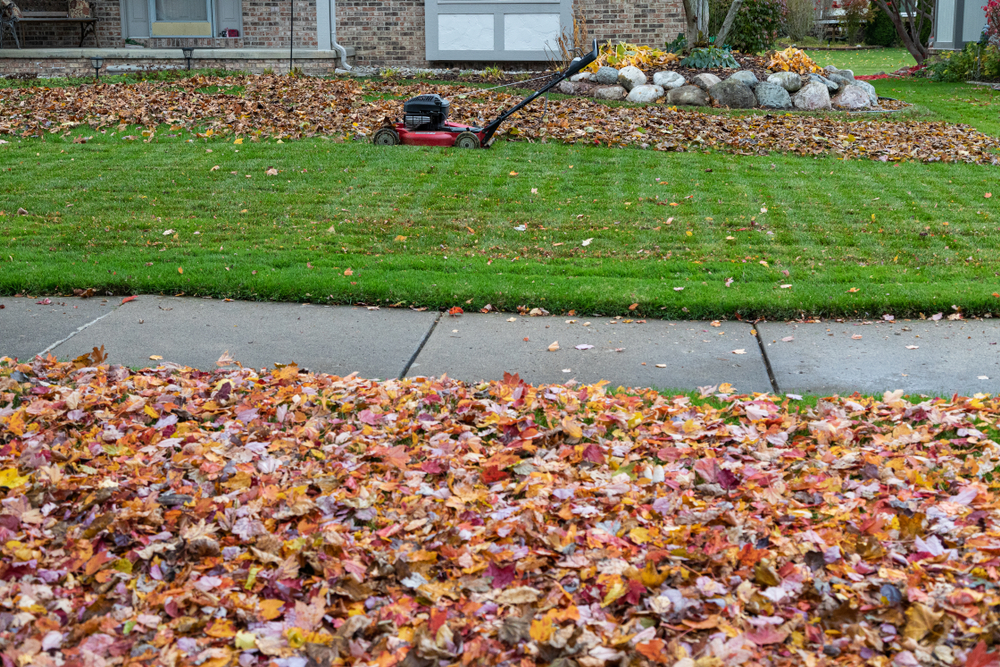
Every fall, millions of homeowners repeat the same ritual: rake the leaves, stuff them into bags, drag them to the curb, and wonder how another pile appeared overnight. But what if you simply stopped? The answer is more complicated than the popular advice to either “leave the leaves” or remove every last one, because leaving leaves in your yard can be beneficial in some places and damaging in others. Fallen leaves are free organic material that can feed soil, protect garden beds, and shelter beneficial insects, but a thick mat sitting on turf all winter can create problems. Before you spend another Saturday chasing leaves across the lawn, it helps to know which ones actually need to move.
Your Lawn Is Where Too Many Leaves Can Become a Problem
A scattering of leaves across grass usually isn’t an emergency, but allowing a thick layer to accumulate all season is another story. Dense, matted leaves can block sunlight and trap moisture against turf, potentially weakening or smothering the grass underneath. University of Minnesota recommends mulching leaves into turf until they become so abundant that less than about half of the lawn remains visible, at which point excess leaves should be collected. The key distinction is that leaving leaves in your yard doesn’t have to mean abandoning them exactly where they fall. If your lawn disappears beneath several inches of wet maple leaves every November, doing absolutely nothing probably isn’t your best strategy.
Your Lawn Mower Can Replace the Rake
If you dread raking, there’s an easier compromise sitting in your garage. Running a mower over dry leaves chops them into smaller pieces that can settle between grass blades and decompose much faster than intact leaves. Penn State notes that shredded leaves return organic matter and nutrients to the soil, and cites research finding no negative turf effects from mulching leaves into lawns. Penn State suggests roughly one-half inch of shredded leaves can be beneficial on turf, while heavier accumulations can be moved elsewhere. In practical terms, leaving leaves in your yard may require a few passes with the mower, but it doesn’t necessarily require hours behind a rake.
Garden Beds Are a Much Better Destination
Leaves that are troublesome on turf can become a valuable resource when moved a few feet into a flower or vegetable bed. Shredded leaves make an effective mulch that helps moderate soil temperatures, retain moisture, add organic material as they decompose, and suppress weeds. Penn State recommends applying shredded leaves around two to four inches deep around trees, shrubs, and perennial beds, where they gradually break down instead of leaving your property in plastic bags. That can save money next spring if you’d otherwise purchase bags of commercial mulch or soil amendments. For a frugal gardener, the irony is hard to miss: homeowners often pay to remove leaves in autumn and then pay again to purchase organic material for the garden in spring.
Some Backyard Wildlife Would Prefer You Didn’t Clean Everything
A perfectly cleared yard may look tidy to us, but fallen leaves serve as winter habitat for an assortment of insects and other small creatures. University of Maryland explains that beneficial predators including lady beetles, minute pirate bugs, assassin bugs, and syrphid flies can overwinter in leaf litter, bark, and other sheltered areas. Butterflies, moths, and other insects also use leaves or nearby plant debris during different stages of their life cycles. That’s a compelling ecological argument for leaving leaves in your yard, particularly underneath shrubs, around native plants, and in designated garden areas rather than clearing the entire property. You don’t have to surrender your driveway and lawn to a mountain of leaves to provide wildlife habitat; even leaving selected patches can help.
Diseased Leaves Are the Important Exception
Not every leaf deserves a protected spot in your garden. If a tree or garden plant experienced certain fungal or other disease problems during the growing season, infected fallen material may harbor pathogens that can contribute to problems later. University of Maryland recommends removing leaves and stems from diseased plants and cautions that home compost piles may not become hot enough to reliably destroy some pathogens. In that situation, leaving leaves in your yard indiscriminately could work against the healthier landscape you’re trying to create. Identify the disease when possible and follow recommendations for that particular plant and pathogen rather than assuming every fallen leaf belongs in the mulch pile.
Whole Leaves Can Become Free Leaf Mold
If you have more leaves than your lawn and garden beds can handle, you can turn the excess into another useful soil amendment. Gather whole leaves into a dedicated pile or simple enclosure and allow fungi and other decomposers to slowly break them down into what’s commonly called leaf mold. It isn’t exactly the same thing as traditional compost, but the finished material can become a valuable source of organic matter for garden soil. This is the slow version of leaving leaves in your yard, requiring patience rather than bags, municipal collection, or much physical work after the pile is assembled. What looked like several wheelbarrows of autumn waste can eventually become something you’d otherwise spend money buying for the garden.
There Are Places Where Leaves Shouldn’t Stay
Even gardeners embracing a less manicured fall cleanup should be selective about where leaves accumulate. Wet leaves can become slippery on sidewalks, steps, decks, and driveways, so those high-traffic surfaces are worth clearing for basic safety. University of Maryland also recommends moving leaves away from areas frequently used by people and pets in regions where ticks are a concern, while suggesting they may be relocated to less-used sections of the property. Storm drains are another poor destination because leaves and other yard debris can contribute to clogged drainage systems rather than benefiting your landscape. Think of fall cleanup as redistribution rather than removal: clear the places where leaves cause trouble and move them somewhere they can do useful work.
The Best Yard May Be Somewhere Between Raked and Wild
So what happens if you never rake your leaves depends largely on where those leaves land and how thickly they accumulate. Ignore a heavy blanket across your lawn and you could have struggling turf waiting in spring, but leave leaves strategically in garden beds and you gain free mulch, organic matter, and wildlife habitat. Shredding moderate amounts directly into the lawn provides another option that requires far less effort than bagging everything. The smarter version of leaving leaves in your yard isn’t necessarily doing nothing; it’s keeping this free resource on your property while moving it to places where it provides the greatest benefit.
Would you stop raking completely, mulch your leaves with the mower, or are you still determined to have a leaf-free lawn every fall?
What to Read Next
Powdery Mildew Is Everywhere This Fall — Can Those Leaves Go in Compost?
Fall Leaves Could Replace Something You’re Paying for at the Garden Center
Leave a Reply