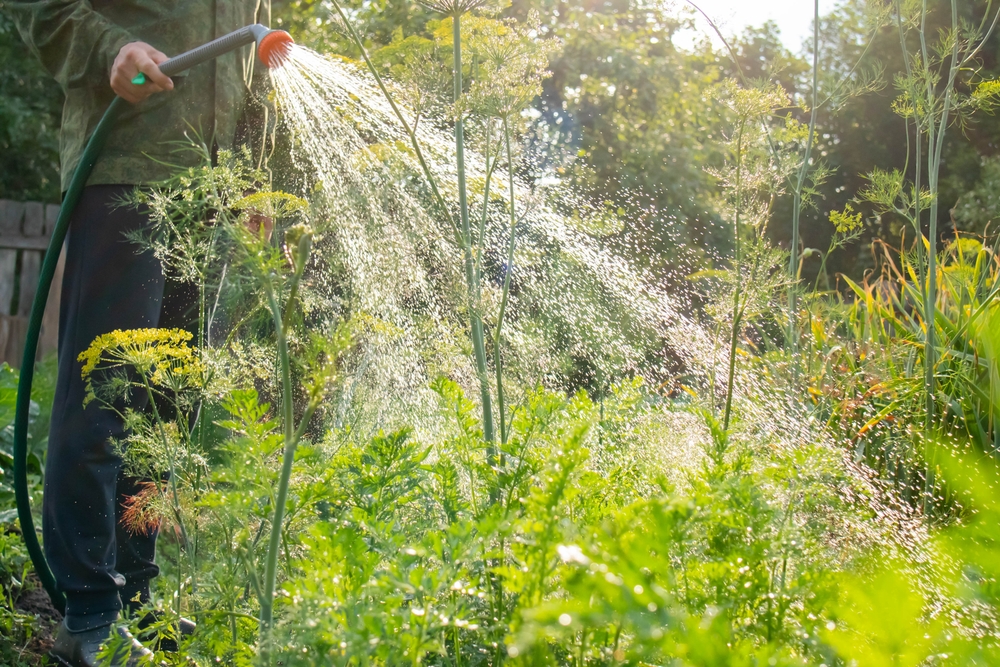
That automatic watering schedule that kept your tomatoes alive through July may be doing too much work by late September. Cooler days, longer nights, weaker sunlight, and seasonal rain can all change how quickly moisture disappears from garden soil, yet it’s easy to keep watering simply because that’s what you’ve done all summer. Too much moisture isn’t harmless: constantly soggy soil can deprive roots of oxygen and create conditions favorable to root problems, while unnecessary irrigation wastes water and money. The better approach to fall garden watering is to stop following the calendar and start paying attention to what’s actually happening below the mulch. Your garden may still need water this fall, but probably not on the same schedule it needed during summer heat.
Cooler Weather Changes the Watering Equation
A vegetable bed baking under a 90-degree July sun can lose moisture much faster than the same bed experiencing 65-degree afternoons in October. As temperatures cool and days shorten, evaporation generally slows, while many plants are also growing less aggressively than they did during summer. That means a watering routine designed around peak summer demand can leave fall soil wetter for longer periods. Instead of automatically running irrigation every morning or every other day, check conditions first and adjust fall garden watering to rainfall, temperature, soil type, and the plants you’re growing. This is one of those seasonal gardening changes that’s easy to overlook because the garden doesn’t suddenly send you a notification saying, “Turn down the hose.”
Your Finger Is a Better Tool Than the Calendar
Before reaching for the hose, dig into the soil and find out whether your plants actually need anything. The University of Minnesota recommends feeling the top six inches of soil and watering when that area is dry, rather than relying exclusively on a predetermined schedule. Check several locations because a sunny edge, shaded corner, raised bed, and container can have surprisingly different moisture levels. If the soil several inches down is still comfortably moist, giving it another soaking simply because “watering day” arrived doesn’t benefit the plants. Making this simple check part of your fall garden watering routine can prevent both unnecessary irrigation and the mistake of assuming cool weather means plants never get thirsty.
Deep Watering Still Beats Frequent Sprinkling
Reducing watering doesn’t mean giving thirsty plants a quick splash and calling it good. When irrigation is necessary, applying water deeply and less frequently generally encourages a healthier root system than repeatedly wetting only the soil surface. University of Minnesota Extension specifically recommends deep, infrequent watering and directing water toward the base of plants, which also helps keep foliage dry and reduces conditions favorable to foliar diseases. A soaker hose or drip system can make this easier because water goes where it’s useful instead of spraying pathways, leaves, and empty sections of the garden. For effective fall garden watering, think fewer purposeful soakings rather than lots of little drinks.
Fall Vegetables Still Need Consistent Moisture
Don’t take “water less” to mean “stop watering,” especially if your fall vegetable garden is still actively producing. Lettuce, spinach, carrots, radishes, kale, broccoli, and other cool-season crops can still experience stress when soil becomes excessively dry, and inconsistent moisture can affect growth and quality. Newly seeded beds are especially vulnerable because seeds and tiny seedlings occupy the upper soil layers that dry first. Containers also deserve extra attention because their limited volume of potting mix can lose moisture much faster than an in-ground bed, even on cool days. The goal of fall garden watering isn’t to deprive plants but to match irrigation to their actual needs instead of treating October like July.
Newly Planted Perennials Are an Important Exception
That new perennial, shrub, or tree you planted for fall shouldn’t necessarily be put on the same reduced schedule as an established landscape plant. New plants have limited root systems and need adequate moisture while becoming established, which is why University of Minnesota’s August gardening guidance recommends keeping newly planted herbaceous perennials well-watered until the ground freezes. Trees and shrubs can also need supplemental water during dry autumn conditions, particularly when they’re newly planted. Established plants aren’t automatically safe either; prolonged drought can leave roots vulnerable going into winter. In other words, reduce irrigation intelligently rather than shutting off every hose the moment you put out the pumpkins.
Rainfall Should Cancel Some Watering Days
One of the simplest ways to waste water is irrigating a garden shortly after nature has already done the job. A basic rain gauge can show how much precipitation your yard actually received, which is far more useful than judging rainfall by how wet the driveway looked. Soil type matters too, because sandy soil drains relatively quickly while clay-heavy ground can remain wet much longer after substantial rain. Mulched beds may also retain moisture longer, with University of Minnesota Extension recommending roughly two to three inches of organic mulch to help conserve soil moisture and protect roots. Before every planned fall garden watering session, check recent rainfall and the soil itself before deciding whether irrigation is necessary.
Don’t Let “Water Less” Turn Into “Forget the Garden”
Autumn can also bring stretches of surprisingly dry weather, so gardeners shouldn’t assume cooler automatically means wetter. In regions with dry falls, trees, shrubs, lawns, and perennials may need supplemental irrigation well beyond the vegetable-growing season. Colorado State University warns that prolonged dry periods during fall and winter can damage root systems and recommends supplemental watering under dry conditions, particularly for susceptible plants. Local climate matters enormously here: a gardener experiencing regular autumn rain has a very different irrigation problem from someone dealing with weeks of dry, windy weather. That’s another reason a universal watering schedule isn’t nearly as useful as watching your weather and checking your soil.
Let the Garden Tell You When It’s Thirsty
The biggest fall watering mistake isn’t necessarily giving plants too much or too little water; it’s refusing to change the routine when the season changes. Start checking soil moisture before irrigation, pay attention to rainfall, prioritize newly planted and actively growing crops, and gradually reduce watering where the soil is staying moist longer. Keep an especially close eye on raised beds and containers because they can behave differently from the surrounding landscape. Once you stop treating irrigation as an automatic chore, fall garden watering becomes simpler, more efficient, and better tailored to what your plants actually need.
Have you already cut back your watering schedule for fall, or are you still running the garden on its summer routine?
What to Read Next
7 Vegetables You Can Still Plant in Fall for One More Cheap Harvest
Planting a Tree This Fall? This $0 Mistake Can Kill a $100 Tree
Stop Cleaning Up Your Garden This Fall — 7 Things Experts Say You Should Leave Alone
Leave a Reply