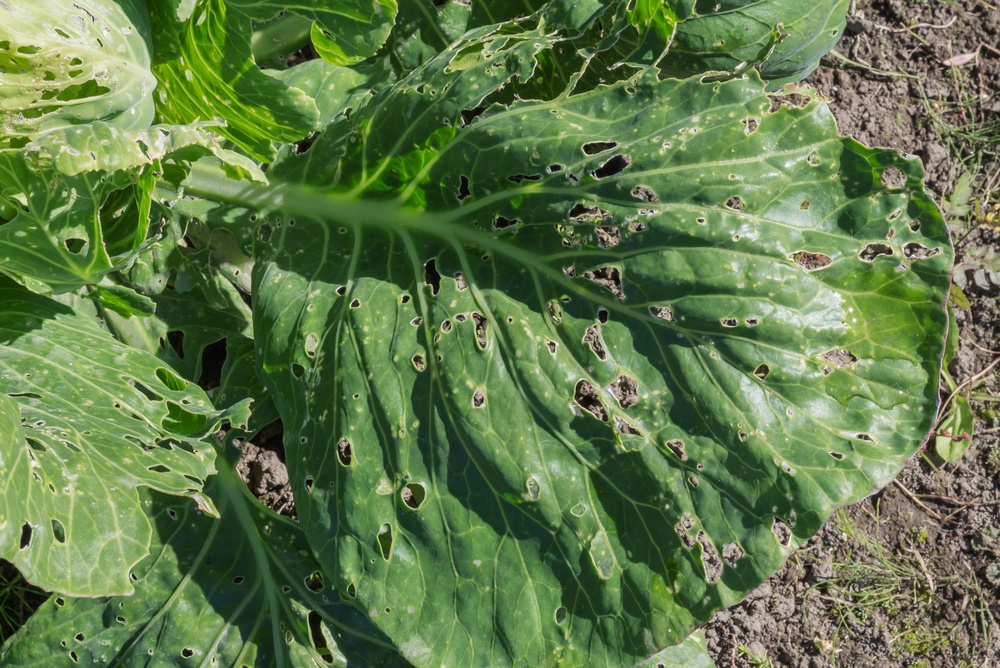
Those tiny holes appearing in fall vegetables are more than ugly little souvenirs from the garden. They can point toward the particular pest nibbling away at leaves, and the shape, size, and location of the damage can help narrow down the culprit.
A few ragged leaves do not automatically mean a garden disaster, but ignoring the evidence can give hungry insects plenty of time to turn dinner into a skeleton. The good news for gardeners is that the leaves themselves often provide clues, almost like a tiny detective story written in green.
Start With the Shape of the Damage
Small, round holes scattered across leaves often point toward flea beetles, especially on young plants such as arugula, radishes, kale, and other members of the cabbage family. These tiny jumping beetles can pepper foliage with holes that look remarkably similar to someone attacking the leaves with a miniature hole punch. Their damage can become particularly frustrating on seedlings because young plants have less foliage to spare. If the insects jump away when a hand approaches, that behavior adds another useful clue.
Larger irregular holes can suggest caterpillars, while chewing along leaf edges can point toward slugs, snails, or other hungry visitors. Caterpillar damage sometimes comes with another giveaway: dark specks of frass, which resemble tiny grains of dirt but actually represent caterpillar droppings. Check both sides of leaves because many caterpillars hide underneath foliage during the day. The hole itself matters, but the surrounding evidence often tells the more interesting story.
Fall Vegetables Attract Their Own Usual Suspects
Cool-season vegetables bring a familiar cast of garden pests back to the dinner table. Cabbage worms and other caterpillars commonly target broccoli, cabbage, kale, Brussels sprouts, and related crops, chewing irregular holes through leaves as they feed. Aphids take a different approach, clustering on tender growth and undersides of leaves while sucking plant juices rather than chewing obvious holes. Slugs and snails also enjoy cool, damp conditions and can leave ragged holes along with a telltale trail of slime.
That variety explains why one pest-control method rarely handles every garden problem. A gardener who sees holes and immediately reaches for an insecticide may eliminate helpful insects along with the unwanted guests. Instead, inspect the plant closely and identify the damage before deciding what action makes sense. A five-minute leaf inspection can save a gardener from treating the wrong pest, which ranks somewhere between stepping on a rake and watering the driveway on the list of garden frustrations.
Look Under Leaves Before Reaching for a Spray
The underside of a leaf deserves just as much attention as the pretty side facing the sun. Caterpillars may tuck themselves underneath foliage, aphids often gather around tender growth, and insect eggs can sit in places that remain easy to miss during a quick glance. Flea beetles can also hide around the soil surface or nearby vegetation when disturbed. Gently turn leaves over and inspect stems, new growth, and the soil around the base of the plant.
Handpicking visible caterpillars can provide a remarkably simple solution in a small garden. A strong stream of water can knock some aphids from foliage, while removing heavily infested leaves can reduce pest pressure when the plant still has plenty of healthy growth. Row covers can also create a physical barrier that keeps certain flying insects away from susceptible crops, although gardeners need to install them before pests reach the plants and must account for crops that need pollinator access. These low-impact steps often make more sense than treating an unidentified problem with a broad-spectrum product.
Healthy Leaves Still Matter More Than Perfect Leaves
Gardeners sometimes expect fall vegetables to look as immaculate as produce in a grocery-store display, but real garden leaves rarely cooperate with that fantasy. A few holes do not necessarily mean a plant will stop producing, particularly when plenty of healthy foliage remains. Leaves perform essential work by capturing sunlight and helping the plant make the sugars it needs for growth and reproduction. Removing every imperfect leaf can sometimes create more trouble than the original pest.
Instead, watch the overall condition of the plant. New growth that looks healthy, steady production, and limited damage usually call for monitoring rather than panic. Rapidly increasing damage, heavily skeletonized leaves, wilting, or visible clusters of insects deserve faster attention. The goal involves keeping pest activity at a manageable level, not declaring war on every creature that dares to land in the vegetable patch.
Your Fall Garden Can Give You the Answer
Those little holes become much less mysterious once gardeners start treating them as clues rather than catastrophes. Round pits, ragged bites, slime trails, frass, insects, eggs, and leaf discoloration can each narrow the list of suspects. A quick inspection can also reveal whether the problem comes from chewing insects, sap-sucking insects, or nighttime visitors such as slugs and snails. That information helps gardeners choose a response that actually matches the problem.
Fall vegetables can handle some cosmetic damage, but unchecked pests can eventually overwhelm young plants or reduce the foliage needed for healthy production. Keep checking crops regularly, especially after cool or damp weather, and look beneath leaves instead of inspecting only the tops. Catching a small problem early usually gives gardeners more options and reduces the temptation to reach for unnecessary treatments. So the next time a kale leaf looks like someone attacked it with a hole punch, take a closer look because the garden may already have left the evidence sitting right there.
Which fall vegetable has given you the biggest pest mystery in the garden this year?
You May Also Like…
September Isn’t the End of the Vegetable Garden: These 8 Crops Can Still Go in the Ground
10 Vegetables You Can Grow From Seed for Far Less Than Store-Bought Produce
Fall Garden Clearance Has Started: These 7 Things Are Worth Buying Now and 5 Aren’t
10 Perennials You Can Divide This Fall Instead of Buying More Plants
9 Vegetables That Give You the Most Food for the Least Garden Space

Brandon Marcus is a staff writer for FrugalGardening.com at District Media, Inc., where he delivers practical gardening advice with a relatable, no-nonsense style. An avid amateur gardener, he holds a BA degree and with over ten years of professional writing experience, he is also an award-winning published author whose first book, Questions For Deep Thinkers, was released by Adams Media. His work has appeared in major publications including Fandom.com, CHUD.com, TheColdWire.com, and Fansided.com.
Leave a Reply