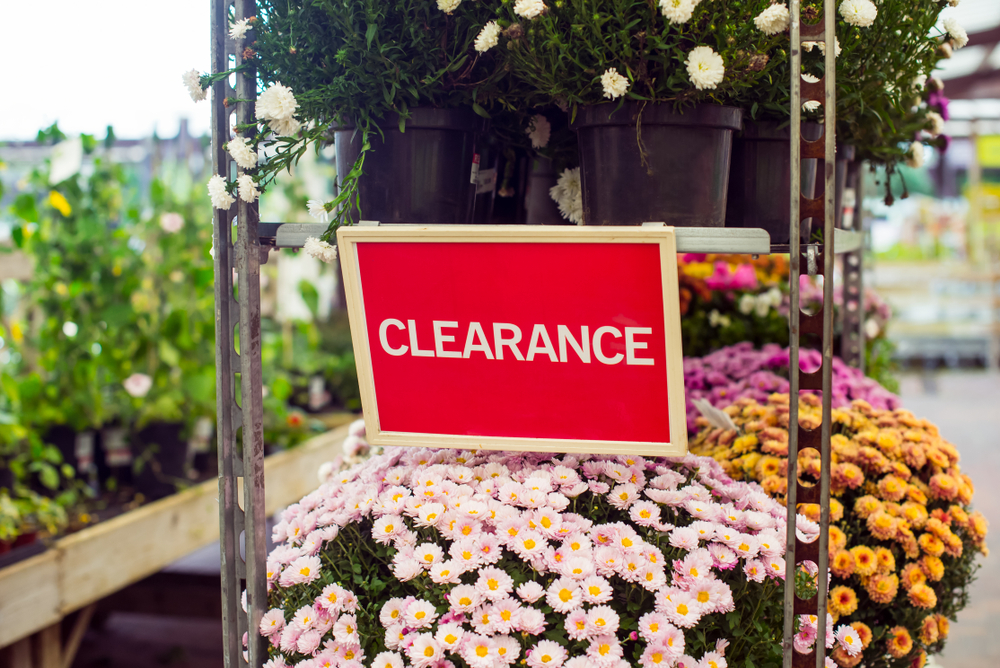
A perennial marked down from $18 to $5 can make even a disciplined gardener start rearranging flower beds in their head. By September and October, garden centers often need space more than they need another month of full-price inventory, creating opportunities for gardeners willing to overlook a few brown leaves and faded blooms. But fall clearance plants aren’t automatically bargains because some are simply going dormant while others are root-bound, diseased, cold-sensitive, or too damaged to justify even the clearance price. The smartest strategy is to buy plants that still have healthy roots and enough time to establish before winter rather than shopping based on the markdown sticker alone. Here’s what deserves a spot in your cart—and what may be cheaper to leave behind.
Hardy Perennials Can Be Excellent Clearance Buys
That sad-looking perennial with yellowing leaves may actually be one of the best deals in the clearance section. Iowa State University says late summer and early fall are excellent times to plant many perennials, including plants such as peonies, iris, daylilies, garden phlox, and oriental poppies. The foliage doesn’t need to look spectacular in September because the plant’s long-term value is underground in its crown and root system. Check that the roots are firm and healthy, avoid plants with obvious disease or rot, and make sure the perennial is hardy for your climate. A 50%-off perennial that returns for years can make fall clearance plants substantially more valuable than discounted annuals that disappear with the first hard freeze.
Deciduous Trees and Shrubs May Be Even Better Deals
Trees and shrubs take up enormous amounts of retail space, which can make them particularly interesting when nurseries start clearing inventory. Iowa State says August through early November can be an excellent planting window for deciduous trees and shrubs, although exact timing depends on local conditions. Cooler air reduces some of the stress on the above-ground plant while relatively warm soil can continue supporting root development. Illinois Extension explains that warm fall soil allows new feeder roots to develop while plants gradually enter dormancy. A healthy $60 shrub marked down to $30 can therefore be a genuine bargain if you have the correct site ready and can keep it watered until the ground freezes.
Native Perennials Are Worth a Close Look
Native plants can be especially attractive clearance purchases because you’re buying something intended to remain in the landscape rather than provide a few more weeks of seasonal color. You should plant native herbaceous perennial transplants roughly six weeks before the first frost so they have time to establish roots. That means an early fall clearance rack filled with coneflowers, asters, goldenrods, grasses, or other locally appropriate natives may offer real long-term value. Always verify that the specific species fits your soil, sunlight, moisture, mature-space requirements, and region rather than buying something simply because the word “native” appears on the label. A cheap plant that has to be moved or replaced next year wasn’t really cheap.
Spring-Flowering Bulbs Can Deliver Huge Value Per Dollar
Don’t overlook the bags and boxes near the clearance racks while you’re examining potted plants. Fall is the normal planting season for many spring-flowering bulbs, and you should plant hardy spring-flowering bulbs such as tulips, daffodils, and crocuses in fall. A marked-down package can potentially provide years of spring flowers, particularly when you’re choosing bulbs suited to naturalizing in your area. Inspect packages carefully and skip bulbs that are soft, moldy, badly shriveled, or otherwise deteriorating. Among fall clearance plants and garden supplies, healthy bulbs can be one of the easiest ways to stretch $10 into a surprisingly large spring display.
Evergreens Become Riskier as Fall Gets Later
That deeply discounted spruce or arborvitae deserves more caution than a dormant deciduous shrub. Iowa State recommends planting evergreen trees such as pine and spruce from roughly mid-August through September in its climate, warning that evergreens planted in late October or November may not establish adequately before winter. Evergreens continue losing moisture through their foliage during winter, so an inadequately established root system can leave them vulnerable to desiccation injury. The appropriate planting cutoff will vary by climate, but the underlying lesson applies broadly: a 70% discount isn’t useful if you’re buying too late for the plant to establish safely. Ask the garden center when the plant should be installed locally rather than assuming every woody plant has the same fall deadline.
Annuals Are Only Bargains if You Have an Immediate Use
A flat of petunias for $3 certainly looks cheap, but ask yourself how much growing season remains. If frost could arrive within a couple of weeks, you’re purchasing a temporary burst of color rather than a long-term garden investment. There can still be situations where discounted annuals make sense—for a party, porch display, empty container, or quick burst of late-season flowers for pollinators. But don’t compare a $3 annual with a $7 perennial purely by sticker price when one may survive for days and the other for years. When shopping fall clearance plants, cost per season is often more useful than cost per pot.
Inspect the Roots Before You Let the Price Decide
The foliage on a clearance plant can look rough without signaling disaster, but roots tell a more important story. Slide the root ball partly out of the container when the nursery permits it and look for healthy, firm roots rather than a foul-smelling, mushy mass that suggests serious deterioration. A heavily root-bound plant isn’t necessarily doomed, but it may require more attention and could be a poor choice when you’re already planting late in the season. It’s also a good idea to water newly planted perennials thoroughly so soil settles around the roots, and to continue watering during establishment. Don’t buy a struggling plant unless its condition is something you realistically know how to correct.
The Best Clearance Plant Is One You Would Have Bought Anyway
The easiest way to waste $40 at a clearance sale is buying eight $5 plants for which you have no suitable location. Before heading to the register, check the mature size, hardiness, sunlight requirements, water needs, planting deadline, and whether you actually wanted that species before seeing the red sticker. Fall-planted perennials may also need winter protection; Iowa State recommends late-fall mulch to reduce freeze-thaw cycles that can heave newly established plants from the ground. Prioritize healthy hardy perennials, suitable native plants, deciduous trees and shrubs, and sound spring bulbs while becoming increasingly cautious about tender plants and late-planted evergreens.
What’s the best bargain you’ve ever rescued from a garden-center clearance rack—and did it survive? Tell us about it in the comments.
What to Read Next
The Garden Center Wants You to Fertilize Before Winter — Your Plants May Not Need It
Before Buying Fall Plants on Clearance, Check These 5 Things at the Garden Center
Leave a Reply