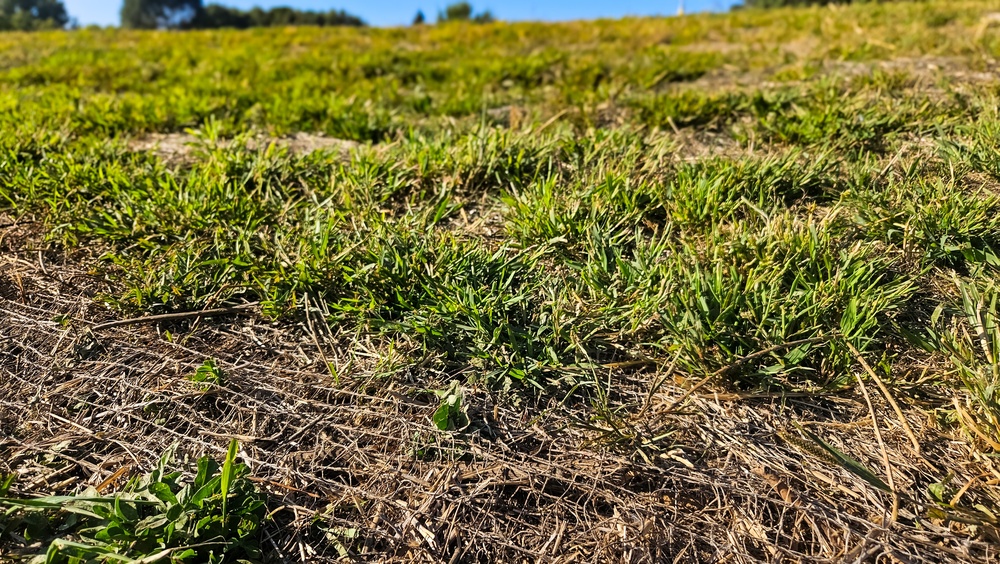
A lawn that looks thin after a long summer doesn’t necessarily need to be torn out and started over. If plenty of healthy turf remains, overseeding thin grass can fill bare patches, improve density, and help crowd out future weeds for considerably less money than installing new sod. Timing matters, though, because grass seedlings need enough favorable weather to germinate, develop roots, and become established before winter conditions shut down growth. Penn State says late summer to early fall is generally the best seeding period for cool-season lawns because weed competition is lower and seedlings get fall and spring growth before facing summer heat. Before tossing seed across the yard and hoping for the best, make sure you’re giving those seeds the soil contact, moisture, and time they actually need.
Decide Whether Overseeding Will Fix the Real Problem
Thin grass is a symptom, not a diagnosis, and adding more seed won’t solve every lawn problem. Compacted soil, excessive shade, poor drainage, heavy foot traffic, insects, disease, incorrect mowing, drought, and unsuitable grass varieties can all cause turf to disappear. University of Minnesota recommends considering renovation when weeds occupy roughly 30% to 50% of the lawn or other serious problems prevent the existing turf from filling bare areas. If one shady patch dies every summer, repeatedly buying another bag of sun-loving grass seed isn’t a particularly frugal solution. Before overseeding thin grass, spend a few minutes figuring out why the lawn became thin in the first place.
Don’t Wait Until Winter Is Almost Here
The phrase “before winter dormancy” shouldn’t be interpreted as permission to wait until the week before the ground freezes. Cool-season grasses such as Kentucky bluegrass, perennial ryegrass, tall fescue, and fine fescue establish best while soil is still warm enough for germination and cooler air reduces heat stress. Penn State notes that seeding later than mid-October isn’t recommended in most of Pennsylvania, although the appropriate deadline varies significantly by climate and grass species. The underlying principle applies more broadly: new grass needs time to establish before prolonged cold slows growth dramatically. Check guidance from your local Cooperative rather than relying on a nationwide calendar date printed on a seed display.
Choose Grass Seed for the Conditions You Actually Have
The cheapest bag isn’t necessarily the least expensive choice if most of its seed fails in your yard. Grass species differ in shade tolerance, drought performance, appearance, maintenance needs, germination speed, and ability to withstand traffic. Penn State’s lawn establishment guidance notes, for example, that perennial ryegrass establishes quickly and is particularly useful for lawn renovation, while Kentucky bluegrass establishes more slowly. A lawn with partial shade may benefit from a different mixture than an open lawn receiving full sun all day. Successful overseeding thin grass begins with matching the seed to your climate and site rather than choosing a variety because the package promises a greener lawn.
Get the Seed Down to the Soil
Scattering seed over tall grass and a thick layer of dead material can produce disappointing results because seed needs contact with soil to establish. Penn State recommends creating that contact through techniques such as core aeration, dethatching, or a disk-type seeder that deposits seed into small openings or slits. Core aeration can be especially useful when the lawn is compacted because it opens the surface while creating additional places for seed to reach soil. For small bare areas, loosening the upper soil surface with a rake may be enough to provide a suitable seedbed without renting machinery. When overseeding thin grass, think about where each seed lands rather than simply how evenly the spreader distributes it.
Don’t Assume More Seed Produces a Better Lawn
It can be tempting to double the recommended seeding rate when a lawn looks especially bad, but that can waste money and create unhealthy competition. Penn State warns that excessively high seeding rates can create overly dense turf, increasing the risk of disease and mower scalping. Follow the rate recommended for the grass species and product you’re using, measuring your lawn area rather than estimating how many pounds “look about right.” Different grasses have dramatically different recommended rates, so copying the amount you used with another seed mixture can also produce poor results. Spending a few minutes calculating square footage makes overseeding thin grass both more economical and more likely to succeed.
Keep the Seedbed Moist While Grass Germinates
The job isn’t finished when the spreader goes back into the garage. Newly planted grass seed needs consistent moisture near the soil surface, and Penn State emphasizes regular irrigation until germination begins. That typically means lighter, more frequent watering than you’d use for an established lawn because the goal is keeping the shallow seed zone moist without creating puddles or washing seed downhill. As seedlings develop, gradually transition toward deeper and less frequent watering that encourages roots to move farther into the soil. If fall rainfall is dependable, nature may handle part of the work, but don’t assume a cool day means newly germinating seed cannot dry out.
Know When You’ve Missed the Normal Window
Sometimes summer lasts too long, vacation interferes, or you simply don’t notice the lawn’s thin areas until normal fall seeding time has passed. Throwing seed down during marginal temperatures may result in germination followed by young seedlings being damaged before they develop enough cold tolerance. Penn State notes that seeding susceptible grasses too late can leave immature turf more vulnerable to winter injury, while the University of Minnesota describes dormant seeding as a separate strategy in sufficiently cold climates. With dormant seeding, seed is applied late enough that it doesn’t germinate until favorable spring conditions arrive, allowing winter freezing and thawing to help improve soil contact. That’s different from late-fall overseeding, so gardeners who have missed the regular window should consult local extension recommendations before deciding which strategy fits their climate.
Give New Grass Enough Time to Become a Lawn
The secret to overseeding thin grass isn’t buying the fanciest seed—it is creating conditions where ordinary good-quality seed can establish successfully. Identify why the turf became thin, choose a suitable grass, seed early enough, improve seed-to-soil contact, follow the recommended rate, and keep the surface consistently moist during germination. Fall gives cool-season grass a valuable opportunity to establish before winter and then resume growth when temperatures improve in spring. If you’ve already missed the appropriate fall window for your region, waiting or using a properly timed dormant-seeding strategy may be smarter than sacrificing an expensive bag of seed to cold soil.
Are you overseeding thin spots in your lawn this fall, or are you planning to wait and repair them next spring?
What to Read Next
How to Save Pepper Seeds Before Frost Damages the Plants
Can You Grow Grocery Store Garlic Instead of Buying Seed Garlic?
7 Garden Plants Worth Saving Seeds From Instead of Buying Them Again Next Year
Leave a Reply