That gorgeous flowering vine climbing your fence or colorful shrub filling an empty corner of your yard might seem like the perfect landscaping investment. But what happens when it refuses to stop growing? Some of the most attractive plants sold for home gardens can spread aggressively, overwhelm neighboring vegetation, and leave homeowners facing years of expensive removal work.
The problem is that many invasive garden plants don’t look threatening when they’re small. They may produce beautiful flowers, provide quick privacy, or promise easy maintenance, making them especially appealing to gardeners on a budget. Unfortunately, some spread through underground roots, airborne seeds, or fragments that can generate entirely new plants.
Before adding another attractive bargain to your landscape, consider these seven plants that can become far more trouble than their appearance suggests.
1. English Ivy Can Take Over Trees and Structures
English ivy creates a lush, evergreen appearance that makes it popular for covering fences, walls, and shady areas where grass struggles. However, the National Park Service identifies English ivy as an invasive plant capable of spreading across forest floors and climbing into trees. Its dense growth can suppress native vegetation, while heavy vines add weight to tree branches and complicate maintenance. Homeowners who allow ivy to climb mature trees may eventually face extensive removal work, especially when vines become thick and woody. If you already have English ivy, keep it away from trees and neighboring properties, and consider replacing it with regionally appropriate native groundcovers.
2. Purple Loosestrife Can Overwhelm Wet Gardens
With tall spikes of brilliant purple flowers, purple loosestrife can look spectacular beside ponds, drainage areas, and rain gardens. Unfortunately, the U.S. Fish and Wildlife Service identifies this plant as an invasive species that threatens wetlands by crowding out native vegetation. A mature plant can produce enormous quantities of seeds, allowing infestations to spread beyond the original planting area. Once established in wet soil, its persistent root system can make complete removal difficult and time-consuming. Gardeners looking for similar color should consider native alternatives such as blazing star or other moisture-tolerant flowering plants suited to their region.
3. Japanese Wisteria Can Swallow Fences and Trees
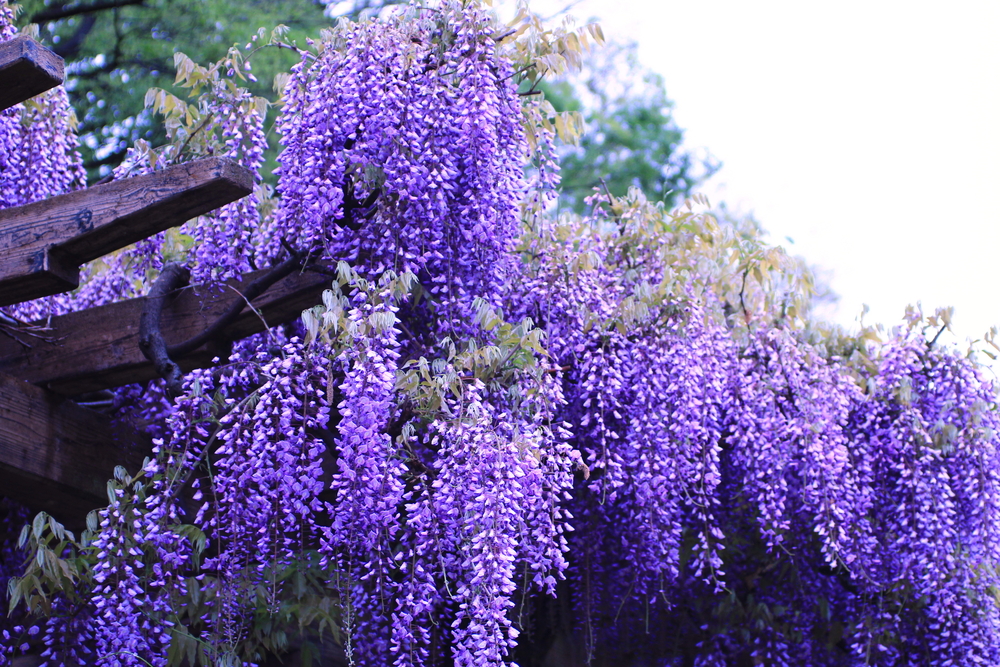
Japanese wisteria produces breathtaking cascades of purple flowers that can transform an ordinary pergola into a stunning garden feature. Unfortunately, North Carolina State Extension warns that this invasive vine grows aggressively, develops rooting runners, and can create dense thickets around trees and shrubs. Its woody stems become increasingly substantial as the plant matures, making removal difficult and potentially damaging nearby structures or vegetation. A homeowner who plants wisteria beside a wooden fence may eventually discover that controlling its growth requires repeated pruning and extensive root removal. Consider American wisteria (Wisteria frutescens) instead, which is native to parts of the United States and generally less aggressive than its Asian relatives.
4. Japanese Barberry Can Create Thorny Thickets
Japanese barberry attracts homeowners with colorful red or purple foliage, compact growth, and bright berries that add seasonal interest. However, Penn State Extension warns that this ornamental shrub can escape cultivation and dominate woodland edges, crowding out native vegetation. Birds spread its seeds, while established plants form dense, thorny growth that can make removal uncomfortable and labor-intensive. Research has also associated dense Japanese barberry stands with increased populations of blacklegged ticks, adding another reason to reconsider the plant in certain regions. Instead of planting invasive varieties, gardeners can explore native ninebark or other colorful shrubs recommended by their local extension service.
5. Japanese Honeysuckle Can Smother Other Plants
The sweet fragrance and delicate white-and-yellow flowers of Japanese honeysuckle make it tempting for gardeners who want an attractive climbing vine. Unfortunately, the USDA National Invasive Species Information Center identifies Japanese honeysuckle as an invasive species that crowds out native vegetation. Its rapidly growing vines can spread across fences, shrubs, and small trees, blocking sunlight and competing with surrounding plants. What begins as a decorative planting along a backyard fence can eventually require repeated cutting and follow-up treatment to control regrowth. Native trumpet honeysuckle (Lonicera sempervirens) offers attractive flowers and hummingbird appeal without the same invasive reputation in its native range.
6. Burning Bush Can Spread Far Beyond Your Yard
Burning bush earns its name from the brilliant red foliage that makes it a favorite in autumn landscapes. However, Cornell Cooperative Extension warns that ornamental shrubs such as burning bush can spread when birds carry their seeds into nearby forests and natural areas. Once seedlings become established outside cultivated landscapes, they can compete with native shrubs and contribute to habitat disruption. Homeowners may spend money maintaining a seemingly well-behaved specimen while unknowingly allowing new plants to establish themselves beyond their property. For dependable fall color, consider native alternatives such as Virginia sweetspire or highbush blueberry where growing conditions are suitable.
7. Bradford Pear Can Become an Expensive Landscaping Problem
Few ornamental trees create a more dramatic spring display than Bradford pear, with its branches covered in bright white blossoms. However, the USDA National Invasive Species Information Center warns that Callery pears can spread into natural areas, forming dense thickets that compete with native vegetation. Bradford pear trees are also notorious for weak branch structures, making them susceptible to splitting during storms or as they mature. A homeowner who originally purchased one for its attractive flowers may eventually face professional tree removal costs after major limbs fail or the tree becomes hazardous. Native serviceberry, flowering dogwood, or another regionally appropriate flowering tree can provide seasonal beauty without introducing the same problems.
Why These Plants Can Cost More Than You Expect
The financial consequences of invasive garden plants often extend well beyond the original purchase price. Aggressive vines may require repeated removal, thorny shrubs can make routine landscaping difficult, and invasive trees may create additional maintenance or replacement expenses. In some states and municipalities, certain invasive species are restricted or prohibited, meaning homeowners should check local regulations before purchasing or sharing plants. Removing an established infestation may also require multiple growing seasons because roots, seeds, or surviving plant fragments can generate new growth. Choosing appropriate plants from the beginning is usually easier and less expensive than trying to reclaim an overgrown landscape later.
How to Stop a Spreading Plant Before It Takes Over
If you already have invasive garden plants growing on your property, identifying the exact species should be your first step. Contact your local Cooperative Extension office or consult a state invasive plant database to determine whether the plant is considered invasive in your area. Small infestations may be manageable through careful digging or repeated cutting, while extensive growth sometimes requires professional assistance or targeted treatment. Avoid dumping roots, seeds, or plant fragments into nearby woods or waterways because improper disposal can spread the problem to new locations. Monitor treated areas for regrowth and replace removed plants with suitable alternatives that provide similar beauty without creating long-term maintenance headaches.
A Beautiful Garden Shouldn’t Become a Financial Burden
Attractive flowers, colorful foliage, and fast-growing vines can make invasive garden plants difficult to resist when you’re planning a new landscape. However, a plant that looks impressive during its first growing season may become a costly problem after several years of uncontrolled spreading. The best approach is to research each species before purchasing it, paying particular attention to regional invasive plant lists and local planting restrictions. Native and well-behaved ornamental alternatives can often provide the same visual appeal while requiring less effort to control. Spending a little extra time choosing the right plants today could save you years of frustrating maintenance and expensive removal work.
Have you ever planted something beautiful only to regret it after it spread throughout your yard? Which invasive garden plants have caused the biggest headaches in your landscape? Share your experience in the comments.
What to Read Next
Bringing Your Houseplants Inside for Winter? Don’t Make This Common Mistake
Before You Accept Free Plants From a Neighbor, Check for This Hidden Garden Pest
7 Landscaping Decisions That Could Start a Fight With Your Neighbors
Leave a Reply