Cool, wet weather might be a reprieve after summer heat. But for your garden, it’s prime time for disease outbreaks. Moisture and lower temperatures create the optimal environment for fungal and bacterial infections to thrive. It doesn’t matter if your plants are healthy. When leaves stay wet for hours, every plant is susceptible. Knowing which diseases strike fastest helps you act before the damage spreads through your entire yard.
1. Powdery Mildew
Powdery mildew loves cool, humid conditions with poor air circulation. This white, powder-like coating attacks everything from roses to cucumbers. It can stunt growth and distort leaves, making photosynthesis difficult. So, what can you do to fight powdery mildew? Prune crowded plants, avoid overhead watering, and apply fungicidal sprays early in the season to prevent outbreaks. Otherwise, entire beds can become infected in a matter of days.
2. Downy Mildew
While similar in name, downy mildew is a different, and often more destructive, disease. If nights are cool and mornings are wet, watch out for downy mildew. It first appears as yellow patches on upper leaf surfaces and gray fuzz underneath. Keep an eye on spinach, basil, and impatiens, as they are especially vulnerable. Preventative measures are key. Good drainage, early planting, and resistant varieties can help keep it under control. Once spores spread, recovery is nearly impossible without removing infected plants.
3. Botrytis (Gray Mold)
Botrytis cinerea, also known as gray mold, attacks flowers, fruits, and vegetables under prolonged damp conditions. If humidity exceeds 85%, it will spread very rapidly. You’ll notice soft brown spots on petals or fruit, followed by a fuzzy gray coating. Prune off affected parts immediately and improve airflow with wider spacing. You can also avoid watering late in the day, as nighttime moisture encourages spore growth.
4. Leaf Spot Diseases
Cool, wet weather also fuels bacterial and fungal leaf spot outbreaks on tomatoes, lettuce, and ornamentals. You’ll notice that infected plants show small dark lesions surrounded by yellow halos. Unfortunately, overhead irrigation can make leaf spot diseases worse. It can splash spores onto healthy leaves, accelerating spread. Instead, you should water at the base, mulch around stems, and disinfect garden tools after each use. Early removal of infected foliage can save the rest of the plant.
5. Late Blight
Late blight, infamous for causing the Irish Potato Famine, remains one of the fastest-moving garden diseases. It develops most rapidly in cool (60–70°F), moist weather. Brown lesions with white moldy edges appear on tomatoes and potatoes, spreading within hours under ideal conditions. Preventive copper-based fungicides and crop rotation are the best defenses. Once symptoms appear, infected plants should be destroyed immediately to protect others.
6. Black Spot on Roses
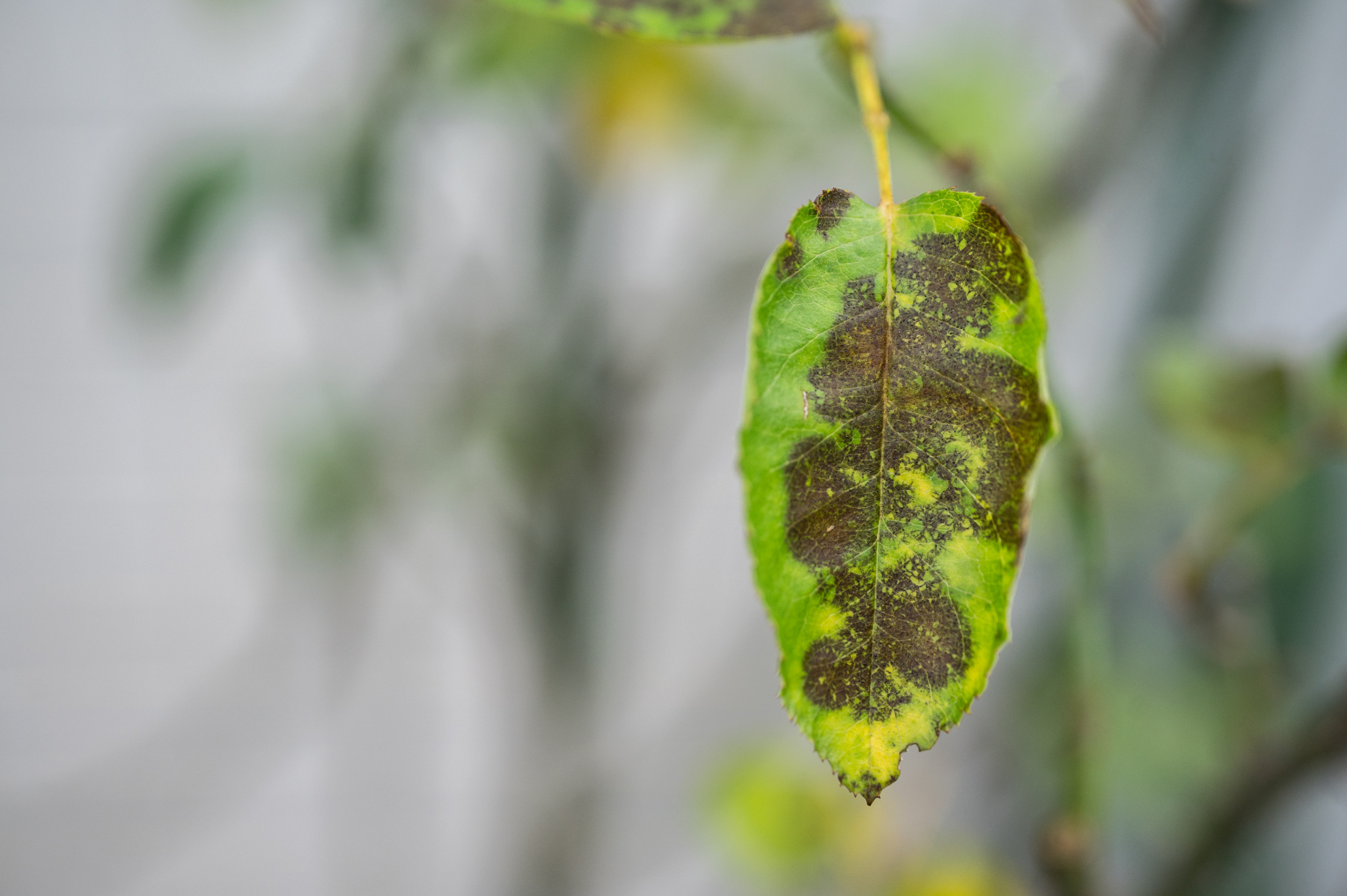
Roses become especially vulnerable to black spot when temperatures dip and rain lingers. Spores germinate on wet leaves and cause circular black patches with yellow margins. Over time, defoliation weakens the plant and reduces blooming. Remove fallen leaves, prune low branches for airflow, and use sulfur-based sprays preventatively. Healthy maintenance routines are more effective than trying to cure advanced infections.
7. Rust Diseases
Rust appears as orange, yellow, or brown pustules on the undersides of leaves. Damp mornings followed by cool afternoons create perfect rust conditions. Hollyhocks, beans, and snapdragons are frequent victims. Remove infected leaves and dispose of them. You should never compost them. Rotating crops and watering in the morning help reduce lingering moisture that fuels the fungus.
Prevention Is Easier Than Cures
Cool, wet weather can’t be controlled. But how you manage your garden can. Prune for airflow, water early, and monitor leaves often during extended damp spells. A little prevention now can save you from losing entire harvests later. When the air turns cool and the dew lingers, that’s your signal to stay vigilant.
Have you battled mildew or leaf spot during a rainy season? Share your favorite prevention tips or natural treatments in the comments to help fellow gardeners.
You May Also Like…
- 10 Houseplants That Love Being Brought Inside Now
- Why Some Seeds Germinate Better in Cold Soil
- How to Identify Frost Pockets in Your Yard
- 9 Fall Garden Pests That Arrive Out of Nowhere
- How Temperature Fluctuations Impact Fall Growth

Teri Monroe started her career in communications working for local government and nonprofits. Today, she is a freelance finance and lifestyle writer and small business owner. In her spare time, she loves golfing with her husband, taking her dog Milo on long walks, and playing pickleball with friends.
Leave a Reply