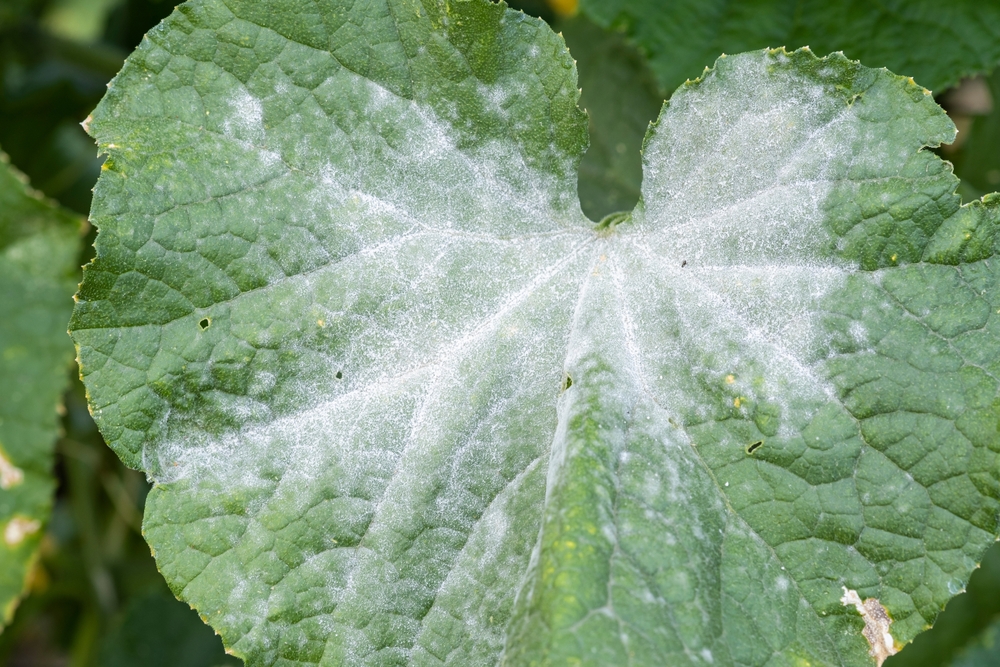
That white powder coating your plant leaves probably did not arrive courtesy of a very messy bag of flour. It may be powdery mildew, a common fungal disease that can spread across leaves, stems, and even flower buds when conditions cooperate.
A plant covered in white does not automatically need the compost pile. With a little detective work and some timely cleanup, gardeners can often slow the disease and send plants into winter in much better shape.
First, Make Sure That White Stuff Really Is Powdery Mildew
Powdery mildew usually looks exactly like its name suggests: a white, floury coating that develops on the surface of leaves. Unlike some fungal diseases that need wet foliage to infect plants, powdery mildew often appears during periods of moderate temperatures, humid air, crowded growth, and poor air circulation.
The coating can start as small patches before spreading across larger portions of a leaf, and heavily affected leaves may curl, yellow, brown, or drop prematurely. A quick swipe can remove some of the powdery material, but the leaf underneath may still show signs of infection. If the white material looks more like tiny insects, cottony clusters, sticky residue, or hard scale, the culprit may be something entirely different.
Give Infected Leaves Less Company
Once powdery mildew shows up, the garden needs a little breathing room. Trim away badly infected leaves and stems when practical, especially on plants with dense growth that blocks air movement around the foliage.
Do not turn pruning into a plant massacre, though, because removing too much healthy foliage can stress a plant right before winter. Place infected plant material in the trash rather than adding diseased leaves to a home compost pile, particularly if the compost does not reach temperatures that reliably destroy plant pathogens. Clean pruning tools after working on infected plants, especially before moving to a healthy specimen.
Fix the Conditions That Help It Hang Around
Powdery mildew loves a crowded garden where leaves sit close together and air barely moves. Thinning congested growth, spacing plants appropriately, and keeping surrounding weeds under control can improve air circulation and make the foliage a less inviting neighborhood for fungal problems.
Watering habits also matter, although powdery mildew does not behave like many leaf diseases that spread primarily through splashing water. Water the soil around plants instead of routinely wetting foliage, and water early enough in the day for excess moisture to evaporate. Avoid piling extra fertilizer onto a struggling plant, since lush, tender new growth can create more foliage for mildew to colonize.
Treatment Can Help, But Timing Matters
For a mild case, gardeners can often start with sanitation and better growing conditions rather than reaching immediately for the strongest product on the shelf. Several fungicides can help manage powdery mildew, including products containing horticultural oils, potassium bicarbonate, sulfur, or other labeled fungicidal ingredients, depending on the plant and the specific product.
Always read the product label before treating a plant, because a product that works on one ornamental may damage another, and some treatments can cause problems during hot weather or when combined with other sprays. Never assume that a homemade kitchen remedy works safely on every plant, either. If treatment becomes necessary, follow the label’s directions for the crop, application rate, weather conditions, and protective equipment.
Do One More Cleanup Before Winter Arrives
Fall cleanup gives gardeners a useful opportunity to remove infected leaves that otherwise could linger around the garden. Pick up fallen diseased foliage around susceptible plants and clear away dead plant debris where practical, while keeping in mind that not every garden leaf needs to disappear.
Perennials that remain healthy can often stay standing until late winter or spring when local wildlife and garden conditions make delayed cleanup worthwhile. The important distinction involves removing clearly diseased material rather than stripping the entire garden bare simply because the calendar says fall. A tidy garden can look great, but a smart garden also considers what plants, beneficial insects, soil organisms, and wildlife need through the colder months.
Give Next Season a Better Starting Line
Powdery mildew can return because many of the fungi responsible for it have specialized relationships with particular plant hosts. That means replacing one susceptible plant with another susceptible plant may not solve the problem, especially when the same environmental conditions remain in place.
When choosing plants for future seasons, look for varieties described as resistant to powdery mildew when those options exist. Give plants enough room for mature growth, prune thoughtfully to improve airflow, and monitor leaves early rather than waiting for an entire plant to turn white. Catching a few powdery spots is far easier than discovering a mildew-covered botanical snowstorm after weeks of ignoring it.
Let the White Powder Be a Warning, Not a Garden Death Sentence
Powdery mildew looks dramatic, but its presence does not automatically mean a plant has reached the end of its gardening career. Removing heavily infected material, improving airflow, avoiding unnecessary stress, and using an appropriate labeled treatment when needed can put the garden in a much better position before winter.
The bigger lesson comes from looking beyond the white coating itself: plant diseases often reveal something about the conditions around the plant. A crowded bed, excessive tender growth, poor airflow, or lingering plant debris can create opportunities for problems to return. Take care of those conditions now, and the garden heads into winter with fewer fungal favors to repay next spring.
Would powdery mildew make you reach for the pruners immediately, or have you found another garden-friendly way to keep it under control?
You May Also Like…
Should You Compost Diseased Plants? The Answer Depends on How Hot Your Pile Gets
5 Disease Prevention Tips That Actually Work
10 Perennials You Can Divide This Fall Instead of Buying More Plants
September Is One of the Best Times to Get Free Plants From the Ones You Already Own
Is It Safe to Compost Plants With Powdery Mildew?

Brandon Marcus is a staff writer for FrugalGardening.com at District Media, Inc., where he delivers practical gardening advice with a relatable, no-nonsense style. An avid amateur gardener, he holds a BA degree and with over ten years of professional writing experience, he is also an award-winning published author whose first book, Questions For Deep Thinkers, was released by Adams Media. His work has appeared in major publications including Fandom.com, CHUD.com, TheColdWire.com, and Fansided.com.
Leave a Reply